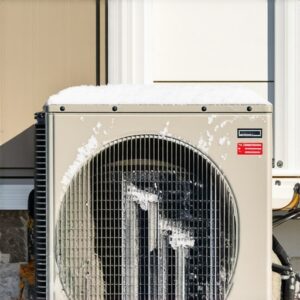
My old mentor used to scream, ‘You can’t cool what you can’t touch!’ and he’d follow it up by barking that you can’t heat with what you don’t understand. This is why airflow matters more than horsepower. We were standing in a drafty mechanical room in mid-January, the wind howling through the louvers, and he was pointing at a frost-covered condenser. Everyone in this trade used to say heat pumps were glorified hair dryers that quit the moment the mercury hit thirty-two. They were wrong then, and with the hardware coming out in 2025, they are dangerously wrong now. Understanding how a modern inverter-driven system pulls heat out of -15°F air isn’t magic; it is pure, gritty thermodynamics. It is about the boiling point of the juice and the speed of the scroll.
The Thermodynamic Zoom: How Cold-Climate Systems Function
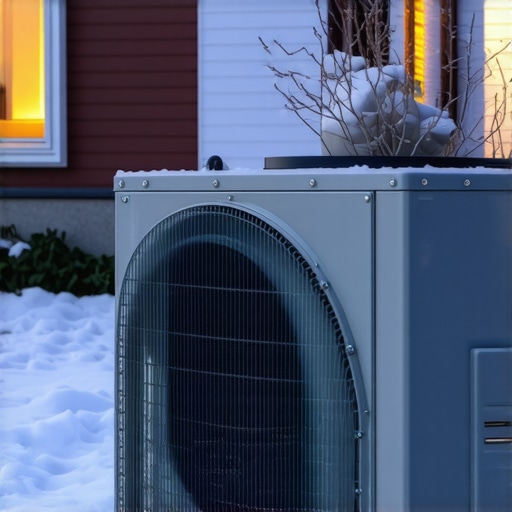
Most homeowners think heat pumps ‘create’ heat like a toaster. They don’t. They are heat movers. When we talk about cold-climate performance, we are talking about the refrigeration cycle’s ability to maintain a temperature differential. Even at ten below zero, there is heat energy in the air. The trick is having a refrigerant that can boil at -40°F so it can absorb that energy. When that gas hits the compressor, we squeeze it. Squeezing molecules together generates heat—think of a bike pump getting hot as you use it. Modern systems use Enhanced Vapor Injection (EVI) to keep the compressor from overheating while it works double-time to provide that lift. This is where most ‘Sales Techs’ get lost; they want to sell you a 15kW heat strip backup because they don’t understand the compressor’s mapping. But a real tech knows that with heat pump solutions for efficient home comfort in 2025, those strips should rarely engage.
“Equipment shall be sized to satisfy the calculated heating and cooling loads… Over-sizing can result in poor humidity control and excessive energy consumption.” – ACCA Manual S
The 2025 Regulatory Cliff: R-454B and Low-GWP Refrigerant Retrofits
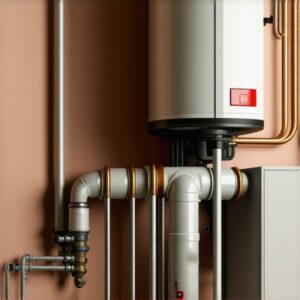
We are standing on the edge of the biggest refrigerant shift since we killed R-22. The transition to low-GWP (Global Warming Potential) refrigerants like R-454B and R-32 is changing the guts of every machine we install. These are ‘mildly flammable’ A2L refrigerants. Don’t let the ‘flammable’ part scare you—your stove’s gas line is a thousand times more dangerous—but it does mean the hardware is more complex. These new systems require leak sensors and specific control boards that can shut the whole rig down if they sniff a whiff of gas. This makes top hvac repair strategies to extend your systems life more critical than ever. You can’t just have some ‘Sparky’ or a ‘Tin Knocker’ slapping these together; the brazing needs to be nitrogen-purged and the vacuum pulled to 500 microns, or the moisture in the lines will turn that new oil into acid, eating the windings right out of your compressor.
Airflow is King: Why Static Pressure Kills Efficiency
You can buy a 25-SEER2 hyper-heat unit, but if your ductwork was sized by a guy who used a ‘rule of thumb’ from 1974, you’re throwing money into the attic. High static pressure is the silent killer of the inverter compressor. When the ductwork is too small, the blower motor has to ramp up, the suction line pressure drops, and the system starts short-cycling. I’ve spent decades using airflow measurement services to prove to people that their ‘broken’ AC was actually just a strangled return air drop. If the air can’t move, the heat can’t move. We use ‘Pookie’ (mastic) to seal every joint because leaking air is leaking cash. Proper preventative heating maintenance must include a static pressure test, or it’s just a glorified dusting.
“The design and installation of the air distribution system shall be in accordance with recognized industry standards.” – ASHRAE Standard 62.2
The Future of Comfort: AI-Driven HVAC Optimization and IAQ
We are moving away from the ‘dumb’ thermostat. Modern comfort is about AI-driven HVAC optimization and predictive maintenance alerts. These systems monitor their own subcooling and superheat in real-time. If the liquid line thermistor sees a 2-degree drift that shouldn’t be there, it sends an alert before the system actually fails. This is the end of the 2:00 AM 24/7 heating emergency response call. Combine that with IAQ improvement services like UV light installation for HVAC to keep the coil clean, and you have a system that doesn’t just heat—it cleans. For those in older homes, we’re even seeing ventless gas heater services and relay services integrated as hybrid ‘dual-fuel’ backups for those few hours a year when the polar vortex actually hits the hardware’s physical limit.
The Verdict: Physics Beats Marketing
Don’t let a salesman tell you that you need a brand-new system just because yours is ten years old. If the heat exchanger isn’t cracked and the compressor isn’t grounded, it might just need a low-GWP refrigerant retrofit or a better set of lungs (ducts). But if you are upgrading, look at the COP (Coefficient of Performance) at 5°F. That is the real test. If you want the truth, ask the guy with the dirty gauges and the smell of burnt oil on his shirt—not the guy in the pleated khakis with a clipboard. Comfort is a matter of physics, and the physics of 2025 says heat pumps are the undisputed heavyweight champions of the North. “