The Low-Frequency Ghost in Your Mechanical Room
You hear it before you feel the cold. It’s a low-frequency, rhythmic thrumming that seems to vibrate the very drywall of your mechanical room. In my thirty years of crawling through spider-infested crawlspaces and hauling recovery tanks up icy ladders, I’ve learned that a humming HVAC unit is the equipment’s way of screaming for help in a language most homeowners don’t speak. This isn’t the healthy whir of a blower motor or the confident click of a gas valve. This is the sound of electrical resistance, inductive loads struggling to maintain a circuit, and the slow, agonizing death of a transformer. As we push into the 2025-2026 heating seasons, the complexity of our systems—from geothermal heat pump systems to high-efficiency warehouse heating solutions—means that a simple hum is rarely just a loose screw. It is often the precursor to a catastrophic electrical failure that could leave you freezing in a polar vortex.
I remember following a ‘Sales Tech’—one of those guys who spends more time on his hair than his manifold gauges—into a commercial warehouse last winter. The client had been told their entire 20-ton rooftop lineup was ‘electrically compromised’ and needed a $150,000 overhaul because the ‘wiring was obsolete.’ The sweet owner was terrified. I walked up to the first unit, pulled the service panel, and there it was: a $60 transformer that had vibrated its mounting bracket loose, causing a harmonic resonance that sounded like a jet engine. The ‘Sparky’ they’d hired previously had used the wrong gauge wire for a control circuit, leading to a voltage drop that was chattering the contactors into dust. I fixed the whole bank of units for under a grand. That’s the difference between someone who wants to sell you a box and someone who understands the physics of an electron. In the world of real HVAC, we don’t guess; we diagnose.
“The most expensive equipment in the world cannot overcome a bad duct system or faulty electrical integration.” – Industry Axiom
1. The ‘Death Chatter’ of the Contactor
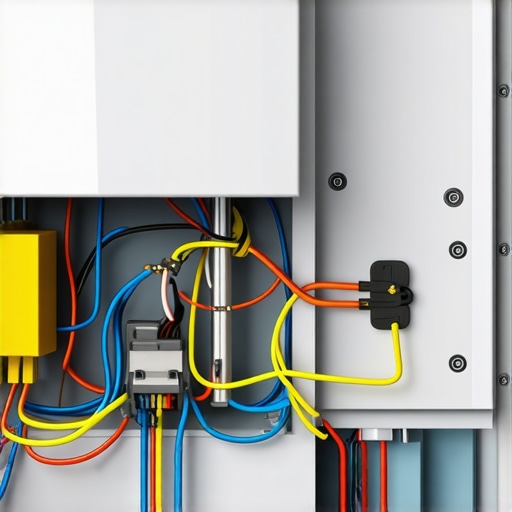
The most common source of that irritating hum is the contactor. Think of the contactor as the heart’s valve for your heater’s electrical system. It’s a heavy-duty relay that uses a 24V coil to pull in a set of high-voltage contacts, sending ‘the juice’ to your heat strip or compressor. When your wiring is compromised—perhaps due to 2026-era insulation degradation or simple oxidation—the voltage reaching that coil drops. Instead of a firm, clean ‘snap,’ the contactor begins to vibrate at 60 cycles per second. This is ‘chattering.’ If you ignore this, the silver plating on the contacts will pit and weld shut, potentially causing your heater to run uncontrollably until the high-limit switch (hopefully) trips. If you’re seeing flickering lights when the heat kicks on, it’s time to look at transformer replacement or a dedicated wiring overhaul. This is especially critical for those utilizing heat pump technology where the defrost cycle puts immense strain on the electrical sub-panel.
2. The Transformer’s Lament and Voltage Drop
Every modern system relies on a transformer to step down your 240V or 120V line voltage to the 24V used by your smart thermostat setup. Transformers are essentially blocks of laminated steel wrapped in copper wire. When the internal insulation begins to fail—often due to ‘pushed’ systems running too hard in extreme cold—those laminations vibrate. A loud hum from the control board area is a sign that your transformer is generating excessive heat. This ‘sensible heat’ is energy that should be moving your blower, but instead, it’s melting the wire varnish. If you’re managing warehouse heating solutions, this vibration can be amplified by metal ductwork, turning a small electrical issue into a building-wide acoustic nightmare. Proper HVAC duct sealing can dampen some noise, but it won’t fix a failing winding. You need to check the ‘gas’ (voltage) at the source. If you’re seeing 19V instead of 24V, your wiring is the bottleneck, not the component.
3. The 2026 Regulatory Shift: Insulation and Arc Faults
As we move into 2026, the industry is seeing stricter enforcement of electrical safety codes regarding ‘Arc Fault’ detection in HVAC circuits. Older wiring, specifically in boiler repair services where moisture and heat cycles are extreme, tends to become brittle. When the insulation cracks, you get micro-arcing. This creates a high-pitched hum or a ‘sizzling’ sound. It’s the sound of electricity jumping a gap it shouldn’t. This doesn’t just kill your efficiency; it’s a fire hazard. Whether you are dealing with ventless gas heater services or complex geothermal heat pump systems, the wiring integrity is what stands between comfort and a 911 call. This is why preventative maintenance contracts are not a luxury; they are a diagnostic necessity. A real tech will use a megohmmeter to test the insulation resistance of your heater’s wiring, catching a failure before the ‘Sparky’ has to come out to replace a melted bus bar.
“All electrical equipment and wiring shall be installed in a neat and workmanlike manner to prevent interference and vibration.” – ASHRAE Standard 15
The Physics of Airflow and Electrical Load
Most people don’t realize that duct cleaning services and HVAC duct sealing are actually electrical repairs in disguise. Why? Because if your ducts are restricted or leaking, your blower motor has to work harder to move the air. This increases the ‘Amp Draw.’ Higher amps mean more heat in the wires. More heat means more resistance. It’s a feedback loop that ends with a charred terminal block. I’ve seen ‘Tin Knockers’ (duct guys) install returns that were half the size they needed to be, causing the motor to hum so loudly the homeowner thought the house was haunted. We used ‘Pookie’ (mastic) to seal the leaks and resized the return air drop, and suddenly the ‘electrical’ hum vanished. The motor wasn’t dying; it was suffocating. If you want to extend your system’s life, you have to start with the physics of airflow. You can’t cool—or heat—what you can’t touch, and you can’t move air through a straw with a jet engine without something breaking.
When it comes to choosing the best heating service, don’t be fooled by a clean uniform and a shiny truck. Ask them about static pressure. Ask them to check the voltage drop across the contactor. If they immediately jump to ‘you need a new unit’ without pulling out a multimeter, show them the door. Whether it’s a simple transformer replacement or a full smart thermostat setup, the solution should be rooted in thermodynamics and electrical engineering, not a sales commission. If your unit is humming, it’s telling you a story. Make sure you hire someone who knows how to listen. If you’re unsure about your current system’s health, especially heading into a brutal winter, check out our guide on preventative heating maintenance for 2025 or contact us for a real forensic diagnosis. Remember, the ‘juice’ has to flow freely, or your wallet will be the thing that ends up empty.
Reading through this post reminded me of a situation I encountered last winter, where a humming noise was mistaken for a simple loose screw. It turned out to be a transformer vibration caused by aging insulation, which was a clear sign of impending failure. What stood out to me was the importance of not just listening to the hum, but actually diagnosing the root cause with proper electrical testing. I’ve found that many homeowners overlook the significance of these sounds until they lead to costly repairs or system failure. It makes me wonder, how many of us proactively schedule electrical inspections along with regular HVAC maintenance? It might save a lot of trouble down the line. Also, what’s been your biggest challenge in troubleshooting electrical issues in HVAC systems? I’d love to hear others’ experiences with transformer or contactor problems and how they approached fixing them.