The Airflow Manifesto: Why Your Expensive Furnace is Failing You
You’re sitting in your living room, the thermostat says 72 degrees, but your feet are freezing and your nose is as dry as a desert bone. You call a ‘Sales Tech’ from a big-box franchise, and he spends ten minutes looking at your unit before telling you that you need a brand-new $12,000 system. He’s lying. Or worse, he’s ignorant. I’ve spent thirty years crawling through joists and sealing plenums with Pookie, and if there is one thing I’ve learned, it’s that the box outside matters a hell of a lot less than the tin inside your walls. My old mentor, a man who could hear a refrigerant leak from across a parking lot, used to scream at me, ‘You can’t cool or heat what you can’t touch!’ He was talking about the medium—the air. If that air isn’t moving exactly where it needs to go, at the right velocity and volume, you’ve just got an expensive paperweight hummed away in the basement. This is the core of the Airflow Manifesto: Comfort isn’t a setting on a geofencing temperature control app; it’s a result of balanced physics.
“The most expensive equipment in the world cannot overcome a bad duct system. Total External Static Pressure (TESP) is the heartbeat of HVAC performance.” – ACCA Manual D
The Forensic Diagnosis: Why One Room is a Sauna and the Other is a Freezer
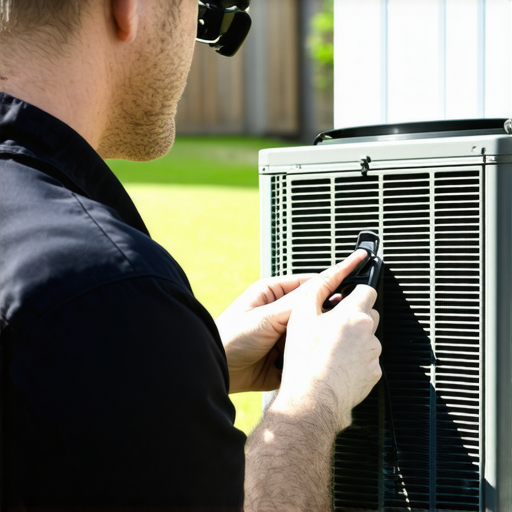
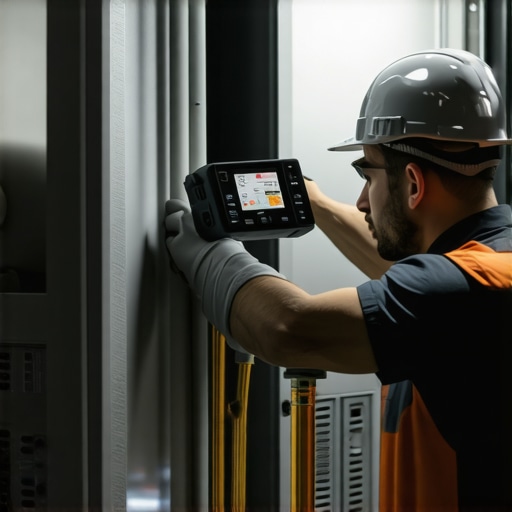
When we talk about 2026 airflow measurement services, we aren’t just waving a hand in front of a register. We are looking at the Total External Static Pressure. Think of it like blood pressure for your home. If the pressure is too high, your blower motor is working overtime, screaming like a banshee until you finally need a blower motor replacement. Most modern furnaces have ECM motors that try to compensate for restrictive ducts by spinning faster, which just sucks more ‘juice’ and burns out the bearings. If you’re hearing a high-pitched whistle, that’s not ‘normal operation’—that’s your system gasping for breath through a straw. [image_placeholder] This is where a real HVAC repair starts: not with a wrench, but with a manometer. We measure the pressure drop across your evaporator coil and your filter. If you’ve shoved a high-MERV filter into a system designed for a cheap fiberglass rock-catcher, you’re killing your efficiency. You need to understand top HVAC repair strategies to extend your systems life, and it starts with letting the machine breathe.
The Northern Winter: Fireplaces, Humidifiers, and the Humidity Trap
In our climate, we aren’t just fighting the cold; we’re fighting the dry. When the temperature drops, the moisture leaves the air, and your skin starts to crack. This is where humidifier installation becomes a survival necessity, not a luxury. But here is what the ‘Tin Knockers’ won’t tell you: a bypass humidifier repair is often needed because the bypass ducting was installed so poorly it’s actually short-circuiting your airflow. You’re taking heated air and dumping it right back into the return, tricking your limit switch and causing the furnace to short-cycle. It’s a waste of energy and a fast track to a cracked heat exchanger. I’ve seen fireplace insert services go wrong the same way—the insert provides beautiful radiant heat, but it messes with the house’s pressure envelope, causing the furnace to struggle to distribute air to the back bedrooms. Proper airflow measurement accounts for these secondary heat sources to ensure your multi-family heating upgrades actually provide even comfort across every unit.
“Standard 62.1 defines the requirements for ventilation and air quality, ensuring that ‘Demand-Controlled Ventilation’ does not compromise the health of the occupants for the sake of energy savings.” – ASHRAE Standards
Advanced Integration: Geofencing, Solar Thermal, and Demand-Controlled Ventilation
By 2026, we are seeing more solar thermal heating integration than ever before. It’s great tech, but if your demand-controlled ventilation (DCV) isn’t calibrated, the system is just guessing. DCV uses CO2 sensors to decide when to bring in fresh outdoor air. In a tight, modern home, if that airflow isn’t measured precisely, you end up with ‘stale’ spots or, worse, back-drafting issues with your water heater. We also have to look at pool heater repair during the shoulder seasons. If your indoor pool room isn’t pressurized correctly relative to the rest of the house, you’re migrating chlorine-heavy, humid air into your structural 2x4s. It’s a recipe for rot. Everything is connected. When you’re looking into preventative heating maintenance, you need a tech who understands the psychrometrics of the whole building, not just the ‘gas’ in the lines.
The Physics of Comfort: Stop Guessing and Start Measuring
If you want to fix those hot and cold spots once and for all, you have to stop looking for a ‘magic’ thermostat. Geofencing temperature control is a neat trick for saving a few bucks when you’re at work, but it won’t fix a crushed flex duct in the attic or a return air drop that’s 30% undersized. You need a professional to perform a duct traverse—measuring the CFM (Cubic Feet per Minute) at every single vent. Sometimes the fix is as simple as a bit of ‘Pookie’ (mastic) on a leaking joint or adjusting a manual damper. Other times, it’s a more involved HVAC repair involving resizing the plenum. Don’t let a ‘Sales Tech’ talk you into a new 18-SEER unit until you know your ducts can actually handle the flow. For the latest on high-efficiency options, check out heat pump solutions for efficient home comfort in 2025, but remember: the ductwork is the heart of the system. If you’re ready to stop shivering in your own house, contact us today for a full diagnostic airflow audit. We don’t just sell boxes; we solve physics problems.