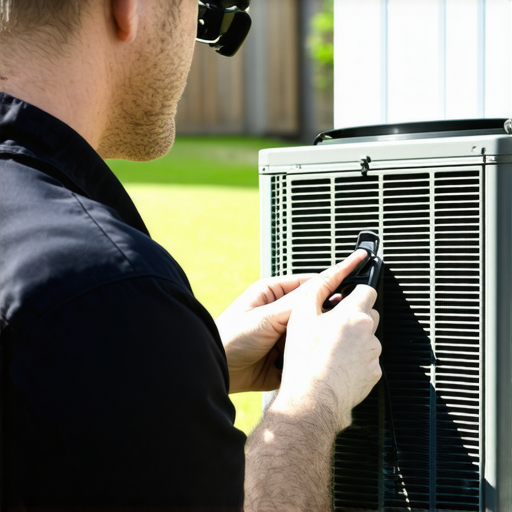

The Sound of a Choking System: Why Your IAQ is Failing
Listen closely. If your furnace sounds like a jet engine preparing for takeoff every time it kicks on, you aren’t hearing ‘power’—you’re hearing a slow death. Most homeowners think air purification is just about slapping a thicker filter in the rack and calling it a day. That’s the first mistake. I’ve spent thirty years in the Northeast, dragging my tool bag through crawlspaces where the air is more insulation than oxygen, and I can tell you: comfort isn’t just a number on a thermostat. It’s physics. When we talk about cleaner air for 2026, we aren’t talking about fancy gadgets; we’re talking about the Thermodynamic Zoom—the intersection of airflow, filtration, and mechanical integrity.
I remember a call last February during a nasty cold snap. I followed a ‘Sales Tech’—the kind who wears a crisp white shirt and never has a smudge of grease on his hands—into a drafty colonial. He’d quoted this couple $18,000 for a total system replacement because their indoor air quality was ‘dangerous’ and the unit was ‘cycling too much.’ I walked in, pulled the blower door, and found a blower motor that was literally vibrating itself to pieces. Why? Because the ‘Sales Tech’ had sold them a high-MERV filter that was essentially a cardboard brick. The motor was trying to pull air through a wall, skyrocketing the static pressure until the system started tripping the high-limit switch. A simple blower motor replacement and a lesson on airflow saved them $17,000. That’s the difference between a technician and a salesman.
“The most expensive equipment in the world cannot overcome a bad duct system.” – Industry Axiom
Step 1: The Foundation of Fluid Dynamics—HVAC Duct Sealing
You can’t purify air if you can’t control it. In our cold Northern climate, your ductwork is the circulatory system of the home. If you have leaks in your return air ducts, you aren’t just circulating house air; you’re sucking in attic dust, insulation fibers, and whatever else is crawling in the dark corners of your basement. This is where HVAC duct sealing comes into play. I don’t mean that shiny silver tape that fails after two seasons. I’m talking about ‘Pookie’—the mastic sealant that hardens into a permanent barrier. When your ducts are sealed, the static pressure stabilizes. This allows your filtration system to actually do its job. If you’re looking to extend the life of your equipment before a major repair, checking your duct integrity is step one. You can read more about these top HVAC repair strategies to extend your systems life to see why seal integrity matters.
For those of us dealing with hydronic heating systems, the ‘duct’ isn’t air—it’s water. But the logic remains the same. If your radiators are caked in dust or blocked by furniture, you’re killing the convection current. Radiator replacement or even a thorough cleaning of the fins is essential for air movement. Remember: you can’t clean what you can’t move. In 2026, air purification starts with mechanical movement. If your wiring is frayed, you need wiring repair for heating systems immediately, as a faulty signal to the blower or pump can lead to ‘short cycling,’ which leaves air stagnant and humid, the perfect breeding ground for mold.
Step 2: The Mechanical Lung—Heat Recovery Ventilators (HRV)
In the North, we build our houses like Tupperware containers to keep the heat in. That’s great for the gas bill, but it’s a nightmare for your lungs. This is where the heat recovery ventilators (HRV) come in. Think of an HRV as the lungs of your house. It brings in fresh, O2-rich air from the outside while exhausting the stale, VOC-laden air from the inside. The magic—the physics—is in the heat exchanger. It strips the heat from the outgoing air and transfers it to the incoming air without the two streams ever touching. You get fresh air without the polar vortex’s price tag. This is a critical component of modern HVAC maintenance plans. Without a functional HRV, your indoor air becomes a soup of CO2 and allergens. If you haven’t looked into preventative maintenance contracts that include HRV core cleaning, you’re missing the forest for the trees.
“Ventilation shall be provided to maintain indoor air quality at a level that provides a healthy and comfortable environment.” – ASHRAE Standard 62.1
I often see guys try to bypass these systems when the sensors fail. Don’t let them. WiFi thermostat integration allows you to monitor your IAQ (Indoor Air Quality) sensors in real-time. If your CO2 levels spike, your thermostat should be smart enough to kick the HRV into high gear. This isn’t ‘smart home’ fluff; it’s a diagnostic tool that tells you when your ‘lungs’ are failing. If you’re unsure about which tech is right for your home, checking out choosing the best heating service expert tips for 2025 can give you a roadmap for integration.
Step 3: The DNA Destroyer—UV Light Installation for HVAC
Filtration catches the ‘big’ stuff—the dog hair and the dust bunnies. But what about the microscopic bugs? In our humid summers and damp shoulder seasons, the evaporator coil is a dark, wet petri dish. UV light installation for HVAC is the solution. We mount these lights inside the air handler, pointed directly at the coil. The UVC radiation scrambles the DNA of mold spores and bacteria, rendering them unable to reproduce. It’s the difference between a ‘passive’ system and an ‘active’ defense. This is especially vital for hydronic heating systems that might have a separate AC coil for the summer. If that coil gets ‘slimy,’ you’ll smell it immediately—that sour, ‘dirty sock’ odor that no amount of Febreze can kill.
But a UV light isn’t a ‘set it and forget it’ tool. The bulbs lose their ‘juice’ after about 12 months, even if they’re still glowing blue. That’s why preventative heating maintenance is so important. A tech who knows his stuff will check the micro-wattage of those bulbs during your annual visit. You can find a complete guide for homeowners in 2025 that covers why these small checks prevent catastrophic failures later. When you combine UV with a high-efficiency media filter, you’re finally treating the air, not just moving it.
The Physics of 2026: Why Airflow Still Wins
At the end of the day, whether you’re looking at heat pump solutions or traditional gas furnaces, the air must move. I’ve seen ‘Tin Knockers’ build beautiful duct systems that were ruined by a homeowner who closed all the vents in the guest rooms to ‘save money.’ Let me tell you: that’s a lie. Closing vents increases the static pressure, makes the blower motor work harder, and actually reduces the efficiency of your air purification. If the air doesn’t pass through the filter or past the UV light, it doesn’t get cleaned. It’s that simple. 2026 air quality isn’t about one magic box; it’s about the synergy of blower motor replacement, HVAC duct sealing, and UV light installation. Don’t settle for a ‘Sales Tech’ who wants to replace your whole system. Find a technician who understands the psychrometrics of your home. If you have questions about our standards, check our privacy policy or contact us for a real diagnosis. Comfort is physics, not magic.