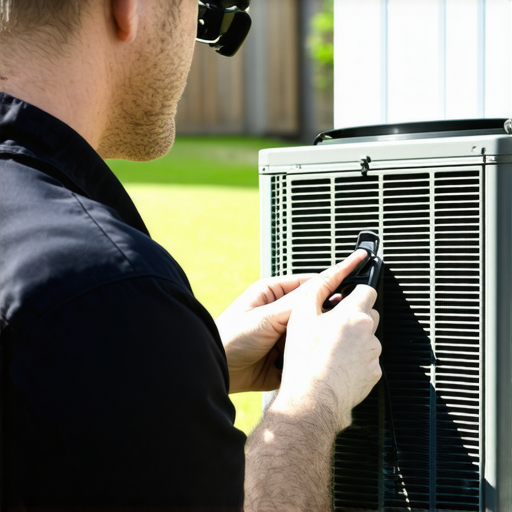

You can smell it the second you walk through the front door of a modern ‘high-efficiency’ home: that heavy, metallic, and slightly sour scent of recycled human breath and off-gassing carpet. My old mentor, a man who spent forty years in the ‘tin knocker’ trade before I even picked up a manifold gauge, used to scream at me, ‘Kid, you can’t cool what you can’t touch, and you can’t breathe what’s trapped in the walls!’ He was talking about the physics of airflow, the one thing most ‘Sales Techs’ will never understand because they’re too busy trying to push a $15,000 condenser when the real problem is a suffocating house. This is the Airflow Manifesto, and as we head into 2026, the Energy Recovery Ventilator (ERV) is no longer a luxury—it’s the lungs of your mechanical system. I’ve seen enough cracked heat exchangers and oil to gas conversion disasters to know that if you don’t control the exchange of air, physics will eventually control you.
1. The Thermodynamic Balance: Latent Heat Recovery
In the North, where we deal with school boiler maintenance and the dry, biting chill of winter, the ERV is a miracle of enthalpy. Unlike a standard HRV that just swaps heat, the ERV core allows for the transfer of moisture—what we call latent heat. When your furnace is cranking and that wood burning stove installation is drying out every molecule of moisture in the living room, a standard ventilator would just dump that humidity outside. An ERV captures it. It’s about the dew point; we want the incoming fresh air to be tempered by the outgoing stale air without mixing the two streams. This isn’t magic; it’s a desiccant-coated honeycomb doing the heavy lifting so your humidifier doesn’t have to redline all season. By managing this moisture, you prevent the ‘shrunken wood’ syndrome that kills hardwood floors and causes static shocks that could jump-start a dead truck.
“Ventilation system design shall be based on the actual expected occupant density and the floor area of the space.” – ASHRAE Standard 62.1
2. Protecting the ‘Juice’: Reducing System Load
Every time your AC kicks on, it has to fight two battles: sensible heat (the temperature you see on the thermostat) and latent heat (the humidity). If you’re bringing in raw, humid 2026 summer air through leaky gaps in your ‘Pookie-sealed’ ducts, you’re forcing your evaporator coil to work double-time. This leads to high head pressure and eventually, the dreaded compressor burnout that smells like a battery died in a dumpster fire. By pre-cooling and de-humidifying the air through an ERV, you’re taking the ‘sensible’ load off the main unit. This extends the life of your equipment significantly, a topic we cover in our guide on top HVAC repair strategies to extend your systems life. Less strain on the compressor means fewer calls for refrigerant leak detection and a much lower chance of seeing a guy like me on your roof at midnight on a Tuesday.
3. Static Pressure and the IAQ Crisis
Most homes are built so tight today they might as well be Ziploc bags. When you run an exhaust fan or a high-CFM range hood, you’re creating a negative pressure environment. In a house with a wood stove or an older boiler, that negative pressure can actually pull carbon monoxide back down the flue. We call it backdrafting, and it’s a silent killer. The ERV provides a balanced approach, ensuring that for every cubic foot of air pushed out, a cubic foot of filtered, tempered air comes in. During a preventative heating maintenance check, I always run static pressure testing to see how the house is ‘breathing.’ If your static pressure is too high because you’ve got no fresh air intake, your blower motor is going to scream like a banshee until the bearings weld themselves shut. The ERV keeps the pressure neutral, the motor happy, and the air moving.
“The most expensive equipment in the world cannot overcome a bad duct system.” – Industry Axiom
4. Mitigation of the ‘Stale Air’ Toxic Load
In 2026, we’re seeing a massive shift in how we handle indoor air quality (IAQ). With the transition to A2L refrigerants and the high efficiency required for modern heat pump solutions, we are living in a ‘sealed’ world. Volatile Organic Compounds (VOCs) from furniture, cleaning supplies, and even that pool heater repair job you had done in the basement can linger for weeks. An ERV ensures a constant ‘purge’ of these contaminants. It’s like having a window open 24/7, but without the $400 heating bill. We’re not just talking about comfort; we’re talking about the biology of the building. When I do an annual heating inspection, I’m looking at more than just the flame color; I’m looking for signs of stagnation. If you want to know more about keeping things running right, you should be choosing the best heating service experts who actually own a manometer and know how to use it. Don’t let a ‘Sales Tech’ tell you that a fancy UV light is a substitute for actual air exchange. Physics doesn’t care about marketing; it cares about CFM and enthalpy.
The Technician’s Final Word
If you’re dealing with relay services that keep failing or a hot water heater repair that seems frequent, check your mechanical room’s air supply first. Everything in your home—from the boiler to your lungs—needs fresh oxygen to operate. An ERV is the only way to get it without breaking the laws of thermodynamics. If you’re ready to stop breathing the same air you exhaled yesterday, feel free to contact us and let’s talk about a real airflow solution, not a sales pitch.