The Sound of a Choking System: Why Airflow is King in 2026
You’ve heard it before. That whistling sound coming from your return air grill, or the way your high-efficiency furnace installation seems to be screaming for air like a marathon runner through a straw. I’ve spent thirty years in the trade, crawling through attics where the temperature hits 130 degrees before noon, and I’ll tell you right now: most people treat their ductwork like a trash can, then act surprised when the heat pump fails. In 2026, with the transition to A2L refrigerants and the rising cost of equipment, you can’t afford to guess about your airflow. If your system is struggling, the local ‘sales tech’—the guy in the clean uniform who’s never actually held a multimeter—is going to try to sell you a $20,000 replacement. But is duct cleaning the answer, or just another line item on a bloated invoice? Let’s get into the physics of why your house feels like a swamp even when the AC is cranking.
The Physics Lesson: You Can’t Cool What You Can’t Touch
My old mentor used to scream at me until he was blue in the face: ‘You can’t cool what you can’t touch!’ This wasn’t just old-man rambling; it was a lesson in thermodynamics. If your air isn’t moving across that evaporator coil at the right velocity, the refrigerant (the ‘gas’ or ‘juice’ as we call it) can’t pull the latent heat out of your home. You end up with a frozen coil, a toasted compressor, and a massive repair bill. In regions where we rely on swamp cooler maintenance in the dry months and modulating furnace repair in the winter, the integrity of your ‘tin’—your ductwork—is everything. If that tin is restricted, no amount of ‘pookie’ (mastic) or silver tape is going to save your utility bill. You have to understand static pressure. It’s the blood pressure of your HVAC system. Too high, and the heart—your blower motor—gives out. This brings us to the million-dollar question: Does cleaning those ducts actually lower that pressure, or are you just vacuuming out money?
‘The most expensive equipment in the world cannot overcome a bad duct system. Proper sizing and maintenance are the prerequisites for efficiency.’ – Industry Axiom
Myth 1: Duct Cleaning Improves Airflow Efficiency Automatically
The first lie is that a dirty duct is the reason your house has hot spots. Look, dust happens. Unless you’re living in a clean-room laboratory, you’re going to have some fuzz in there. But industrial heater services and residential pros know that airflow issues are almost always a design flaw, not a dust problem. Most homes have returns that are undersized. If you haven’t had Manual J calculations performed lately, your ducts are probably too small for that new heat pump you just financed. No vacuum truck on earth is going to fix a duct that was never big enough to begin with. If you’re considering financing for heat pump installs, you better make sure the tin knocker actually measured the static pressure first. A clean, undersized duct is still an undersized duct.
Myth 2: It’s a Substitute for Real Maintenance
I’ve walked into too many homes where the owner spent $600 on a duct ‘sanitization’ but hasn’t had a hot water heater repair or a furnace check-up in five years. Duct cleaning is the icing; the mechanical system is the cake. If your gas line installation for furnaces was done poorly or your burner assembly is caked in carbon, cleaning the vents won’t stop the flame rollout that’s waiting to happen. You need to focus on preventative heating maintenance before you worry about the dust bunnies. In my thirty years, I’ve seen more systems die from neglected capacitors and filthy coils than from ‘dirty’ ducts. When a modulating furnace fails, it’s usually because the electronics are fried or the airflow is so restricted the heat exchanger cracked from thermal stress.
Myth 3: Duct Cleaning Fixes That ‘Old House Smell’
The smell of a compressor burnout is sour and acidic—it’s the smell of death for an AC. But that musty, ‘old house’ smell? That’s often latent heat issues. If your unit is oversized, it ‘short cycles.’ It turns on, blasts the house with cold air, and turns off before it can actually pull the humidity out of the air. This leaves your ducts damp. Damp ducts grow things. Cleaning them is a temporary band-aid. The real fix? Proper sizing and perhaps heat pump solutions for 2025 that include variable speed blowers that run longer cycles to dehumidify. If you have ventless gas heater services performed, you might also be dealing with moisture by-products that contribute to that ‘heavy’ air feeling. You don’t need a vacuum; you need a psychrometric analysis.
‘Total external static pressure shall not exceed the manufacturer’s rated limit for the selected airflow.’ – ACCA Manual D Standard
Myth 4: All Duct Cleaners Use Professional-Grade Equipment
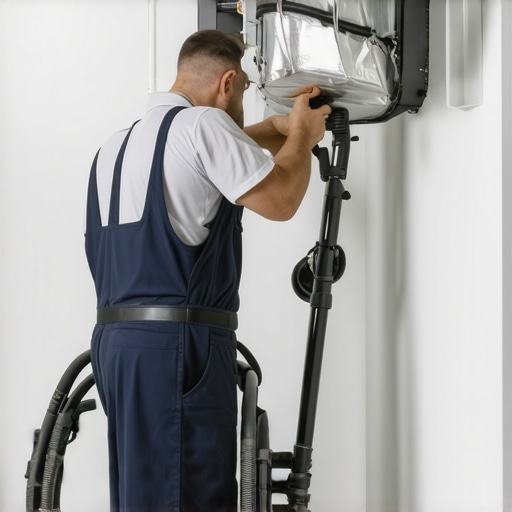
Here’s the cynical truth: any guy with a shop-vac and a magnetic sign can claim to be a duct cleaner. They’ll show you a ‘before’ picture of a dusty return and an ‘after’ picture that looks the same. Real duct cleaning requires negative pressure machines that look like something out of a sci-fi movie. If they aren’t sealing off your registers and creating a vacuum in the entire trunk line, they’re just putting on a show. It’s better to invest that money into top hvac repair strategies like cleaning the actual evaporator coil. That’s where the heat transfer happens. A dirty coil is a 20% hit to your efficiency. A dirty duct? Maybe 1%. Do the math. If you’re looking for high-efficiency furnace installation, prioritize the mechanical integrity over the cosmetic cleanliness of the sheet metal.
The Reality of 2026: Efficiency and Airflow
As we move deeper into 2026, the cost of ‘gas’ (refrigerant) is only going up. We are seeing a move toward more sensitive equipment that requires precision. If you’re dealing with industrial heater services or even just a home split system, the margin for error is gone. You need a tech who understands Manual J calculations to ensure your system isn’t fighting your house. If you have a room that’s always five degrees hotter than the rest, it’s not because the duct is dirty—it’s because the static pressure is wrong or the duct run is too long with too many 90-degree elbows. Before you sign a contract for duct cleaning, ask for a static pressure test. If the ‘tech’ doesn’t know what a manometer is, show him the door. For those in dry climates, don’t forget your swamp cooler maintenance; a dry pad is as useless as a clogged filter. And if you’re upgrading, check out choosing the best heating service to find a tin knocker who actually knows his craft. Don’t be the person who buys a Ferrari and puts bicycle tires on it. Your HVAC unit is the engine; your ducts are the tires. Make sure they can handle the speed. If you have questions about your specific setup, you can always contact us for a real diagnosis, not a sales pitch. Comfort isn’t magic; it’s physics. And physics doesn’t care about your marketing brochures.
This article hits the nail on the head about the importance of airflow and system design over simple duct cleaning. I’ve personally seen homes where duct cleaning was touted as the main fix, but the real problem was undersized returns or long duct runs filled with elbows. It’s a reminder that proper sizing and static pressure testing are critical steps before investing in any cleaning or repairs. From my experience managing HVAC systems in dry climates, I can say that moisture control and correct system sizing often make more difference in comfort than just clean ducts. Have others noticed a significant difference after addressing static pressure issues directly? I’d love to hear some success stories or other ideas on improving airflow without unnecessary expenses.