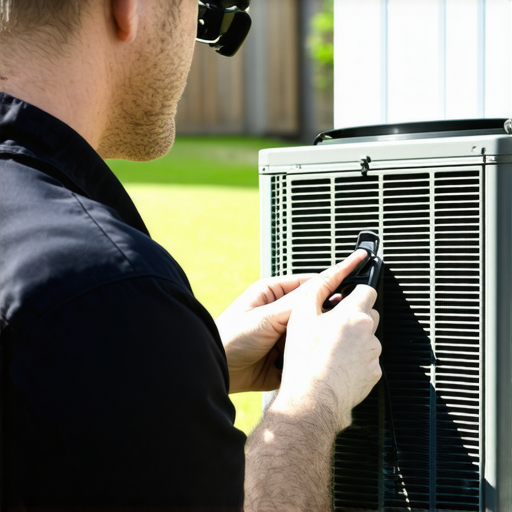
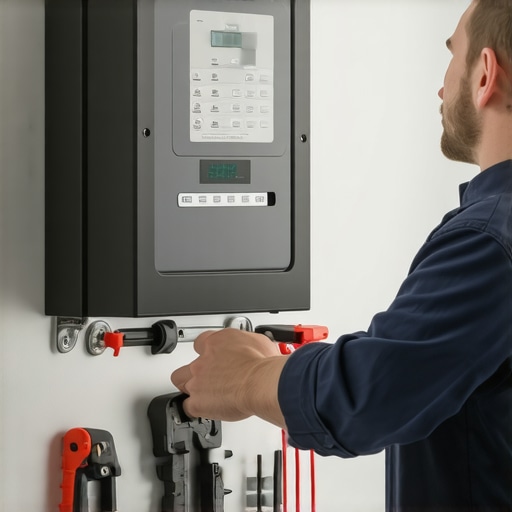
The Sound of a Silent Furnace in a Polar Vortex
It’s 3 AM in mid-January, the wind is howling off the Great Lakes like a banshee, and you wake up not to the comforting thrum of your furnace, but to a silence so heavy it feels physical. You check the thermostat; it’s calling for heat, but the registers are blowing nothing but graveyard air. As a tech who has spent three decades dragging my manifold gauges through crawlspaces and over frozen rooftops, I can tell you that in 2026, the culprit is rarely the ‘gas’ or a simple dirty filter. More often than not, the brain of the operation—the Integrated Furnace Control (IFC) board—has decided to go on strike. This isn’t just a box of wires; it’s a complex microprocessor managing everything from variable speed furnace services to the safety interlocks of your dual fuel heat pump systems.
The Physics of the Controlled Explosion
My old mentor, a man who had more silver in his hair than a brazing rod, used to grab me by the collar and scream, ‘You can’t heat what you can’t touch, and you can’t touch anything if the brain is dead!’ He was obsessed with the idea that HVAC isn’t about magic; it’s about the laws of thermodynamics and the movement of electrons. This is why airflow matters more than raw horsepower. If your control board isn’t sensing the right pressure or temperature, it shuts down the party to prevent your house from becoming a statistic. We are dealing with gas furnace repair where the margin for error is measured in microns and millivolts. When you look at hydronic heating systems or complex boiler repair services, the logic remains the same: the board is the gatekeeper of energy transfer.
“The most expensive equipment in the world cannot overcome a bad duct system, nor can it bypass the safety protocols of a properly calibrated control board.” – Industry Axiom
The Forensic Diagnosis: Anatomy of a Dead Heater
Before you call out a ‘Sales Tech’ who’s going to try and pivot you into a $15,000 replacement because ‘the parts aren’t made anymore,’ you need to perform a forensic audit of that control board. In the 2026 landscape, we are dealing with the R-454B refrigerant transition services, which means even your heating system might have sensors for ‘mildly flammable’ refrigerants if you’re running a hybrid setup. Here are the three diagnostic fixes that separate the pros from the parts-changers.
1. The LED Blink Code (The Machine’s S.O.S.)
Most modern boards have a small heartbeat—a red or green LED that flashes through a sight glass on the blower door. Don’t just look at it; count the pulses. In the world of industrial heater services, these codes are the map to the treasure. A ‘3-flash’ might mean a pressure switch failed to close, while a ‘1-flash’ could indicate a lockout due to failed ignition. This is the board telling you exactly which organ is failing. If you see a code for ‘Limit Switch Open,’ your furnace is overheating because a tin knocker somewhere didn’t size the return air drop correctly, or you’ve got a blocked heat exchanger. If you’re struggling to understand the nuances of these signals, it might be time to check out top HVAC repair strategies to extend your systems life.
2. The Ghost Voltage and Continuity Check
Grab your multimeter. We aren’t just looking for 120V at the main power; we are looking for the 24V transformer output that powers the logic. A common failure point I see involves ‘ghost voltage’—where a multimeter shows potential, but the board can’t carry a load. I’ve seen sparkies wire up a system where the ground wasn’t true, causing the flame sensor to fail because it couldn’t complete the rectification circuit back to the board. In variable speed furnace services, the board uses Pulse Width Modulation (PWM) to control the blower. If you don’t see a signal on those low-voltage lines, the board is fried, or a safety sensor is holding it hostage. This is particularly critical in biomass boiler services or wood burning stove installation where secondary blowers are integrated into the main control logic.
3. The A2L Sensor & Dual Fuel Interlock Audit
As we move deeper into 2026, the R-454B refrigerant transition services have introduced new complexities. If you have a dual fuel heat pump system, your furnace control board is now talking to refrigerant leak sensors. If that sensor detects a leak in the evaporator coil (which sits right on top of your furnace), it will lock out the furnace to prevent any ignition source from meeting the refrigerant. It’s a safety feature that can feel like a bug when you’re freezing. You need to verify that the board isn’t receiving a ‘False Positive’ from an uncalibrated A2L sensor. This is the new frontier of gas furnace repair. If your system is old and lacks these modern protections, you should be choosing the best heating service expert tips for 2025 to upgrade safely.
“Ventilation systems shall be designed to provide the required outdoor air-flow rates… to ensure the safety and health of occupants while maintaining thermal equilibrium.” – ASHRAE Standard 62.1
Thermodynamic Zooming: Why Boards Fail
Why do these boards die? It’s usually heat or vibration. In a demand-controlled ventilation setup, the board is constantly switching relays to adjust for CO2 levels. That mechanical wear and tear adds up. Furthermore, if your system wasn’t installed with ‘Pookie’ (mastic) sealing the joints, vibrations from the blower can cause micro-cracks in the solder joints of the IFC. I’ve spent years fixing systems where a tin knocker left a gap that let attic dust into the control cabinet, coating the board in an insulating layer of grime that caused the resistors to cook. This is why preventative heating maintenance is the only way to avoid the ‘July 4th Panic’ version of a winter freeze.
The Repair vs. Replace Math
If you find a scorched spot on the back of the board, it’s done. A new board might run you $300 to $800 depending on if it’s a proprietary communicating model for variable speed furnace services. If your furnace is over 15 years old and you’re already looking at a cracked heat exchanger or a failing inducer motor, don’t throw good money after bad. In 2026, the incentives for heat pump solutions for efficient home comfort are too high to ignore. If you’re running a hydronic heating system or a boiler, a board swap is usually a no-brainer, but for gas furnaces, always weigh the AFUE rating of a new unit against the patch-job of an old one. If you’re unsure, you can always contact us for a second opinion that isn’t just a sales pitch.
Closing the Circuit
HVAC isn’t about luck; it’s about physics. Whether you are dealing with industrial heater services or a small dual fuel heat pump system, the control board is the conductor of the orchestra. If the music stops, don’t just start replacing parts. Trace the sequence of operation. Check your voltages. Understand the ‘why’ behind the ‘what.’ And for the love of all that is holy, make sure your filters are clean and your ‘pookie’ is dry. Airflow is king, and the board is its crown. If you want more details on keeping your system running, read about heat pump solutions for 2025 and beyond.