The Airflow Manifesto: Why Your Warehouse Is Bleeding Cash
My old mentor, a guy we called ‘Old Man Bernoulli’ because he spent more time looking at manometers than his own kids, used to slap the side of a galvanized return drop and yell, ‘If you can’t feel the static, you’re just blowing whistles in the wind!’ He taught me that a 50,000-square-foot warehouse doesn’t care about your fancy Wi-Fi thermostat; it cares about the mass of air moving across the heat exchanger. We aren’t just ‘heating’ a building; we are managing a massive thermodynamic exchange where every cubic foot of air is a liability if it isn’t handled with precision. When you see a warehouse manager crying over a $10,000 gas bill in January, it’s usually because they ignored the physics of stratification and the mechanical health of their plant. In 30 years of crawling through ductwork, I’ve seen it all, and 2026 is going to be the year that punishes those who don’t understand the ‘Regulatory Cliff’ we are currently standing on.
1. The A2L Transition and the End of Cheap ‘Gas’
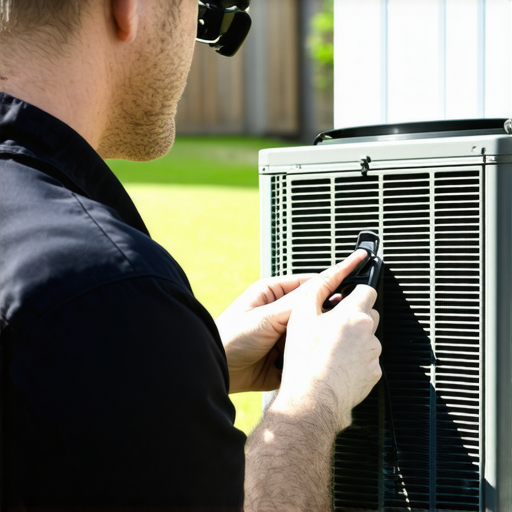
We are entering the era of the A2L transition. By 2026, the old R-410A units—what we call the ‘Juice’—will be relics of a more expensive past. The new mildly flammable refrigerants like R-454B are requiring us to install sensors and specialized equipment that the average ‘Sales Tech’ can’t even spell. If you are operating a warehouse with aging rooftop units (RTUs), you are likely dealing with high head pressure and inefficient heat transfer. The ‘Sparky’ on your maintenance crew might be able to swap a fuse, but he isn’t checking the subcooling or the superheat to ensure that compressor isn’t slugging liquid. Upgrading to Energy Star heating certification standards isn’t just about a sticker; it’s about the physics of sensible heat. A unit that is short-cycling because it’s oversized for the duct static will kill your utility budget faster than a broken water main. This is where choosing the best heating service expert becomes a survival strategy rather than a luxury.
“The design of the duct system shall be such that the pressure drop through the ducts does not exceed the external static pressure available from the blower.” – ACCA Manual D
2. Energy Recovery Ventilators (ERV): Stopping the Latent Heat Leak
In a warehouse environment, especially those with high ceiling heights, you have a massive problem with stratification. All that heat you paid for is sitting 30 feet up in the air while your pickers are freezing on the floor. Worse, if you’re exhausting air without recovery, you’re literally throwing money out the roof. Energy recovery ventilators (ERVs) are the unsung heroes of industrial HVAC. They use a desiccant wheel or a plate heat exchanger to transfer the thermal energy from the exhaust air to the incoming fresh air. This is ‘Thermodynamic Zooming’ at its finest: we are capturing the enthalpy of the outgoing air stream. If you aren’t using ERVs, your furnace is working 30% harder than it needs to. You’re essentially trying to heat a sieve. When we perform preventative heating maintenance, we check the integrity of these recovery wheels. If they’re clogged with warehouse dust, they aren’t exchanging anything; they’re just expensive obstructions.
3. The Draft Inducer Motor: The Heart of AFUE Efficiency
When a warehouse furnace starts to scream like a banshee, it’s usually the draft inducer motor bearings giving up the ghost. This motor is responsible for pulling the combustion gases through the heat exchanger and pushing them out the flue. If that motor is failing, your combustion efficiency drops into the gutter. We see a lot of draft inducer motor repair calls where the previous tech just ‘lubricated’ it and left. That’s a band-aid on a gunshot wound. A failing inducer affects the pressure switch, which leads to intermittent ignition failures. You end up with a ‘Tin Knocker’ like me having to replace the whole assembly because the high-heat environment of a warehouse furnace cooks the windings. By 2026, utility companies are going to be monitoring peak demand loads more aggressively. A struggling motor draws more amps, and over thousands of square feet, those amps add up to thousands of dollars. Regular top HVAC repair strategies must include checking the amp draw on these inducer motors before they seize in the middle of a polar vortex.
4. Managing the Flame: Thermocouples, Pilots, and Capacitors
I despise Sales Techs who walk into a warehouse, see a standing pilot light on an old unit, and immediately quote a $50,000 replacement. Sometimes, all that’s standing between a cold warehouse and a warm one is a $30 thermocouple or a dirty pilot orifice. Pilot light relighting and thermocouple replacement are ‘old school’ skills that are disappearing. But don’t get me wrong—old equipment is a gas-hog. However, if your budget is tight for 2026, keeping your existing units in peak condition via heat pump solutions or traditional furnace tune-up services is vital. We also look at capacitor replacement services. A capacitor is like a battery for your motor’s start-up; it gives it the ‘kick’ it needs to get spinning. If that capacitor is out of spec—even by 5%—it makes the motor run hotter and less efficiently. In a warehouse with 20 RTUs, having 20 weak capacitors is like driving your truck with the parking brake partially engaged.
“Effective ventilation in high-occupancy or industrial spaces requires a balance between exhaust rates and makeup air to prevent negative pressure zones.” – ASHRAE Standard 62.1
5. The Kitchen/Warehouse Hybrid Challenge
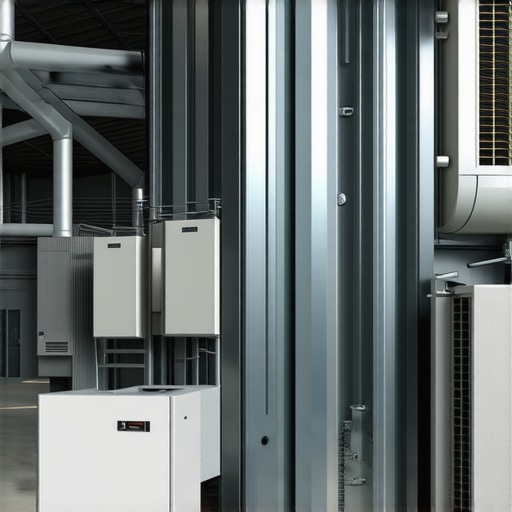
If your warehouse facility includes a cafeteria or breakroom with commercial cooking, you have a unique nightmare: restaurant kitchen exhaust repair. These systems pull massive amounts of air out of the building. If your makeup air unit (MAU) isn’t synchronized with your warehouse heating, you create a negative pressure zone. This ‘sucks’ the cold air in through every crack in the loading dock doors. You’ll see the furnace flame rollout or pilot lights blowing out because of the draft. It’s all physics. You can’t take air out without putting it back in. We often integrate fireplace insert services for office areas or specialized zones to provide localized ‘sensible’ heat without over-taxing the main plant. But the real fix is ensuring your preventative maintenance contracts cover the synchronization of your exhaust fans and your heating stages. If they aren’t talking to each other, you’re just burning ‘gas’ to heat the parking lot. [IMAGE_PLACEHOLDER]
The Bottom Line on 2026 Utility Costs
The days of ‘set it and forget it’ warehouse management are over. With the 2026 utility mandates and the shift in refrigerant chemistry, you need a technician who understands the ‘Suction Line’ (it should be beer can cold in summer, but we’re talking heating now) and the heat of compression. You need someone who isn’t afraid of ‘Pookie’ (mastic) to seal up those leaking duct joints. Airflow is the only king in this industry. If you want to slash costs, stop looking at the thermostat and start looking at the static pressure. For a deep dive into your specific facility needs, you should contact us before the winter rush hits and the prices for A2L-compliant components skyrocket. Maintenance isn’t an expense; it’s the only way to keep your ‘tin’ from turning into a pile of rust.