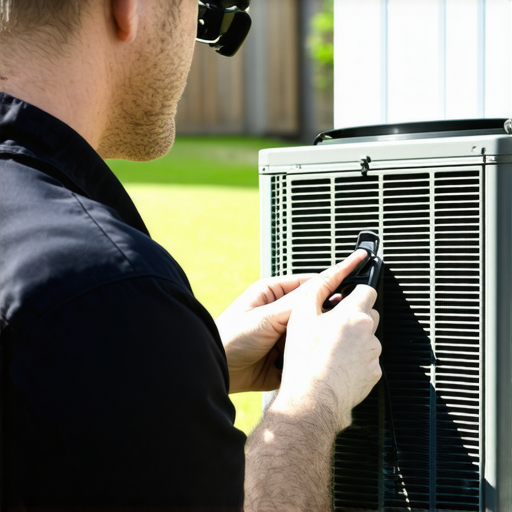
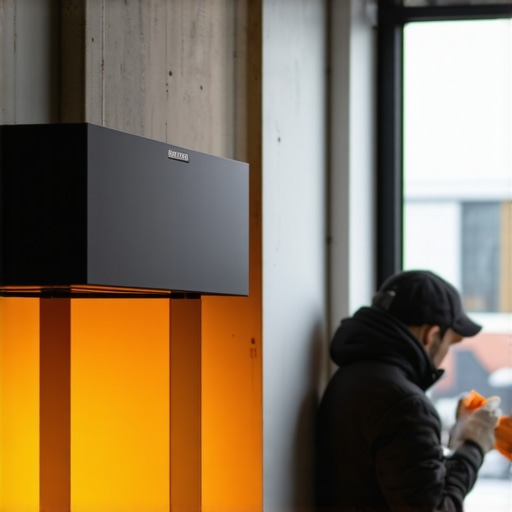
I remember my old mentor, a man who had more soot in his lungs than a 1970s coal boiler, screaming at me in the middle of a blizzard. I was trying to figure out why a 200,000 BTU forced-air unit couldn’t keep a three-bay garage above forty degrees. He grabbed my manifold gauges and pointed at the rafters where all that expensive heat was hovering, useless as a screen door on a submarine. ‘You can’t heat what you can’t touch!’ he yelled. That was my first real lesson in the physics of shop heating. In a high-ceiling environment, air is your enemy. It’s a fluid that wants to escape through every crack in the bay doors. To fix a frozen shop for the 2026 season, you don’t need more ‘hot air’; you need electromagnetic radiation. You need infrared.
The Thermodynamic Reality of Shop Heating
In the North and Northeast, we deal with the ‘Cold Slab Syndrome.’ You can run a furnace until the heat exchanger cracks, but if that concrete floor stays at 35 degrees, the mechanics working on those trucks are going to be miserable. Infrared heaters don’t waste time trying to warm up thousands of cubic feet of air. Instead, they operate like the sun, sending waves of energy that vibrate the molecules of the objects they hit—the floor, the tools, the technicians. This is where sensible heat meets the reality of shop life.
“Radiant heating systems shall be designed and installed in accordance with the manufacturer’s instructions and the International Mechanical Code to ensure proper clearance to combustibles.” – ASHRAE Standards
When we talk about Infrared Heater Installation, we aren’t just hanging a pipe and calling it a day. We are engineering a comfort zone. If you’re seeing ice on the inside of your flue or the unit is ‘chugging’ like an old diesel, you’ve got a combustion or airflow problem that no amount of ‘gas’ can fix.
Fix 1: The Flue Pipe Installation & Combustion Air
One of the biggest mistakes I see a ‘tin knocker’ make is failing to account for the static pressure in a shop environment. When you have large exhaust fans running for paint booths or welding stations, the shop goes under negative pressure. This can cause a backdraft in your flue pipe installation, pulling carbon monoxide right back into the workspace. For 2026, we are seeing more stringent requirements for sealed combustion. This means the heater pulls its oxygen from outside, not from the shop air that’s likely contaminated with brake cleaner or sawdust. If your flue isn’t pitched correctly, the acidic condensate will eat through the metal in two seasons. I’ve seen heat exchangers that looked like Swiss cheese because some ‘Sales Tech’ forgot that physics doesn’t care about his commission.
Fix 2: Managing the Ignition & Heat Exchange
Every year, I get called to shops where the heater ‘clicks’ but never catches. Usually, it’s a furnace ignition repair issue or a dirty flame sensor. In an infrared tube heater, the burner fires down a long steel tube. That tube is your heat exchanger. If that tube is coated in shop dust or oily residue, your heat transfer efficiency drops through the floor. A proper preventative maintenance schedule includes heat exchanger cleaning to ensure that the thermal emissivity of the tube remains high. If the tube can’t get rid of the heat, the high-limit switch will trip, leaving you in the dark and the cold.
Fix 3: Electrical Stability & Capacitor Health
Don’t let the ‘Sparky’ tell you that shop heaters are simple. These units rely on inducer motors to pull the flame through the tube. If your inducer has a weak start, check the guts. We provide capacitor replacement services for these motors because, in unconditioned shop spaces, the extreme temperature swings from 10°F to 90°F cook the dielectric fluid inside those cans. A failing capacitor leads to a slow-spinning motor, which leads to poor combustion, which leads to a sour-smelling shop and a soot-clogged burner. If you hear a hum but no roar, you’ve likely got a dead capacitor or a seized bearing.
“Proper venting of gas-fired infrared heaters is critical to prevent the accumulation of products of combustion, which can lead to hazardous conditions for occupants.” – NFPA 54 / National Fuel Gas Code
Fix 4: Integrating Advanced Climate Tech
For multi-bay facilities or multi-family heating upgrades where a shop is part of the complex, we’re now looking at cold climate heat pumps for the office areas and infrared for the floors. But in the shop itself, if you want to keep the air fresh without losing all your heat, you need heat recovery ventilators (HRVs). These units swap the stale shop air for fresh outdoor air while ‘stealing’ the heat from the outgoing stream. If you’re dealing with wood shops or sensitive electronics, we might even install steam humidifiers to prevent the air from becoming a static-electricity nightmare. Even a pool heater repair specialist knows that managing water and air temperature is a balancing act; a shop is no different.
Why You Should Avoid the ‘Quick Fix’
I followed a guy last week who told a shop owner he needed a whole new $12,000 radiant system because his ‘computer board was fried.’ I walked in, saw the flame sensor was just caked in drywall dust, cleaned it with a piece of Scotch-Brite, and the unit fired right up. That’s the difference between a technician and a salesman. Whether you’re looking for choosing the best heating service or just trying to survive the next polar vortex, remember that airflow is king. If you don’t have enough ‘pookie’ (mastic) on your joints and your furnace tune-up services don’t include a full combustion analysis, you’re just burning money to stay lukewarm.
If your shop is still an icebox, it’s time to stop guessing. We handle everything from flue pipe installation to complex cold climate heat pumps. Don’t wait until the ‘gas’ stops flowing and your pipes freeze. You can contact us today to get a real diagnostic on your system. Comfort isn’t a luxury in a shop; it’s a safety requirement. Keep your floor warm, your air clean, and your equipment serviced by people who actually know which way the molecules are moving.
Reading this post really resonated with my experience in shop heating. Infrared heaters are a game-changer, especially when addressing those cold slab problems that traditional forced-air systems just can’t solve efficiently. I vividly recall a project where upgrading to infrared significantly improved both comfort and productivity in a high-ceiling garage. The point about static pressure and negative shop pressure is crucial; I’ve seen many installations falter because of neglecting airflow dynamics—something as simple as proper flue pitch can save a lot of headaches down the line. Also, I appreciate the emphasis on maintenance, like cleaning the heat exchanger tubes and inspecting capacitors regularly. It’s easy to overlook those small details but they play a huge role in system longevity and safety. Has anyone here integrated heat recovery ventilators with infrared heating? I’m curious how others balance air quality and heat retention in larger shops, especially in extreme climates. Overall, investing in proper design and maintenance definitely pays off when it comes to reliable, efficient shop heating.
This article hits home for me. I’ve seen firsthand how improper flue pipe installation leads to dangerous backdrafts, especially in shops with large exhaust fans. Sealed combustion and correct pitch are critical, but I think many technicians underestimate the importance of airflow management in high-ceiling environments. Infrared heaters are indeed a game-changer, especially for the cold slab syndrome. I recently worked on a shop where simply cleaning the flame sensor and ensuring proper heat exchanger maintenance restored efficiency remarkably. It makes me wonder, how many shop owners are aware of the significance of combustion air management and proper system integration? Installing heat recovery ventilators (HRVs) has made a real difference in balancing air quality with heat retention in complex setups. I’d love to hear how others have tackled these challenges, particularly in conversions or upgrades of existing systems. It’s clear that meticulous attention to detail in every stage—from installation to routine maintenance—can prevent expensive failures and improve safety and comfort in our workspaces.