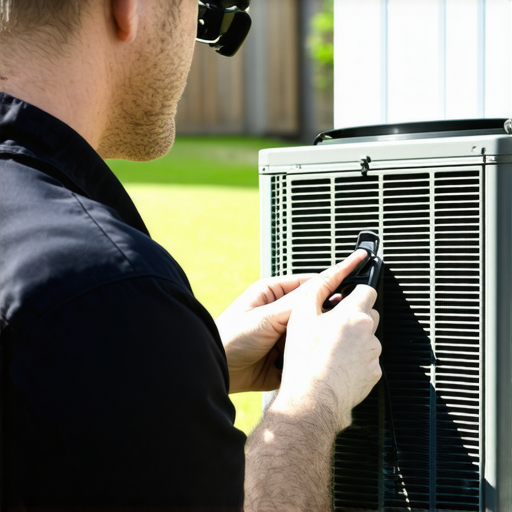

The Rural Heating Crisis: Why Your Wallet is Leaking BTUs
If you live out where the pavement ends and the gravel begins, you know the drill. You’re either burning wood like a 19th-century pioneer, paying a king’s ransom for heating oil, or watching your electric meter spin like a top because some ‘Sales Tech’ sold you a standard heat pump that chokes the moment the mercury dips below thirty. I’ve spent thirty years in crawlspaces and on frozen roofs, and I’m telling you: 2026 is the year the music stops for inefficient rural heating. With the regulatory shift toward A2L refrigerants and the skyrocketing cost of legacy fuels, propane conversion isn’t just an option; it’s a survival strategy. But don’t just call a tin knocker and tell him to throw a box in your basement. You need a plan that respects the laws of thermodynamics.
“The most expensive equipment in the world cannot overcome a bad duct system.” – Industry Axiom
My old mentor, a guy who could smell a cracked heat exchanger from the driveway, used to scream at me, ‘You can’t cool what you can’t touch, and you can’t heat what you can’t control!’ He’d stand over a 1970s cast-iron beast and point at the soot. ‘That’s money turning into ghosts,’ he’d say. He was right. Most rural systems are oversized, poorly vented, and bleeding energy through ‘Pookie’-less ductwork. Propane offers a high-energy density that electricity just can’t match when the Polar Vortex hits, but if your HVAC load calculation services aren’t spot on, you’re just trading one expensive headache for another.
Tactic 1: The Dual-Fuel Hybrid (Hyper-Heat Meets the Gas)
The biggest mistake I see in the North is the ‘all-or-nothing’ approach. In 2026, the smart money is on hyper-heat heat pumps paired with a propane furnace backup. Think of it like a hybrid car. When it’s 40°F outside, the heat pump pulls heat out of the thin air with surgical precision. But when that Chicago wind starts howling and the temperature drops to -10°F, the heat pump’s COP (Coefficient of Performance) tanks. That’s when the ‘brain’ of the system—the thermostat—tells the heat pump to take a nap and fires up the propane burners. This requires specialized preventative heating maintenance to ensure the transition is liquid-smooth.
When we talk about ‘Hyper-Heat,’ we’re talking about vapor injection technology that keeps the ‘juice’ (refrigerant) moving even when it’s bitter cold. But propane is your insurance policy. Propane burns at a much higher temperature than the air coming off a heat pump coil. We’re talking ‘toast-your-toes’ heat. If you’re looking at heat pump solutions for efficient home comfort in 2025 and beyond, you have to look at how the ‘Sparky’ (electrician) is going to wire that dual-fuel kit. One wrong wire on the reversing valve and you’ll be blowing AC in the middle of a blizzard.
Tactic 2: Thermodynamic Zoning and Radiant Integration
If you have a boiler, you’re sitting on a goldmine of comfort, but you’re probably wasting it. Most rural boilers are inefficient hulks. Switching to a high-efficiency propane modulating-condensing boiler is a game-changer. This isn’t just about choosing the best heating service; it’s about physics. Water carries 3,500 times more heat than air. By utilizing radiant floor heating installation, you’re putting the heat at your feet, not at the ceiling. In a school boiler maintenance setting or a large rural home, the savings are astronomical because you aren’t heating the ‘dead air’ in the top three feet of the room.
I’ve seen guys try to skip the HVAC load calculation and just ‘size it by eye.’ That’s how you end up with a boiler that short-cycles. Short-cycling is the silent killer of equipment. It’s like drag racing your truck from stoplight to stoplight; you’ll burn out the ignition and the pump in half the time. Propane allows for precise modulation, meaning the flame can turn down to a flicker just to maintain the ‘sensible heat’ of the floor slabs without wasting a drop of gas.
“Standard practice for residential load calculation must account for the specific thermal envelope of the structure, including the infiltration rates of rural exposures.” – ACCA Manual J
Tactic 3: The ‘Regulatory Cliff’ and Furnace Ignition Repair
We are approaching a massive shift in 2026. The EPA is cracking down on high-GWP (Global Warming Potential) refrigerants. This is why buying a cheap R-410A system right now is like buying a VCR in 2005. The ‘gas’ (refrigerant) is going to become insanely expensive. Propane furnaces don’t have this problem. They are simple, mechanical, and when properly maintained with an annual heating inspection, they’ll last 20 years. The most common fail point? The igniter. Modern furnace ignition repair is usually a 20-minute job, but if you haven’t upgraded your thermostat wiring, the board might not even be sending the signal.
In dry climates or during the dead of winter, you also have to worry about the heat exchanger. Propane burns clean, but if your combustion air isn’t dialed in, you’ll get soot buildup that acts like an insulator—and not the good kind. It keeps the heat inside the metal instead of letting it transfer to your air. That’s how heat exchangers crack, and that’s how ‘The Silent Killer’ (Carbon Monoxide) gets into your vents. Never skip the combustion analysis during your service call.
The Reality of Rural Airflow
I can’t say it enough: Airflow is king. You can have the fanciest propane-fired hyper-heat system in the county, but if your return air ducts are undersized, the system will ‘hunt’ for air, overheat, and trip the high-limit switch. I’ve gone into homes where the owner complained the new system ‘didn’t work,’ only to find they’d used duct tape instead of Pookie on the plenums. You’re losing 30% of your heat to the attic. In rural settings, mice love to chew through flex duct, turning your expensive propane heat into a heater for the squirrels in your crawlspace. This is why a real tech—not a sales guy—looks at the static pressure first.
If you’re still running an evaporative cooler for the summer, 2026 is the time to consider how that ties into your heating. Those roof-mounted ‘swamp coolers’ are notorious for leaking cold air into the house during the winter through poorly sealed dampers. If we’re doing a propane conversion, we seal those up tight. It’s all part of the ‘Envelope’ strategy. You have to treat the house like a pressurized vessel.
The Bottom Line: Don’t Get Scammed
The ‘Sales Techs’ are going to try to push ‘all-electric’ because it’s a bigger commission. But for rural properties where the grid is flaky and the winters are long, propane is the high-latent-heat hero you need. It’s about reliability. When the power goes out, a small generator can run a propane furnace; it can’t run a 5-ton electric heat strip bank. That’s the difference between a cozy night by the fire and a frozen pipe disaster that leads to a $20,000 steam boiler repair bill. Plan your 2026 upgrades now, focus on the load calcs, and for heaven’s sake, make sure your tech uses Mastic on the joints. “
This article hits on so many crucial points about rural heating that often get overlooked. My own experience switching to a propane boiler was a game changer—more reliable, especially during those brutally cold winters. One thing I’ve noticed is that many homeowners underestimate the importance of proper airflow and duct sealing. I learned that the hard way after experiencing short cycling in my old system. Sealing my ducts with Mastic and ensuring ample return air made a huge difference. The section about vapor injection technology really caught my eye; it’s fascinating how hyper-heat heat pumps can operate efficiently down to extremely low temps when paired correctly. Have others here tried combining these systems with smart zones or radiant floors? I’d love to hear how you’ve managed the controls and wiring to avoid system faults. Planning ahead before the 2026 regulations roll in seems wise, and I believe a well-thought-out hybrid approach is the best insurance for long-term comfort and savings.