The Invisible Thief in Your Attic: Why Horsepower Can’t Save You
You can spend $15,000 on the most sophisticated 20-SEER variable-speed heat pump on the market, but if your attic is a sieve, you’re just throwing money into the wind. I’ve spent thirty years crawling through blown-in fiberglass that tastes like pink sand and sweating through uniforms in 130-degree crawlspaces, and I’ve seen it a thousand times: homeowners blaming their furnace or heat pump when the real culprit is sitting right above their heads. My old mentor used to scream at me, ‘You can’t cool or heat what you can’t touch!’ This is the foundational law of thermodynamics that every ‘Sales Tech’ in a clean uniform ignores while they try to push a 5-ton unit into a 3-ton duct system. Airflow is king, and in the North/Cold climate zones where the winter wind howls like a banshee, your attic insulation and air sealing are the only things standing between comfort and a utility bill that looks like a mortgage payment. We’re going to talk about real fixes, not the fluff you see in glossy brochures. We’re talking about the physics of the ‘Stack Effect’ and why your bypass humidifier repair won’t mean a lick if your ceiling is leaking like a colander.
“The most expensive equipment in the world cannot overcome a bad duct system or a thermal envelope that lacks integrity.” – Industry Axiom
The Science of the Stack Effect: Why Your Heat Is Escaping
In regions like Chicago or the Northeast, we deal with sensible heat loss on a massive scale. The ‘Stack Effect’ is simple physics: warm air is less dense than cold air. As your furnace or heat pump works to warm your living space, that air naturally wants to rise. If your attic isn’t sealed, that air finds every wire penetration, every recessed light fixture, and every plumbing stack, escaping into the attic. This creates a vacuum in your lower levels, sucking in freezing outside air through your rim joists and windows. You aren’t just losing heat; you’re creating a mechanical imbalance. When I see a customer complaining about a limit switch replacement every two years, I usually find that their furnace is overworking to compensate for a house that refuses to hold its ‘charge.’ This constant cycling wears out the components faster than a ‘Sparky’ can wire a new sub-panel. If you’re looking for top HVAC repair strategies to extend your systems life, the first step isn’t under the hood of the furnace—it’s in the attic.
Fix 1: Stop the ‘Chimney’ with Pookie and Mastic
The biggest mistake ‘Tin Knockers’ and DIYers make is thinking that pink fiberglass batts stop air. They don’t. Fiberglass is a filter; it stops dust, not air. To truly cut those 2026 heating bills, you must perform air sealing before adding a single inch of insulation. I’m talking about getting down in the dust with a bucket of ‘Pookie’ (mastic) and cans of fire-rated expanding foam. You need to seal the top plates of every wall. When we talk about smart building management, we often think of thermostats, but the smartest management is a sealed thermal envelope. If you’re planning a heat pump replacement for the upcoming season, your contractor better be looking at your attic’s static pressure. If they don’t mention air sealing, they’re just a parts changer, not a technician.
Fix 2: The R-Value Myth and the Joist Cavity Trap
By 2026, energy codes are going to get even tighter. Most older homes have maybe R-19 or R-30 insulation. In cold climates, you need to be pushing R-60. But here’s the kicker: if you have a wood burning stove installation or a pellet stove repair on your list because your main system can’t keep up, it’s usually because of thermal bridging. The wooden joists in your attic have a lower R-value than the insulation around them. Heat ‘bridges’ through the wood and escapes. You need to blow in cellulose or fiberglass over the top of the joists to create a continuous thermal blanket. This prevents those cold spots on your ceiling that eventually lead to ghosting and moisture issues. If you have ventless gas heater services performed because one room is always freezing, check the R-value above that room first. Chances are, the wind has shifted the insulation, leaving the drywall bare to the elements.
Fix 3: Ductwork Encapsulation and Bypass Humidifier Optimization
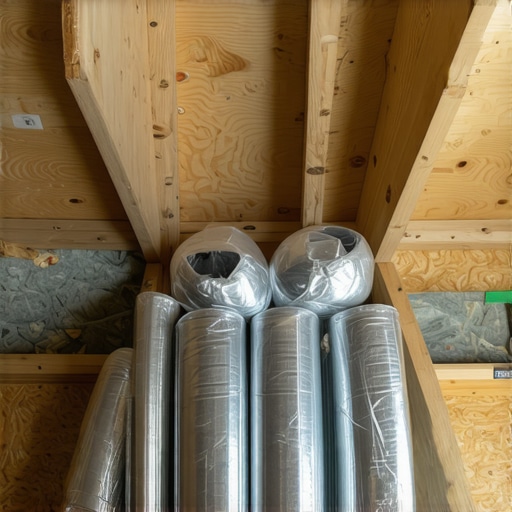
If your ductwork is running through an unconditioned attic, you are losing 20-30% of your system’s capacity before the air even hits the register. That ‘suction line’ might be ‘beer can cold’ in the summer, but in the winter, those ducts are freezing. You need to insulate those ducts to at least R-8, but more importantly, they must be sealed air-tight. This is also where bypass humidifier repair becomes critical. In the dry winter months, low humidity makes the air feel colder than it is (latent heat loss from your skin). If your humidifier isn’t drawing correctly because of poor duct pressure, you’ll crank the thermostat higher, wasting ‘gas’ or electricity. We see this often in priority service memberships; a tech finds a failed motor, but the root cause was a system struggling against the physics of a freezing attic. For more on this, check out our guide on preventative heating maintenance for 2025.
“Airflow is the lifeblood of the thermodynamic cycle; ignore it, and the cycle fails.” – ASHRAE Standards
The Financial Reality: Rebates and Long-Term ROI
The government is practically begging you to fix this. Between the Inflation Reduction Act and local utility programs, rebate application assistance is a service we provide more than ever. You can get thousands back for insulation and heat pump replacement, but you have to play by their rules. Even a pool heater repair or specialized pellet stove repair can sometimes fall under local energy efficiency credits if you know where to look. When you choose an expert, you aren’t just paying for labor; you’re paying for the knowledge of how to navigate these 2026 mandates. Don’t be the person who spends $800 on a limit switch replacement and a new inducer motor because the furnace was suffocating in a house that couldn’t breathe. Invest in the envelope, optimize the airflow, and treat your HVAC system like the precision instrument it is, not a magical box that makes heat out of thin air. If you’re ready to stop the bleeding, visit our contact page to schedule a real forensic diagnosis of your home’s performance. For those still deciding on the right path, reading about choosing the best heating service expert will save you from the sales-tech scam artists. Physics doesn’t lie, even when the salesman does.
Reading this post really opened my eyes to how overlooked attic sealing is when it comes to energy efficiency. I used to think that simply upgrading to a high-efficiency heat pump would solve my heating problems, but after inspecting my attic, I realized there were many gaps and poorly sealed wiring penetrations. Sealing those leaks with mastic made a noticeable difference in indoor comfort and my utility bills. It’s fascinating how much heat can escape through the attic without proper insulation and air sealing. Has anyone here combined attic sealing with deep insulation upgrades, like R-60, and seen a measurable return on investment in the long run? I’d love to hear personal stories or tips, especially about dealing with stubborn thermal bridging or reaching the recommended insulation levels in older homes.
This post really hits home for me. After upgrading my attic insulation to R-60 last year, I noticed a significant drop in my energy bills, but the real game-changer was sealing all the leaks first. I used fire-rated foam around every plumbing stack and outlet, which made a huge difference in how well my HVAC system runs. I’ve heard some folks say that deep insulation alone isn’t enough if the air sealing isn’t done properly, and I can confirm that. The tricky part for my older home was thermal bridging through the joists, but I managed a continuous insulation blanket by blowing cellulose over the existing fiberglass. It’s not a quick fix, but the long-term savings and comfort are worth it. How have others dealt with stubborn thermal bridges, especially in homes with uneven framing? Any tips for reaching those higher R-values in older, more complex structures? Would love to hear more about effective techniques or products that help make this process smoother.