The Invisible Killer: Why Your 2026 HVAC Efficiency is Dying Inside Your Ducts
You can spend twenty thousand dollars on the most sophisticated dual fuel heat pump systems money can buy, but if your ductwork was installed by a tin knocker on a Friday afternoon who didn’t understand physics, you’ve just bought a Ferrari with a restricted fuel line. I’ve spent thirty years crawling through New England attics where the temperature hits 130 degrees while the homeowner wonders why their brand-new modulating furnace is screaming like a banshee. Most guys in this trade—especially the ‘Sales Techs’ who prioritize their commission over a manometer—will tell you that you just need more juice. They’re lying. The refrigerant isn’t the problem; it’s the static pressure. In the 2026 regulatory landscape, where SEER2 and HSPF2 ratings are non-negotiable, static pressure isn’t just a metric; it’s the difference between a system that lasts twenty years and one that burns out a variable-speed blower motor in three.
The Physics Lesson: Why You Can’t Cool What You Can’t Touch
My old mentor, a man who smelled permanently of PVC glue and stale coffee, used to grab me by the collar when he saw me looking at a manifold gauge set too early. He’d scream, ‘Kid, you can’t cool what you can’t touch!’ He was talking about the boundary layer of air on the evaporator coil. If the airflow is restricted because the return air drop is undersized or the filter is a ‘high-MERV’ brick, the air doesn’t move fast enough to move the BTU load, or it moves so fast it can’t dump the latent heat. This is the heart of modulating furnace repair; these units are smart, but they can’t fix stupid ductwork. If the static pressure is too high, the motor ramps up to compensate, consumes double the wattage, and eventually, the bearings start that high-pitched screech that sounds like money leaving your wallet. We see this constantly during heat pump installation—contractors swap the box but leave the 1970s ducts, and the homeowner wonders why their bills went up.
‘The most expensive equipment in the world cannot overcome a bad duct system. Airflow is the fundamental variable of thermodynamic transfer.’ – Industry Axiom (ACCA Manual D Philosophy)
The 2026 Regulatory Cliff: R-454B and the Death of R-410A
We are entering the era of A2L refrigerants. By 2026, the industry is pivoting hard toward R-454B and R-32 because the EPA is phasing out the GWP (Global Warming Potential) of R-410A. These new ‘mildly flammable’ refrigerants require precision. You can’t just ‘slug’ a system with gas and hope for the best. These systems use sophisticated sensors linked to smart building management platforms. If your static pressure is out of whack, these sensors will trip a lockout before you can even pack your tools. This makes warranty service plans more critical than ever, but it also means that a duct cleaning services visit isn’t just about dust—it’s about ensuring the internal liners haven’t collapsed and created a pneumatic dam. When we perform an oil to gas conversion, the biggest mistake is ignoring the fact that a gas furnace moves air differently than an old cast-iron boiler moves water. You’re changing the entire thermodynamic profile of the home.
The Forensic Diagnosis: TESP is the Blood Pressure of Your Home
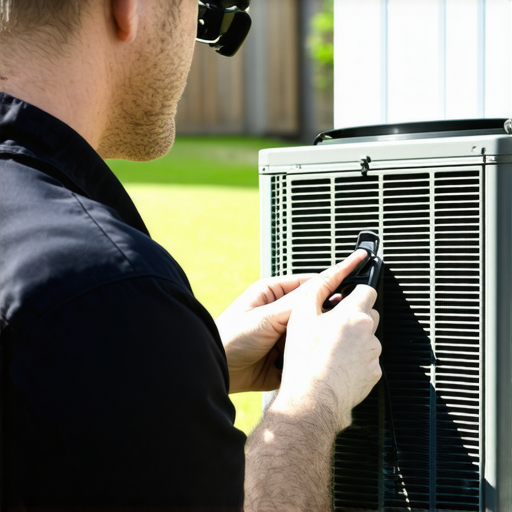
When I walk up to a unit, I’m listening for the ‘whoosh’ or the ‘whistle.’ A whistle means the static is too high; a rumble means the blower is cavitating. Total External Static Pressure (TESP) is measured by drilling two small holes—one before the filter and one after the coil but before the supply plenum. We use a digital manometer to see how hard that fan has to push. If the rating on the nameplate says 0.5 inches of water column (w.c.) and I’m reading 0.9, that system is ‘hypertensive.’ It’s going to have a stroke. This is why industrial heater services are so much more rigorous; they know that a 1% drop in airflow can lead to a 10% drop in efficiency. For residential owners, we often suggest financing for heat pump installs that includes duct remediation. There is no point in putting a 20-SEER unit on a 10-SEER duct system. It’s like putting a high-performance engine in a car with a potato in the tailpipe.
‘Static pressure shall not exceed the manufacturer’s rated maximum for the equipment to ensure the design CFM is achieved.’ – ASHRAE Standard 62.2
The ‘Pookie’ Factor: Why Sealing Matters
You’ll hear us talk about ‘Pookie’—that gray, mastic duct sealant that gets all over your clothes and never comes out. It’s better than any foil tape ever made. In a high-static environment, every tiny leak in the supply plenum is a loss of ‘throw.’ If the air doesn’t reach the far corners of the room, the thermostat stays unsatisfied, the unit short cycles, and your boiler repair services technician (if you have a hybrid setup) will be visiting you far too often. Proper sealing is the only way to ensure the pressure stays where it belongs: inside the trunk line. For those in the North/Cold zones, this is life or death for the heat exchanger. If you don’t have enough air moving over that heat exchanger in a dual fuel heat pump system, it will overheat and crack. Then you aren’t just looking at a repair; you’re looking at a carbon monoxide situation.
The Financial Reality: Repair vs. Replace in 2026
We’re seeing a lot of people asking about financing for heat pump installs because the cost of these new A2L units is jumping 20-30%. If you have an old R-22 or R-410A system that’s leaking, don’t let a ‘Sales Tech’ talk you into a ‘dry ship’ unit or a cheap fix. Look at the top hvac repair strategies to keep your current unit breathing until you can afford a proper, static-tested installation. And for the love of all that is holy, don’t close your registers in unused rooms. That doesn’t ‘save energy’; it increases static pressure, kills the blower motor, and makes your modulating furnace repair bill twice as high next winter. Airflow is a loop. If you choke the loop, you kill the machine. If you’re ready to see if your system is actually breathing, you should contact us for a real static pressure test. It’s the only way to know if your system is a marathon runner or a smoker with one lung.
Conclusion: Comfort is Physics, Not Magic
In 2026, the ‘good enough’ era of HVAC is over. The equipment is too smart, the refrigerants are too sensitive, and the electricity is too expensive to ignore airflow. Whether you are looking for heat pump solutions or just trying to survive a polar vortex with an oil to gas conversion, remember that the metal boxes in your basement and outside your house are only as good as the air they move. Get a tech who carries a manometer, not just a screwdriver. Get someone who understands that ‘Beer can cold’ suction lines are a myth and that static pressure is the law of the land. Your comfort depends on it, and your wallet will thank you when the January bills arrive.