The Whistle of a Dying System: Why Your ‘Hot Room’ is a Physics Problem
You’ve heard it before—that high-pitched, harmonic whistling coming from your registers. It’s the sound of a system gasping for air, or worse, trying to shove ten pounds of airflow into a five-pound duct. In my thirty years of crawling through fiberglass-filled attics and tracing control board diagnostics, I’ve learned one immutable truth: your HVAC unit doesn’t care about your comfort; it only cares about its own internal pressures. When you have that one bedroom that stays at a sweltering 80 degrees while the living room is a meat locker, you don’t have an AC problem. You have an airflow architecture problem. Most residential and industrial heater services will try to sell you a bigger unit to ‘overpower’ the heat, but that’s like buying a bigger engine for a car with flat tires.
I remember following a ‘Sales Tech’—one of those guys who spends more time on his hair than his manifold gauges—into a project involving church heating systems. The sanctuary was freezing, but the pastor’s office felt like a sauna. The kid had quoted them $22,000 for a total equipment replacement. I spent ten minutes with a manometer and found that a single bypass damper had seized, and the relay services on the main board were sending the wrong voltage to the actuator. A $100 fix, but more importantly, a lesson in zoning system installation. He wanted to sell them ‘juice’ (refrigerant) and iron; I wanted to fix the physics.
“The most expensive equipment in the world cannot overcome a bad duct system.” – Industry Axiom
Thermodynamic Zooming: The Latent Heat Trap
In our 2026 climate landscape, we’re dealing with more than just temperature. We’re dealing with latent heat—the energy required to wring humidity out of the air. If your system isn’t zoned correctly, it ‘short cycles.’ It hits the temperature target on the thermostat too fast because it’s only cooling the easy rooms. Meanwhile, the ‘hot room’ stays humid because the evaporator coil didn’t stay below the dew point long enough to pull out the moisture. This is where smart building management becomes critical. By using a modern zoning system, we can force the system to run longer at lower speeds (if you have an inverter-driven compressor), specifically targeting those stagnant zones.
Whether we are talking about hotel boiler services or a residential split system, the goal is the same: maintaining static pressure. When a tin knocker (duct specialist) builds a system without zoning, they assume every room needs the same amount of ‘gas’ all the time. But solar gain changes. The sun hits the east side in the morning and the west in the afternoon. Without zoning system installation, you are fighting a losing battle against the sun itself. This is why control board diagnostics are so vital; we need to see if the board can handle the logic of opening and closing dampers without blowing the motor’s head off.
The Anatomy of a 2026 Zoning Overhaul
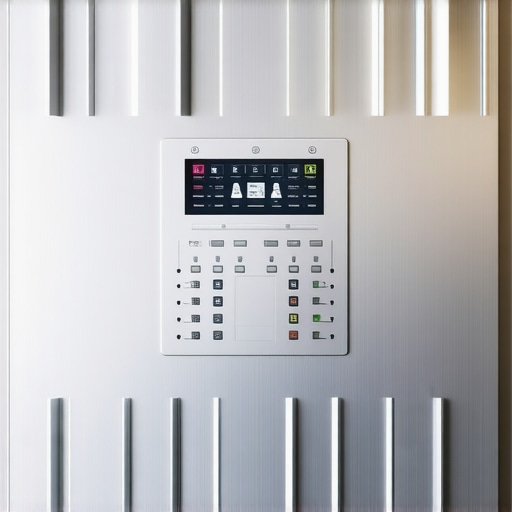
Modern zoning isn’t just about cardboard flappers in the ducts. It’s about relay services and digital precision. We look at the ‘heart’ of the system—the control board. If you’re seeing ‘Limit Switch Open’ or ‘Pressure Switch Faults,’ your system is telling you it’s suffocating. We often integrate UV light installation for HVAC during these retrofits because when you slow down airflow for zoning, you run the risk of biological growth on the damp, cold coil. A proper 2026 setup includes: 1. A modulated bypass damper to protect the blower. 2. Electronic dampers sealed with Pookie (mastic) to prevent air leaks. 3. Smart thermostats in every zone that talk to a central hub.
For those in older buildings dealing with radiator replacement or church heating systems, zoning takes a different form—usually thermostatic radiator valves (TRVs) or hydronic zone valves. I’ve seen hotel boiler services where the relay services were so crossed that the pool heater was trying to kick on the lobby’s heat. If you’re managing a large facility, industrial heater services aren’t just about the burners; they’re about the distribution logic. Even a pool heater repair can turn into a zoning nightmare if the heat exchanger isn’t getting the right flow rate.
“Standard 62.1 – Ventilation for Acceptable Indoor Air Quality requires specific distribution rates that can only be maintained through active pressure management.” – ASHRAE Standards
Why Static Pressure is the Silent Killer
If you close a vent in a guest room to ‘save money,’ you’re actually increasing the Total External Static Pressure (TESP) on your blower. It’s like trying to breathe through a straw while running a marathon. The motor works harder, the heat builds up, and eventually, the windings in the motor fail with that unmistakable smell of ozone and burnt copper. This is why we push for professional zoning system installation. It uses a barometric bypass to ensure that if three zones are closed, the excess air is cycled back into the return, keeping the ‘Sparky’ (electrician) away from your fried motor leads. To keep your system running longer, you should check out these top HVAC repair strategies to extend your systems life.
In 2026, with the transition to A2L refrigerants, precision is no longer optional. These new systems are ‘picky.’ They require exact airflow to ensure the mildly flammable ‘juice’ stays within its thermal window. If you’re considering an upgrade, especially if you’re looking into heat pump solutions for efficient home comfort, zoning is your best friend. It allows the heat pump to operate in its most efficient ‘steady state’ rather than constantly ramping up and down.
Final Diagnostic: Is Zoning Right for You?
If you have a multi-story home, a home office with three computers running hot, or a hotel boiler service contract where guests are constantly complaining, the answer is yes. Don’t let a sales tech talk you into a ‘bigger unit.’ Demand a manual J load calculation and a static pressure test. If your control board diagnostics show erratic behavior, it might just be time to upgrade the brains of the operation. Comfort isn’t a mystery; it’s a calculation of BTUs vs. CFM. Get the math right, and the hot room complaints vanish like 410A in a leaky coil.