![2026 Heat Pump Rebates: How to Claim Your $2,000 [Updated]](https://ecohvacservicez.com/wp-content/uploads/2026/01/2026-Heat-Pump-Rebates-How-to-Claim-Your-2000-Updated.jpeg)
The Great Refrigerant Reset: Why 2026 is the Year of the Heat Pump
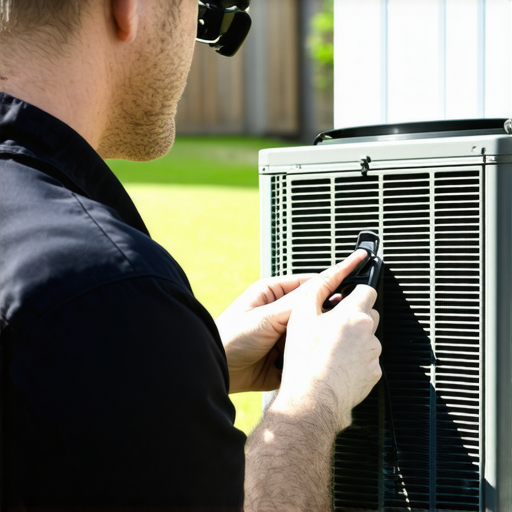
If you have been listening to the rhythmic thump-thump-hiss of an aging outdoor unit and wondering how much longer that compressor can fight the laws of thermodynamics, the clock just sped up. We are standing on the edge of a regulatory cliff. The EPA has slammed the brakes on R-410A, the ‘juice’ that has powered almost every residential system for two decades. Now, we are entering the era of A2L refrigerants like R-454B. They are ‘mildly flammable,’ which sounds terrifying to a homeowner but just means more sensors, more safety protocols, and inevitably, higher equipment costs. However, there is a silver lining in the form of the Inflation Reduction Act’s 25C tax credits and state-level HEEHRA programs. If you play your cards right, you can claw back $2,000 or more on a system that actually handles a Northern winter without breaking a sweat.
The Sales Tech Scam: A Forensic Lesson in Integrity
Let me tell you how the ‘Sales Tech’ game works, because I see it every time the temperature drops below freezing. Last January, during a nasty cold snap, I followed a tech from one of those ‘big box’ HVAC companies to a house in a drafty suburb. The previous guy had told an elderly couple their furnace had a ‘catastrophic heat exchanger failure’ and quoted them $14,000 for a rush replacement. He even showed them a blurry cell phone picture of a ‘crack’ that looked suspiciously like a smudge on his lens. I crawled into that cramped crawlspace, pulled the blower, and used a borescope. The heat exchanger was pristine. The actual culprit? A $40 flame sensor so coated in carbon it couldn’t see the fire, causing the unit to lockout. I cleaned it with a bit of steel wool, and the house was warm in ten minutes. This is why I tell people: before you drop ten grand, get a second opinion from a guy who actually carries a wrench, not just a clipboard. If you are considering an upgrade, check out choosing the best heating service expert tips for 2025 to avoid getting fleeced.
“Proper equipment capacity shall be determined by heat loss and heat gain calculations in accordance with Manual J.” – ACCA Manual S
Thermodynamic Zooming: How Inverter-Driven Compressors Defy the Polar Vortex
In the old days, a heat pump was just a fancy air conditioner with a reversing valve. Once the ambient temperature hit 35°F, it lost its ‘oomph’ and switched to those expensive electric heat strips—basically a giant toaster in your ductwork that eats your bank account. Modern inverter-driven compressors are different. Instead of being ‘on’ or ‘off,’ they modulate their speed. Think of it like a dimmer switch rather than a light switch. Through vapor injection and advanced compression ratios, these units can extract heat from -15°F air. They are moving energy, not creating it. They take the latent heat from the outside air, compress the refrigerant vapor to raise its temperature, and then release that heat into your home. When paired with heat pump solutions for efficient home comfort in 2025, you are looking at a system that can handle the harshest Chicago or Northeast winters without breaking a sweat. If you are still running an old boiler, an oil to gas conversion or a hybrid heat pump setup is the smartest move you can make before the 2026 price hikes hit.
The $2,000 Rebate Roadmap: Step-by-Step
Claiming your $2,000 isn’t as simple as checking a box. It requires rebate application assistance and a bit of foresight. The 25C tax credit covers 30% of the project cost, capped at $2,000 annually for heat pumps. But here is the pro tip: you can stack this. If you do attic insulation for heating this year, you can claim up to $1,200 for weatherization, then hit the heat pump the following year. Priority service memberships often include the documentation support you need to ensure the equipment’s SEER2 and HSPF2 ratings meet the strict federal ‘Consortium for Energy Efficiency’ (CEE) highest tier. Don’t let a ‘tin knocker’ install a mid-grade unit that doesn’t qualify for the credit; you’ll be leaving thousands on the table.
Why Humidity is the Secret to Real Comfort
In cold climates, heating the air naturally drops the relative humidity. This is why your skin feels like parchment and your wood floors start to gap in February. Dry air also feels colder at the same temperature because it accelerates evaporation from your skin. Integrating whole-home humidifiers and dehumidification services into your new heat pump system allows you to keep the thermostat at 68°F while feeling like it’s 72°F. This isn’t just about comfort; it’s about the physics of perceived temperature. While you’re at it, ensure your safety with a carbon monoxide detector installation, especially if you’re keeping a gas furnace as a backup (dual-fuel). Even the best systems need an eye kept on them; check top hvac repair strategies to extend your systems life for more on maintaining that investment.
“The most expensive equipment in the world cannot overcome a bad duct system.” – Industry Axiom
Static Pressure: The Silent System Killer
You can buy a 25-SEER2 hyper-efficient unit, but if your ductwork was sized by a guy who thought ‘bigger is always better,’ you’re in trouble. High static pressure—the resistance to airflow—is the #1 cause of premature compressor burnout. If the air can’t move, the heat can’t transfer. The refrigerant stays too cold (in cooling) or too hot (in heating), and the ‘gas’ starts to carry liquid back to the compressor. That’s how you end up needing emergency heating repair or a hot water heater repair when the thermal stress radiates through the mechanical room. We use ‘Pookie’ (mastic) to seal every joint because tape fails, and air leaks are just dollar bills flying into your crawlspace. If you want to keep your system running for 20 years instead of 10, start with preventative heating maintenance that includes a full static pressure test.