I’ve spent thirty years crawling through spider-infested crawlspaces and melting in attics, but nothing matches the visceral dread of a 2:00 AM emergency call when the mercury hits -10°F. My old mentor, a grizzled master tech who could smell a burnt-out motor from the driveway, used to scream at me, ‘You can’t heat what you can’t touch! Airflow is the blood of the system, boy!’ This is why airflow matters more than horsepower. When the wind is howling outside, your furnace isn’t just a machine; it’s a thermodynamic engine pushed to its absolute breaking point. It doesn’t quit on a mild Tuesday in October because it isn’t working hard. It quits tonight because the duty cycle is at 100%, and every single mechanical weakness in your system is being interrogated by the laws of physics.
The Forensic Diagnosis: Why High-Load Scenarios Kill Furnaces
To understand the failure, you have to understand the anatomy. Most homeowners think a furnace is a box that makes fire. As a tech, I see a delicate balance of pressure, electricity, and metallurgy. When you have a high-efficiency furnace installation, the secondary heat exchanger is extracting every bit of latent heat from the flue gases. On the coldest night, that condensate line can freeze if it’s poorly routed, backing up water into the inducer motor. Suddenly, the pressure switch won’t close. The system ‘thinks’ it’s suffocating, so it locks out. You’re left in the cold because of a frozen tube of water. That is the reality of modern heating service.
“The most expensive equipment in the world cannot overcome a bad duct system.” – Industry Axiom
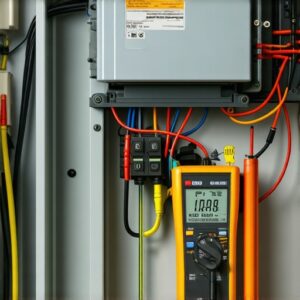
Then there’s the contactor repair or the relay services issue. In a furnace, the blower motor relay is clicking on and off hundreds of times a week. On a sub-zero night, it stays closed for hours. The heat buildup in the control board can cause a solder joint to hairline fracture. You won’t see it with the naked eye, but the ‘Sparky’ (the electrician) or a seasoned tech with a multimeter will see the voltage drop. If your tech isn’t performing static pressure testing, they are just guessing. High static pressure is like trying to breathe through a straw while running a marathon; eventually, the ‘heart’ (your blower motor) just gives out.
The Thermodynamic Reality of Heat Exchangers and Flame Rollout
When I’m looking at a unit that died during a polar vortex, the first thing I check is the heat exchanger. On the coldest night, the metal expands and stays expanded for hours. If there’s a microscopic crack, that’s when it opens up. I’ve seen high-efficiency furnace installation jobs fail because the ‘Tin Knocker’ (duct guy) didn’t size the return air correctly. The furnace gets too hot, the limit switch trips, and it shuts down to prevent a fire. This is where preventative maintenance contracts save lives. A tech should be checking for flame rollout—where the fire actually licks back out of the burner because the heat exchanger is clogged or cracked. It smells like singed dust and ozone, and it’s the precursor to a carbon monoxide nightmare.
“Design heating and cooling loads shall be determined in accordance with ASHRAE Standard 183.” – ACCAs Manual J
For those in the North, the ‘Hyper-heat’ heat pump is becoming a savior. Unlike older units that lost all ‘juice’ (refrigerant efficiency) at 32°F, hyper-heat heat pumps use flash injection technology to maintain capacity down to -13°F. But even these need a pro. If the defrost cycle fails because a sensor is iced over, the outdoor unit becomes a solid block of ice, looking like a discarded prop from a movie set. This is why preventative maintenance contracts are not a luxury; they are a survival strategy.
The 2025 Regulatory Cliff: R-454B and Low-GWP Retrofits
We are currently standing on a regulatory cliff. The industry is moving away from R-410A toward low-GWP refrigerant retrofits and new A2L refrigerants like R-454B. These are ‘mildly flammable.’ If your tech isn’t talking to you about the new sensors required for these systems, they are behind the times. In the coming year, high-efficiency furnace installation costs are going to spike because of these safety requirements. Don’t let a ‘Sales Tech’ talk you into a cheap ‘dry charge’ unit; it’s a scam that will leave you without parts support in five years. You want a system designed for the future, perhaps even an infared heater installation for the garage or shop to take the edge off the main system’s load.
Geofencing and the Myth of the ‘Setback’
Everyone loves geofencing temperature control. It’s cool to have your phone tell the house to warm up when you’re five miles away. But on the coldest night of the year, ‘setbacks’ are your enemy. If you drop the temp to 60°F while you’re at work and it’s -15°F outside, your furnace may never catch up. It will run for 6 hours straight trying to gain those 10 degrees, overheating the internal components. I’ve replaced more capacitors and blowers due to ‘recovery’ stress than almost anything else. To avoid an emergency call, check out these preventative heating maintenance tips for 2025.
How to Spot a Real Tech vs. a Salesman
If a guy walks in and condemns your heat exchanger without showing you a camera feed or a combustion analysis report, kick him out. A real tech uses ‘Pookie’ (mastic) to seal leaks, not just silver tape. They check the ‘suction line’ to ensure it’s not just ‘beer can cold’ but actually hitting the right superheat and subcooling numbers. When you’re choosing the best heating service, ask them about their static pressure kit. If they don’t know what that is, contact us for a real diagnostic. Physics doesn’t lie, but salesmen do.