The Physics Lesson: Why Raw Power Is a Liability
My old mentor, a grizzly veteran who could diagnose a bad blower motor just by the vibration in the floorboards, used to scream at me in the back of the van: ‘You can’t heat what you can’t touch, and you can’t touch it if you’re blowing past it at 90 miles an hour!’ He was talking about the heat exchanger, but he was really talking about control. For decades, the industry lived by the ‘on-off’ philosophy. Your furnace was either a roaring jet engine or a cold block of steel. That binary logic is why your hallway is a sauna while your bedroom feels like a meat locker. When we talk about why modulating gas valves are a major energy saver, we aren’t just talking about burning less gas; we are talking about mastering the physics of heat transfer.
“The most expensive equipment in the world cannot overcome a bad duct system.” – Industry Axiom
In the biting cold of a Northern winter, where the wind-chill makes the siding groan, a standard furnace is a blunt instrument. It kicks on at 100% capacity, slams the heat exchanger with 2000 degrees of flame, and stays there until the thermostat installation reaches its set point. Then it dies. This is ‘short cycling’ in its most violent form. A modulating gas valve, however, works like a dimmer switch rather than a light toggle. It can adjust the gas flow in increments as small as 1%, usually ranging from 35% to 100% of the unit’s total capacity. This isn’t just a luxury; it’s a fundamental shift in how we manage the thermal envelope of a home.
The Anatomy of a Modulating Burner
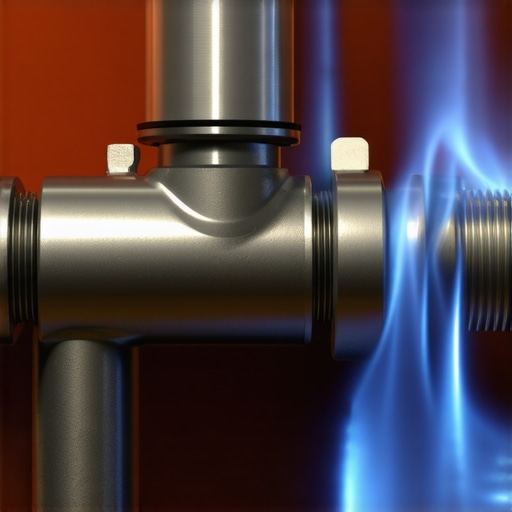
To understand the savings, you have to look at the mechanical anatomy. In a standard setup, the gas valve is a simple solenoid—it’s open or it’s closed. In a two-stage furnace installation, you get a ‘low’ and a ‘high’ setting, which is better, but still limited. A modulating valve uses a stepper motor to precisely meter the ‘juice’ (the gas) entering the burner assembly. This works in tandem with a variable-speed inducer motor. If the gas flow drops, the inducer slows down to maintain the perfect fuel-to-air ratio. This prevents ‘flame rollout’ and ensures that the AFUE (Annual Fuel Utilization Efficiency) rating actually stays high throughout the entire run cycle.
When I’m looking at a wall furnace installation or a central system, the goal is always steady-state operation. A furnace that runs at 40% capacity for twenty minutes is exponentially more efficient and comfortable than a unit that runs at 100% for five minutes. Why? Because the heat exchanger stays warm, the air moves slower through the duct design services, and the air has more time to pick up heat from the metal. It’s the difference between trying to warm your hands by slapping a hot stove or holding them inches away for a steady soak.
Thermodynamic Zooming: Latent Heat and the Comfort Gap
In cold climates, the enemy isn’t just the temperature; it’s the ‘cold dump’ that happens when a furnace shuts off. In a modulating system, the blower motor (usually an ECM variable-speed) keeps the air moving at a whisper-quiet pace. Because the valve stays open at a lower flame, the discharge air temperature remains consistent. You don’t get that blast of hot air followed by ten minutes of silence and the sound of your windows contracting. This consistent airflow is why duct design services are so critical. If your ‘tin knocker’ didn’t size the returns correctly, even a modulating valve can’t save you from static pressure issues that will eventually cook the control board.
“Proper furnace sizing is critical to prevent short cycling and ensure the heat exchanger reaches its design temperature to prevent corrosive condensation.” – ACCA Manual S
I’ve seen too many homeowners get talked into a massive 120,000 BTU unit for a 1,500 square foot house by a ‘Sales Tech’ looking for a commission. That’s a disaster. An oversized furnace with a modulating valve is like putting a Ferrari engine in a lawnmower. It’ll never get out of first gear. This is where rebate application assistance becomes a factor for my customers; often, the higher-efficiency modulating units qualify for massive federal and local incentives that offset the higher upfront cost, making the ‘long game’ of energy savings even sweeter.
Inverters and Modulation: The Heat Pump Connection
We can’t talk about gas modulation without mentioning inverter-driven compressors. In many modern hybrid systems, we pair a modulating gas furnace with a heat pump installation. This is the ‘dual fuel’ holy grail. The heat pump handles the mild days (down to about 35°F), and the modulating gas valve takes over when the ‘gas’ is needed for the heavy lifting in sub-zero temps. If you are looking at a heat pump replacement, don’t ignore the furnace side of the equation.
For those in dryer regions where evaporative cooler services are common, the furnace is often the primary air handler for the entire year. If that air handler isn’t modulating, you’re losing money every time the fan kicks on. I always tell my clients that preventative maintenance contracts are the only way to keep these high-tech valves from getting gunked up by dust and debris. A modulating valve is a precision instrument, and if you treat it like a 1970s cast-iron boiler, it will fail you when the polar vortex hits.
The Verdict: Efficiency Isn’t Magic, It’s Math
Is a modulating gas valve worth it? If you care about the ‘Sparky’ (electrician) bills and the gas meter spinning like a top, yes. It eliminates the ‘hunt’ for the right temperature. It keeps the heat exchanger from the constant expansion and contraction that leads to cracks and carbon monoxide leaks. Most importantly, it respects the physics of airflow. Don’t let a tech sell you on ‘tonnage’ or ‘BTUs’ alone. Ask about the modulation range. Ask about the static pressure. And for heaven’s sake, make sure they use ‘Pookie’ (mastic) on the joints, because the best modulating valve in the world won’t do a lick of good if the heat is leaking into your crawlspace. Comfort is about precision, not power. That is the Airflow Architect’s final word.