The Phantom Load: Why Your AC is Fighting a War It Can’t Win
I remember my old mentor, Pete, a guy who had spent forty years breathing in insulation dust and R-22. He used to stand in a 130-degree attic, wipe the sweat from his eyes with a greasy rag, and scream at me: ‘You can’t cool what you can’t touch!’ At the time, I thought he was just heat-stroked, but three decades later, I realize it’s the only truth in this industry. Airflow is the lifeblood of thermodynamics. If your ductwork is a sieve, your shiny new 18-SEER unit is just an expensive paperweight. Most homeowners think they have a ‘bad unit’ when they really have a ‘bad delivery system.’ When your ducts leak, you aren’t just losing cold air; you are inviting the enemy—unconditioned, humid, filthy air—right into the heart of your home’s respiratory system.
The Physics of the Cold Swamp: Latent Heat and the Evaporator Coil
To understand why sealing your ducts is the most important HVAC maintenance plan move you can make, we have to do some thermodynamic zooming. Your air conditioner doesn’t actually ‘create’ cold; it removes heat. Specifically, it deals with two types of heat: sensible heat (the temperature you see on the thermometer) and latent heat (the moisture in the air). In a humid climate, the latent heat is the real killer. Your evaporator coil is designed to drop below the dew point of the air passing over it. As the air hits that freezing coil, moisture condenses and drips into the drain pan. This is how we de-swamp a house. However, when you have return-side duct leaks, the fan is sucking in 95-degree air from your attic or crawlspace. This air is loaded with moisture. This ‘phantom load’ forces the coil to work double-time just to handle the humidity, meaning it never gets around to lowering the actual room temperature. This is why your house feels like a cold, damp basement even when the AC is cranking.
“The most expensive equipment in the world cannot overcome a bad duct system.” – Industry Axiom
The Static Pressure Nightmare
Every system is designed to move a specific volume of air against a specific amount of resistance, which we call Total External Static Pressure. When a tin knocker installs ductwork, they (hopefully) size it based on Manual D calculations. But when those ducts pull apart or the ‘Pookie’ (mastic) fails, the pressure balance is destroyed. If you have supply leaks, you’re pumping ‘juice’—the cold refrigerant’s hard work—directly into your attic. This causes the thermostat to never satisfy, leading to short-cycling or, worse, constant running. Constant running in high-humidity zones leads to the compressor’s early grave. If you want to avoid a compressor burnout, you have to ensure the air actually makes it to the registers. This is where airflow measurement services come into play. We use flow hoods and manometers to see exactly where the pressure is dropping. It’s not magic; it’s fluid dynamics.
The Solution: Mastic, Not Tape
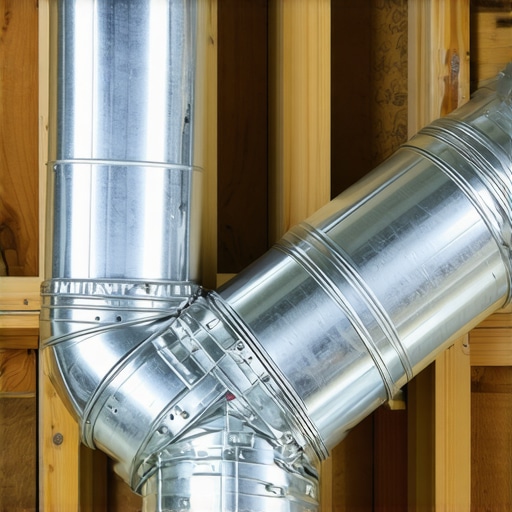
If you see a guy walk into your attic with a roll of shiny silver tape to fix your ducts, fire him. Real professionals use mastic—we call it ‘Pookie.’ It’s a thick, fiber-reinforced paste that you glob on with a brush. It creates a permanent, flexible seal that won’t dry out and flake off like tape does after two summers in an attic furnace. Sealing the plenum-to-unit connection and every branch takeoff can reduce your AC load by as much as 30%. This is especially critical if you have invested in inverter-driven compressors. These high-tech units are designed to ramp up and down based on load, but if your load is constantly inflated by attic air, the inverter never gets to ‘cruise’ at a low, energy-saving speed. You’re paying for a Ferrari but driving it through a swamp with the parking brake on.
“Air leakage in a typical residence accounts for 25% to 40% of the energy used for heating and cooling.” – ASHRAE Standards
Beyond the AC: A Holistic View of Home Comfort
While we are talking about summer loads, remember that the duct system is a year-round highway. If you are planning multi-family heating upgrades or looking into heat pump solutions, those same leaks will kill your efficiency in the winter too. In a heat pump setup, the ‘beer can cold’ suction line becomes the hot gas line. If those ducts are leaking in a crawlspace, you’re losing precious BTUs before they ever hit your floor vents. We often see homeowners who ignore their ducts but spend thousands on evaporative cooler services or spa heater services. They focus on the luxuries while the foundation of their comfort is crumbling. Even simple things like furnace flame sensor cleaning or heat exchanger cleaning are secondary to the integrity of the air path. If the heat exchanger is clean but the air is leaking out of the plenum, who cares how efficient the flame is?
The ROI of Airflow Integrity
Sealing ducts isn’t sexy. You can’t show it off to your neighbors like a new pool heater repair or a sleek outdoor unit. But the math doesn’t lie. By reducing the load, you extend the life of every component—from the contactor to the fan motor. It’s the difference between a system that lasts 12 years and one that hits the 20-year mark. If you’re serious about preventative maintenance, stop looking at the shiny box and start looking at the dark corners of your attic. Check for the smell of ‘attic air’ coming out of your vents—that dusty, woody scent. That’s a sign your return duct is breached. Get a professional to perform a duct blast test. It’s the only way to know for sure. Comfort isn’t a setting on a thermostat; it’s the result of controlled physics. Don’t let your money leak into the rafters. Seal the ducts, balance the pressure, and finally let your AC breathe.[IMAGE_PLACEHOLDER]