The 2025 Refrigerant Reckoning and the Death of R-410A
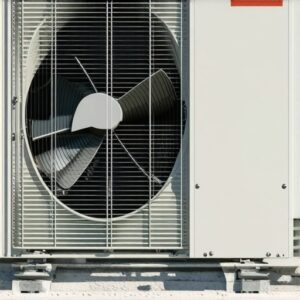
Listen close, because the industry is about to get a lot more expensive and a lot more complicated. We are currently standing on the edge of the A2L transition. For the last two decades, R-410A was the king of the ‘Juice’—the refrigerant running through your lines. But as of 2025, it is being phased out for R-454B and R-32. These are classified as ‘mildly flammable.’ If your ‘Sales Tech’—those guys who show up in a clean white shirt and try to sell you a whole new system before they even take the door off the furnace—hasn’t mentioned the new sensor arrays and mitigation boards required for these units, he’s either ignorant or lying. The cost of equipment is skyrocketing because these units now require sophisticated leak detection that can shut down the system and engage the indoor blower to dilute any potential gas leak. It is a new world of ‘Gas,’ and if you buy a bottom-of-the-barrel unit now, you are buying into a legacy technology that will be a nightmare to service in five years. [image_placeholder_1]
The Physics Lesson: Squeezing Heat from a Stone
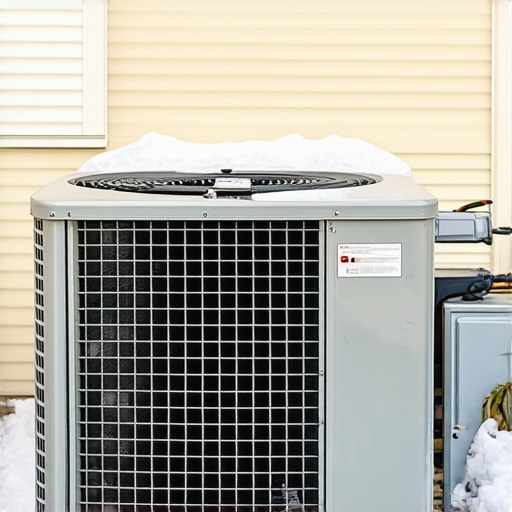
Old Man Miller, my first lead tech back in the late eighties, used to hammer his manifold gauges against a frozen condenser during a blizzard and howl, ‘Thermodynamics isn’t a suggestion, kid, it’s a law! You can’t move heat that doesn’t exist!’ He was half-right. Back then, if the mercury dipped below 30°F, a heat pump was just a very expensive, very noisy paperweight outside. But the physics of cold climate heat pumps has changed the game through vapor injection and variable-speed inverters. We aren’t just moving heat; we are manipulating the boiling point of the refrigerant to extreme lows.
“The most expensive equipment in the world cannot overcome a bad duct system.” – Industry Axiom
When we talk about thermodynamic zooming, we look at the evaporator coil. In the winter, that outdoor coil becomes the evaporator. It has to be colder than the -10°F air outside to ‘absorb’ heat. This causes the suction line to get frigid, and if the ‘Tin Knocker’ who did your ductwork didn’t size your returns correctly, the system will starve, the compressor will scream, and you’ll be left with a block of ice. This is why proper maintenance is non-negotiable; a dirty coil increases the static pressure and kills the heat transfer efficiency when you need it most. Check out our guide on preventative heating maintenance to see why air flow is king.
The Dual Fuel Safety Net: Why You Need a Backup
In the North, where the polar vortex turns your driveway into a skating rink, relying solely on a heat pump is a gamble I wouldn’t take with my own family. This is where dual fuel heat pump systems come in. You pair a high-efficiency heat pump with a gas furnace. When the COP (Coefficient of Performance) of the heat pump drops—meaning it’s taking more electricity to run than the heat it’s putting out—the ‘Sparky’ (the electrician) has the controls set so the furnace takes over. It’s the difference between a 95% AFUE gas burner and a heat pump struggling to maintain 60-degree discharge air. We’ve seen many homeowners looking for crawl space heating solutions lately, and a dual-fuel setup ensures that those pipes under the house don’t turn into icicles when the grid is stressed. For those moving away from old boilers, radiator replacement with modern low-temp hydronic units can be integrated, but it takes a real technician, not a salesman, to balance that load. You can learn more about heat pump solutions for 2025 here.
The Smart Home Gimmick vs. Real Control
Everyone wants remote thermostat access and app-controlled heating systems. They’re great for checking the temp from the airport, but they can be a ‘Sales Tech’ trap. I’ve seen guys install a $500 ‘smart’ thermostat on a system that isn’t wired for it, bypassing the dehumidification cycle or the second stage of heat. Proper thermostat installation in a cold climate means more than just connecting a C-wire; it means configuring the ‘balance point’—the exact temperature where the heat pump stops and the backup heat starts. If you don’t get this right, your electric bill will look like a mortgage payment. Furthermore, in the dead of winter, the air is bone-dry. Humidifier installation is often overlooked, but moist air holds heat better. If your house feels cold at 72°F, it’s probably because your latent heat load is zero. Adding a whole-home bypass humidifier can make 68°F feel like a sauna.
The Airflow Manifesto: Physics Doesn’t Lie
I followed a guy last week who told a homeowner they needed a 5-ton unit for a 2,000-square-foot house because ‘more power is better.’ That’s a lie. An oversized unit in a cold climate will ‘short cycle,’ meaning it turns on and off so fast it never reaches steady-state efficiency. It’s like drag racing your truck from one red light to the next; you’re going to break something.
“Design for the 99% design temperature, not the 1% extreme, to ensure equipment longevity and humidity control.” – ACCA Manual J Standards
We focus on solar thermal heating integration for supplemental gains, but the real work is in the ‘Pookie’—the mastic we use to seal the ducts. If your ductwork is leaking in the attic, you’re literally heating the squirrels while your living room stays freezing. If you’re struggling with high bills, it’s time for choosing the best heating service experts who actually carry a manometer and a thermal camera, not just a clipboard and a financing application. See our tips for choosing heating experts. If you have questions about your specific setup, feel free to contact us.