The Sound of a Silent Killer: Why Your Furnace Transformer Is Screaming for Help
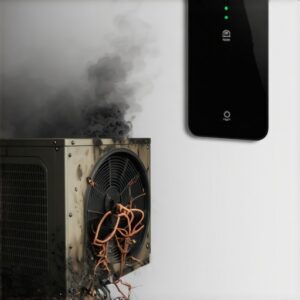
You are lying in bed at 3 AM in the dead of a Chicago winter, and there it is. A low-frequency, persistent 60-hertz buzz vibrating through the floorboards. It is the sound of a transformer under duress. To the average homeowner, it is just background noise. To a technician who has spent three decades chasing ghosts in boiler rooms and crawlspaces, it is the sound of an impending electrical fire or a total system lockout. Most ‘Sales Techs’ will walk in, hear that hum, and immediately try to sell you a $12,000 furnace replacement. They do not understand the physics; they just want the commission. But that hum tells a specific story about electromagnetic resonance and low-voltage shorts that most people ignore until the house goes cold.
The Mentor’s Lesson: Thermodynamics in the Boiler Room
My old mentor, a man who could identify a refrigerant leak by the way the oil felt between his fingers, used to scream at me in the basement of an old elementary school: ‘You can’t heat what you can’t circulate!’ He was talking about hydronic heating systems and the massive boilers we had to maintain. During one school boiler maintenance run in late November, the head custodian complained about a ‘singing’ transformer in the control cabinet. My mentor didn’t reach for a screwdriver; he reached for his multimeter. ‘That hum is the transformer trying to push current into a wall,’ he said. We found a pinched wire in an occupancy sensor installation that was bleeding 24 volts to ground. The transformer was vibrating its internal laminations so hard they were starting to delaminate. If we hadn’t caught it, the smart building management system would have been fried by sunrise. It taught me that in HVAC, everything is connected through the 24-volt nervous system.
“Equipment shall be sized in accordance with ACCA Manual J or other approved heating and cooling calculation methodologies to ensure the electrical load matches the mechanical requirements.” – ACCA Manual J Standards
The Anatomy of the Hum: Why Transformers Fail
A furnace transformer is a simple device: two coils of wire wrapped around an iron core. It takes the 120V ‘juice’ from your house and steps it down to 24V to run your thermostat, gas valve, and control board. When it hums, it is usually because of ‘Magnetostriction’ — the magnetic field literally stretching and squeezing the metal core. However, a ‘scary’ loud hum means the transformer is overloaded. This happens when you add too many ‘smart’ gadgets without checking the VA (Volt-Ampere) rating. If you have done a voice control setup Alexa Google integration alongside a power-hungry bypass humidifier repair and haven’t upgraded the transformer, you are asking for a meltdown. The transformer is sweating electrical heat, and the hum is its death rattle.
The Hidden Culprit: Static Pressure and MERV Upgrades
Here is something your ‘Tin Knocker’ (duct guy) might not tell you: your air filter could be killing your transformer. When homeowners perform MERV filter upgrades to high-density pleated filters without adjusting the blower speed, the static pressure skyrockets. The inducer motor and the blower have to work harder, often drawing more current through the relays on the control board. This extra heat and load ripple back to the transformer. If your system wasn’t sized with manual J calculations to account for high-static filtration, you are redlining the electrical components every time the heat kicks on. This is why preventative heating maintenance is critical; we check the ‘heartbeat’ of the system before the ‘arteries’ clog up. Check out our guide on preventative heating maintenance for more on this.
Hydronic Systems and the 24V Struggle
In hydronic heating systems, the transformer load is even more complex. You have zone valves, circulator relays, and sometimes smart building management interfaces all sipping from that same 24V straw. If a zone valve motor starts to drag because of sediment in the lines, it draws more amperage. That amperage turns into heat in the transformer. I’ve seen ‘Sparkies’ (electricians) misdiagnose a humming transformer as a bad ground when it was actually a seized pump relay. This is why warranty service plans are useless if the tech doesn’t know how to use an ammeter. You need someone who understands the best heating service strategies to diagnose the root cause, not just swap parts.
“Standard 62.1 requires that all ventilation systems be maintained to provide the necessary outdoor air flow, which includes the proper functioning of all electrical control components.” – ASHRAE Standards
The 2025 Regulatory Cliff and Energy Star
As we push toward Energy Star heating certification, systems are becoming more sensitive. The 2025 standards require higher efficiency, which often means more electronic sensors and variable-speed components. These systems require ‘clean’ power. A humming transformer isn’t just annoying; it produces electrical noise that can confuse the logic gates in a high-efficiency furnace. If you are looking at heat pump solutions for 2025, understand that these units are even more reliant on stable low-voltage signals. A $40 transformer failure can lead to a $1,500 control board failure if the voltage spikes during a short.
The Forensic Diagnosis: How to Stop the Hum
If your furnace is humming, follow the trail. First, check the VA rating on the transformer. If it’s a 40VA and you’ve added a humidifier and a smart thermostat, you’re at the limit. Second, look for ‘chattering’ contactors. If a relay is rapidly opening and closing, it creates a feedback loop that makes the transformer scream. Third, check your bypass humidifier repair history; if the solenoid is partially shorted, it’s a constant drain. Don’t let a ‘Sales Tech’ tell you that you need a whole new system just because of a noisy 24V circuit. You can find top HVAC repair strategies to fix these specific issues without breaking the bank. Finally, if the hum is accompanied by a sour, ozone-like smell, shut the breaker off immediately. That is the smell of wire insulation melting. It’s time to contact us for a professional diagnostic before the ‘scary reason’ becomes a house fire. Physics doesn’t care about your comfort; it only cares about equilibrium. If your transformer is humming, it’s because it’s losing the battle against resistance. Fix the resistance, and you’ll find your silence again.