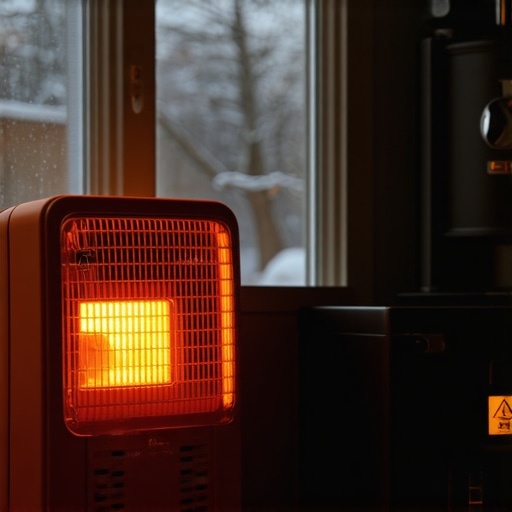
The Silence of a Dead Furnace and the Siren Song of the Space Heater
Every winter, I hear the same silence. It’s a heavy, cold stillness that usually starts in the basement. As a technician who’s spent thirty years crawling through spider-infested crawlspaces and smelling the scorched copper of a 2 AM emergency call, I know exactly what happens next. The homeowner, staring down a furnace that refuses to ignite, panics. They don’t call for furnace repair services right away because they’re afraid of the bill. Instead, they head to the local hardware store and buy three or four portable space heaters. It seems like a cheap fix. It isn’t. It’s a thermodynamic gamble that risks your wallet and your life.
I remember following a ‘Sales Tech’—one of those guys who wears a clean uniform and carries a tablet but doesn’t know a multimeter from a microwave—into a house in the middle of a January freeze. He’d quoted a retired Navy vet $12,000 for a total system replacement because of a ‘cracked heat exchanger’ that didn’t exist. The vet, terrified of the price, had spent $300 on five space heaters instead. When I walked in, the smell hit me—not the smell of gas, but the ozone and hot plastic of overloaded electrical circuits. The outlets were literally discolored. I found a simple failed igniter, a $150 fix, but those space heaters had nearly burnt the house down before I could even get my tools out of the van.
The Physics of Why Space Heaters Are Inefficient
Let’s talk about the HVAC load calculation services we perform. A house is a thermal envelope. When we size a furnace or a cold climate heat pump, we are looking at the BTUs required to offset the heat loss through your walls and windows. A single 1,500-watt space heater produces about 5,118 BTUs. To heat a standard 2,000-square-foot home in a northern climate, you might need 60,000 to 80,000 BTUs. You would need 12 to 15 space heaters running simultaneously to match your furnace. At 12.5 amps per heater, you’d trip every breaker in the house or, worse, melt the insulation off the wires inside your walls. This is why boiler repair services or fixing your central air handler is a matter of safety, not just comfort.
“Heating equipment is the second leading cause of home fires in the United States.” – NFPA Research
In the North, where the polar vortex turns your condensate lines into icicles, physics doesn’t care about your budget. If you are using space heaters, you aren’t circulating air. Your pipes in the exterior walls aren’t getting any heat. I’ve seen more flooded basements from burst pipes caused by ‘space heater solutions’ than I have from actual equipment failure. You need the airflow—the ‘Tin Knocker’s’ art—to push warm air into every corner of the structure. Without it, you’re just creating a warm bubble in a frozen house.
The Real Cost: Electricity vs. Combustion
Using resistance heat (space heaters) is the most expensive way to stay warm. Even with oil to gas conversion or the latest low-GWP refrigerant retrofits in modern heat pumps, central systems are designed for efficiency. A 96% AFUE gas furnace turns 96 cents of every dollar into actual heat. A space heater is 100% efficient at the point of use, but electricity costs per BTU are often triple that of natural gas. If your unit is struggling, it might just need capacitor replacement services to get the blower motor or inducer running again. Putting a band-aid on a technical problem with a portable heater is like trying to fill a swimming pool with a thimble while the drain is open.
“The most expensive equipment in the world cannot overcome a bad duct system or improper maintenance.” – Industry Axiom
We are seeing a massive shift in the industry toward cold climate heat pumps. These aren’t your grandpa’s heat pumps that stopped working at 40°F. Modern units can pull heat out of the air down to -15°F. But they require precision. If you’re worried about the 2025 regulatory cliff and the move toward R-454B refrigerants, now is the time to look at heat pump solutions for efficient home comfort in 2025. These systems integrate leak detector integration and advanced dehumidification services to keep the air crisp in winter and dry in summer.
The Forensic Diagnosis: Why Your Furnace Actually Failed
Before you plug in that space heater, let’s look at the mechanical anatomy of your failure. Often, it’s not the ‘heart’ (the compressor or heat exchanger) that’s failed. It’s the ‘sparky’ stuff—the electrical components. A common culprit is the run capacitor. If you hear a humming sound but the fan won’t spin, you likely need capacitor replacement services. If you smell something sour or acidic, you might have a refrigerant leak or a secondary heat exchanger clogging. For those with hydronic systems, boiler repair services are critical because a dry-fired boiler is a bomb, plain and simple.
This is why preventative heating maintenance is the only way to sleep soundly. I tell my customers that priority service memberships aren’t a luxury; they’re insurance against the ‘Sales Tech’ who wants to commission a new unit instead of cleaning a flame sensor. When we perform a diagnostic, we’re looking at static pressure—the resistance your fan faces. If your ductwork is restricted, your furnace will overheat and trip the high-limit switch. A space heater doesn’t fix that; it just ignores the symptom until your pipes freeze.
Conclusion: Fix the Source, Don’t Mask the Symptom
If you’re freezing right now, don’t reach for the space heater. Reach for the phone. Whether it’s furnace repair services or a long-overdue oil to gas conversion, the safety of your family depends on a sealed combustion system and proper venting. Don’t let a ‘Sales Tech’ scare you, and don’t let a $30 portable heater burn your world down. Learn about top HVAC repair strategies to keep your old unit humming, or contact us to get a real tech out there who knows the difference between a real crack and a dusty manifold. Comfort is physics, and physics doesn’t take days off.