The Sound of a Dying Industry: Why R-410A is Going the Way of the Dodo
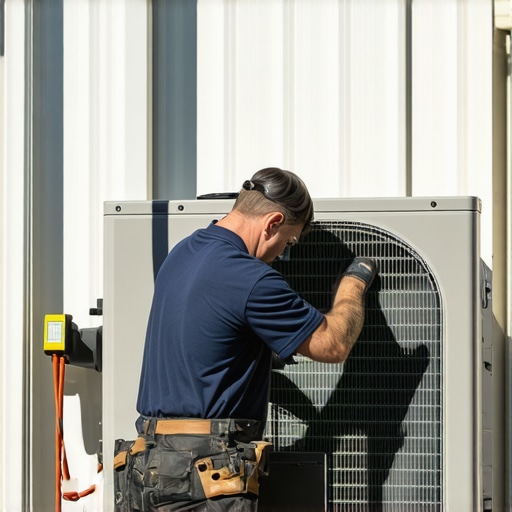
If you listen closely to a condensing unit in the dead of winter, you shouldn’t hear a screaming bearing or the erratic chattering of a contactor. You should hear the hum of a machine doing exactly what physics demands. But we are at a crossroads in the HVAC world. The refrigerant we’ve relied on for decades, R-410A, is being phased out, and the ‘Sales Techs’ are already licking their chops, ready to sell you a system you don’t need for three times the price. I’ve spent thirty years lugging a tool bag up extension ladders, and I can tell you this: a fancy new inverter-driven compressor is just a high-tech anchor if the guy installing it doesn’t understand static pressure. We are entering the era of A2L refrigerants like R-454B—mildly flammable, highly regulated, and a total nightmare for any ‘tin knocker’ who thinks ‘close enough’ is good enough.
“The most expensive equipment in the world cannot overcome a bad duct system.” – Industry Axiom
My old mentor, a man we called ‘Old Man Miller’ who could smell a burnt-out compressor from the driveway, used to grab me by the collar of my work shirt. He’d point at a return air grille and growl, ‘Miller, you can’t squeeze blood from a stone, and you can’t pull heat out of thin air if you don’t have enough surface area on that coil!’ He was teaching me the Airflow Manifesto before it was a buzzword. He knew that 90% of heat pump failures in cold climates weren’t due to bad parts, but bad physics. If you don’t have the cubic feet per minute (CFM) to move that energy, the compressor is going to cook itself in its own oil. This is why heat pump solutions for efficient home comfort in 2025 require more than just a truck and a manifold gauge; they require a deep understanding of the thermodynamic cycle.
The Cold Climate Conundrum: Squeezing Heat from a Polar Vortex
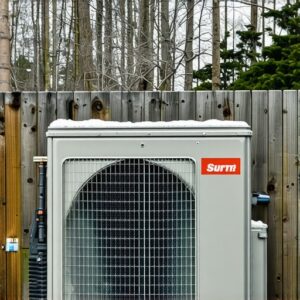
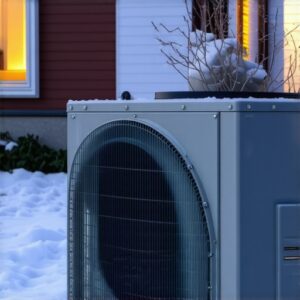
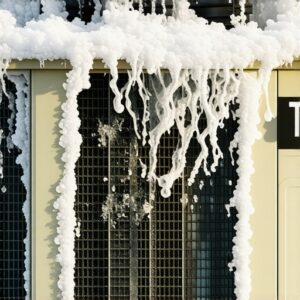
When the temperature drops to -5°F, a standard heat pump starts to struggle. This is where cold climate heat pumps separate the pros from the hacks. In a traditional system, you lose capacity as the ambient temperature drops. But an inverter-driven compressor can ramp up its speed, essentially ‘overclocking’ itself to maintain discharge temperatures. However, here is the pitfall: if the installer didn’t account for dehumidification services and latent heat during the shoulder seasons, or if they ignored the auxiliary heat strip sizing, you’ll be waking up to a ‘cold swamp’ feel or a frozen solid outdoor unit. In the North, the enemy is the defrost cycle. If the unit is sitting on the ground without ‘snow legs,’ the melted frost turns into an ice block, eventually crushing the delicate aluminum fins of the evaporator coil. You need proper drainage and elevation, or you’re just buying a very expensive ice maker.
The Chimney Liner and the Ghost of Gas Past
One of the most overlooked pitfalls when transitioning from a gas furnace to a heat pump is what happens to the water heater. Many homes have a ‘common vent’ where the furnace and water heater share a chimney. You rip out the furnace, install a heat pump, and suddenly that 4-inch chimney is way too big for just the water heater. The exhaust gases cool down before they can exit, creating acidic condensation that eats your bricks from the inside out. This is why chimney liner installation is a non-negotiable part of a total HVAC overhaul. If your tech didn’t mention it, they aren’t a technician; they’re a salesman in a uniform. It’s the same logic we use in restaurant kitchen exhaust repair: if the pressure isn’t balanced, the system fails, and the building starts to act like a giant vacuum, pulling in cold air through every crack in the windows.
Control Board Diagnostics: Stop Swapping, Start Testing
I see it every day—a tech sees a blinking LED on a board and immediately quotes $900 for a new one. That’s ‘parts cannon’ engineering. Real control board diagnostics involve checking for 24V at the transformer, testing for ground loops, and ensuring the communication wire isn’t picking up interference from a nearby high-voltage line. With modern electric heater services and hybrid systems, the wiring is complex. If you have a wall furnace installation acting as a backup, the ‘brain’ of the heat pump has to know exactly when to hand off the load. If the crossover temperature is set incorrectly, you’ll be burning through electricity or gas like it’s free. A real pro uses a multi-meter, not a sales brochure.
“Design of the duct system shall be based on the actual pressure drop of the equipment selected.” – ACCA Manual D Standards
The IAQ Trap: HEPA Filters and the Death of Airflow
Everyone wants IAQ improvement services these days. They want HEPA filter systems that can catch a virus at fifty paces. But here is the thermodynamic reality: a HEPA filter is like a brick wall for your blower motor. If your ductwork was designed for those cheap fiberglass ‘rock catchers,’ and you slide in a high-MERV filter, you just increased the static pressure to a point where the motor will eventually overheat and die. You cannot have clean air without a larger return air drop or a variable-speed motor that can handle the ‘drag.’ I’ve seen brand-new 5-ton units restricted down to 3 tons of actual cooling because the homeowner wanted ‘hospital-grade air’ but didn’t want to pay for the ‘tin’ to be sized correctly. This is where ‘Pookie’ (mastic) becomes your best friend. Sealing the leaks in the return plenum is more effective for air quality than any fancy UV light if that light is just shining on a coil choked with dust from a leaky duct.
Commissioning: The 500-Micron Gospel
The final pitfall is the most common: rushing the vacuum. When we install a system, we have to pull all the air and moisture out of the copper lines. If a tech tells you they ‘purged the lines with gas’ instead of using a vacuum pump, kick them off your property. Moisture in a system reacts with the POE oil and the ‘juice’ (refrigerant) to create hydrofluoric acid. That acid eats the motor windings from the inside out. It might take two years, but that compressor is a dead man walking. We pull it down to 500 microns and hold it there. It’s not a suggestion; it’s the law of the trade. If you want to know top HVAC repair strategies to extend your systems life, it starts with a clean, dry, and tight installation on day one. Anything less is just a slow-motion disaster. Check our privacy policy for how we handle your data, or better yet, contact us to get a tech who actually knows how to use a Micron gauge. For more on making the right choice, see our guide on choosing the best heating service expert tips for 2025 or look into preventative heating maintenance to keep that old beast running as long as possible.