The Sound of Impending Thermodynamic Failure
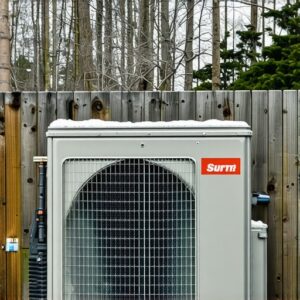
Listen closely. That isn’t just a noise; it’s the mechanical protest of a system fighting a losing battle against physics. When a heat pump starts buzzing, most homeowners ignore it until the house is 45 degrees and the pipes are threatening to burst. My old mentor, a man who had more refrigerant in his blood than red cells, used to scream at me in the back of a freezing van: ‘You can’t cool what you can’t touch, and you can’t heat what you can’t move!’ He was obsessed with airflow, and he was right. Most of the ‘buzzing’ calls I get in the dead of a Northern winter aren’t because the unit is ‘old’—it’s because the system is suffocating.
“The most expensive equipment in the world cannot overcome a bad duct system.” – Industry Axiom
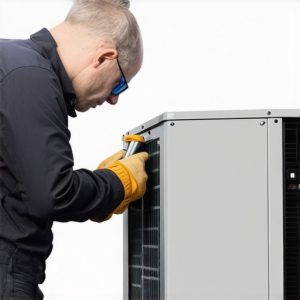
In the North, where the polar vortex turns your heat pump into an ice cube, buzzing is the sound of a system under extreme stress. We aren’t in the desert here; we are dealing with high-static pressure and the brutal reality of defrost cycles. If your unit sounds like a swarm of angry hornets, you’re likely looking at an electrical component vibrating at 60 hertz or a mechanical part trying to tear itself out of the chassis. Let’s perform a forensic diagnosis on your HVAC anatomy before some ‘Sales Tech’ tries to convince you that a buzzing contactor requires a $12,000 system replacement.
The Mechanical Anatomy: Why the Hum Happens
First, we look at the contactor. Think of this as the heart’s valve. It’s an electromagnetic switch that pulls in to send high-voltage power to the compressor and the fan motor. Over time, the silver coating on the points wears down, or a rogue spider decides to take a permanent nap between the contacts. This causes ‘chattering.’ The ‘Sparky’ down the street might call it a simple circuit issue, but it’s often a symptom of low voltage from a failing transformer or a faulty control board. If you hear a constant hum coming from the outdoor cabinet even when the fan isn’t spinning, that contactor is likely stuck or struggling to pull in.
Next, we move to the reversing valve. This is what makes a heat pump different from a standard AC. It’s a four-way valve that flips the flow of the ‘juice’ (refrigerant) to change the coil from an evaporator to a condenser. It uses a solenoid coil to slide a block inside the valve. When that solenoid starts to fail, or if the refrigerant charge is low, the valve might get stuck halfway. This creates a bypass of high-pressure gas that sounds like a deep, vibrating groan. This is where thermodynamic zooming comes in: if that gas isn’t compressed and directed properly, you lose the latent heat exchange. You aren’t just losing comfort; you are burning money through your meter.
The Frozen Coil and the Blower Motor’s Last Stand
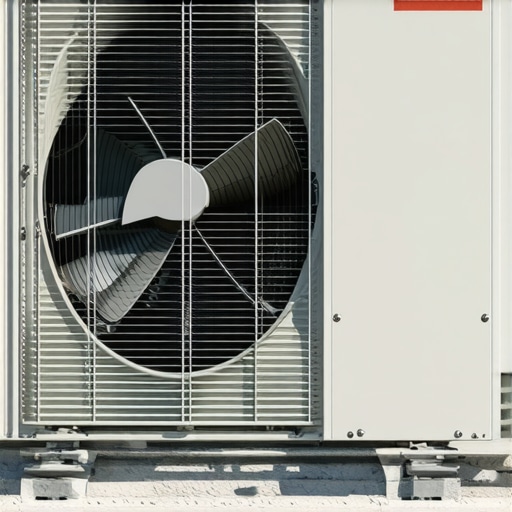
In our climate, ice is the enemy. When the outdoor temp drops, the moisture in the air hits that sub-freezing evaporator coil and turns to frost. The unit should go into a defrost cycle, but if your annual heating inspection was skipped, the sensors might be blind. When the fan blade hits a chunk of ice, it creates a rhythmic buzzing or thumping. Worse, if the ice builds up, the fan motor has to work against increased static pressure. This leads to a blower motor replacement faster than you can say ‘frozen pipes.’ A motor that can’t move air will overheat, and the internal windings will start to vibrate—that’s the ‘electrical buzz’ you hear through the vents.
“Standard 180-2018 establishes minimum HVAC inspection and maintenance requirements that preserve the ability of the system to provide designated projects and services.” – ASHRAE Standards
Don’t forget the ‘Pookie’ and the ‘Tin Knockers.’ If your ductwork wasn’t sealed with proper mastic (Pookie) by the original installers, the vibration of the unit can travel through the metal like a tuning fork. Sometimes the ‘buzz’ isn’t the unit at all, but a loose piece of sheet metal vibrating against a joist because the static pressure is too high from a clogged filter. If you’re running high-efficiency heat pump solutions, these tolerances are even tighter. You can’t just slap a thick HEPA filter into a system designed for a cheap fiberglass mesh without adjusting the motor speed, or you’ll kill the compressor with liquid slugging.
Diagnostic Logic: Repair vs. Replace
When I’m out on a call, I look at the control board diagnostics. Modern boards have LED flash codes that tell a story, but they don’t replace a voltmeter and a set of gauges. If the buzzing is coming from the compressor itself, we have a problem. It could be ‘slugging,’ where liquid refrigerant is getting back to the compressor because the indoor coil is too dirty to evaporate the gas. Compressors are designed to compress gas, not liquid. Trying to compress liquid is like trying to squeeze a rock—something is going to break, and the sound it makes before it dies is a metallic, high-pitched buzz.
Is it worth fixing? A contactor is a $200-$400 repair. A reversing valve solenoid is similar. But if the ‘juice’ has leaked out because of a vibratory crack in the suction line, you’re looking at a major repair. This is why choosing the best heating service matters. A ‘Sales Tech’ will hear that buzz and tell you the whole ‘sealed system’ is compromised and you need a 16-SEER replacement today. A real tech will check the capacitor first. A weak capacitor can’t give the motor the ‘kick’ it needs to start, leaving it humming in a locked-rotor state until the thermal overload triples and shuts it down.
The Airflow Manifesto: Beyond the Buzz
To stop the noise, you have to respect the physics. This means looking at HVAC maintenance plans that actually include cleaning the coils and checking the ‘gas’ levels. It’s about ensuring your HEPA filter systems aren’t choking the blower. It’s about making sure your whole-home humidifiers aren’t leaking moisture into the control board cabinet, causing those electrical shorts that sound like a backyard bug zapper. If you’re running specialized equipment like biomass boiler services or even restaurant kitchen exhaust repair, you know that grease and ash are just as deadly as ice. Even a swamp cooler maintenance routine in the off-season involves preventing the rust that leads to imbalanced fans and, you guessed it, more buzzing. If you need a pro to look at your system, contact us before the hum becomes a bang.