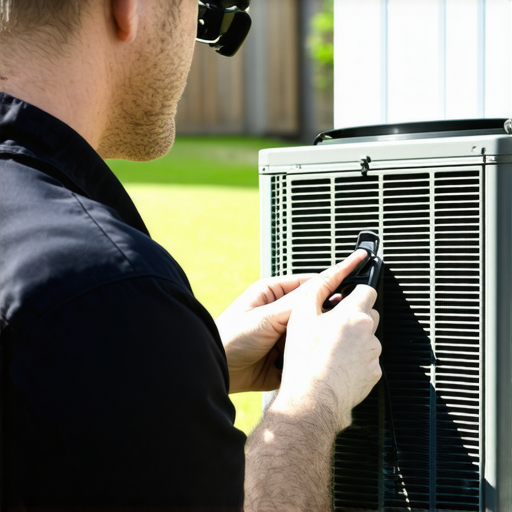

The Reckoning of R-410A and Why Geothermal is the Survivor
Listen, if you are still chasing a standard air-source box because some ‘Sales Tech’ in a clean uniform told you it’s the ‘latest and greatest,’ you are walking straight into a financial buzzsaw. I’ve spent thirty years in the trade, mostly in the Northeast where the wind-chill makes steam boiler repair a midnight emergency, and I’ve seen every fad come and go. But 2026 is different. We are hitting a regulatory cliff. The EPA is phasing out R-410A, and the new A2L refrigerants—while technically ‘mildly flammable’—are driving the price of standard heat pump solutions through the roof because of the added sensors and safety mitigation required. This is why Geothermal is no longer just a ‘green’ hobby; it is the only way to escape the refrigerant war.
“Design conditions shall be based on the 99% heating and 1% cooling design temperatures to ensure equipment is sized for the actual load, not a guess.” – ACCA Manual J
My old mentor, a grizzled old tin knocker who could smell a cracked heat exchanger from the driveway, used to grab me by the collar and scream, ‘You can’t pump what you can’t touch!’ He was talking about heat transfer. In the dead of a New York winter, an air-source unit is trying to squeeze blood from a stone—trying to find heat in -5°F air. It’s a losing battle. Geothermal, however, touches the 55°F constant temperature of the earth. It isn’t magic; it’s physics. While the guy across the street is paying for gas furnace repair or stressing over a propane conversion service, the geo-owner is just moving heat from the ground into the house. It’s the ultimate thermal cheat code.
1. The Stability of the Heat Sink: Thermodynamic Zooming
Let’s talk about sensible vs. latent heat. In a cold climate, your biggest enemy is the defrost cycle. On a standard air-source unit, when the temperature drops, the outdoor coil freezes over. The system has to reverse itself, essentially running the AC in the winter to melt the ice, while your electric heat strips (the most expensive way to heat a home) kick in to keep you from shivering. That is a massive waste of ‘juice.’ A geothermal system never sees the frost. Because the loop is buried below the frost line, the refrigerant-to-water heat exchanger always sees a stable temperature. This means your heat pump replacement strategy for 2026 should focus on COP (Coefficient of Performance). While a standard unit might hit a COP of 2.0 in the cold, a geo-unit is sitting pretty at 4.0 or 5.0. That means for every dollar of ‘gas’ (electricity) you put in, you get five dollars of heat out.
2. The Death of Combustion and Carbon Monoxide Risks
Every year, I get calls for carbon monoxide detector installation and the inevitable gas furnace repair because a 20-year-old heat exchanger finally rotted through. Combustion is inherently dangerous and inefficient. When you burn gas, 10% to 20% of your money goes straight up the flue pipe. Geothermal eliminates the flame entirely. You don’t need a fireplace insert service to supplement your heat because the geo-unit doesn’t lose capacity as it gets colder outside. Plus, you’re removing the risk of CO poisoning entirely from your HVAC system. If you’ve been looking at infrared heater installation for a drafty workshop, a well-designed geothermal system with proper ductwork renders that obsolete. It provides a constant, gentle lift of temperature that doesn’t dry out your sinuses like a forced-air gas furnace.
“The most expensive equipment in the world cannot overcome a bad duct system.” – Industry Axiom
3. Longevity vs. The Disposable Era
We live in a world of disposable appliances. A modern air-source condenser is lucky to last 12 to 15 years before the salt, rain, and snow eat the fins or a sparky has to come out and tell you the compressor is grounded. Geothermal units are housed indoors, safe from the elements. The ‘insides’—the compressor and heat exchanger—typically last 25 years, while the ground loop (the expensive part) is rated for 50 or more. When you factor in top hvac repair strategies, geothermal wins because you aren’t replacing the whole rig every decade. You’re just maintaining the indoor cabinet. No more hosing down coils or worrying about a dryer vent cleaning disaster sparking a fire near an outdoor gas line.
4. Total Climate Control: Humidity and Airflow
In the North, the winter air is as dry as a bone. That’s why we see so many requests for whole-home humidifiers. Geothermal systems are often paired with variable-speed blowers that allow for much better integration with humidity control. Because the system runs at lower, more consistent speeds, it passes air over the humidifier pads more effectively. It’s about static pressure and airflow. If your tin knocker didn’t size your returns right, your system is suffocating. I’ve seen ‘professionals’ slap some duct tape on a leak and call it a day, but I prefer pookie (mastic). A sealed, geothermal-driven system ensures that every CFM of air is treated and filtered. If you are tired of the ‘cold blow’ effect from older heat pumps, 2026 geothermal tech is the answer. It delivers air that feels ‘beer can cold’ in the summer and ‘suction line warm’ in the winter. For those still clinging to old tech, preventative heating maintenance is a start, but it won’t fix a fundamentally inefficient heat source. If you’re ready to stop the bleeding, it’s time to look under the dirt. Contact us to see if your lot is right for a loop.