The Sound of a Choked System
Listen closely to your mechanical closet. Is it a soft hum or a localized hurricane? If your furnace sounds like a jet engine trying to take off from your basement, you don’t have a power problem—you have a physics problem. I’ve spent three decades in the trenches, crawling through crawlspaces and dragging my tool bag across ice-slicked roofs, and I can tell you that most ‘broken’ heaters are actually just gasping for air. We are entering an era where high-efficiency modulating furnace repair is becoming the norm, but these sophisticated machines are the first to die when the ductwork is garbage. If the static pressure isn’t right, that expensive blower motor is going to cook itself long before its time.
The Sales Tech Scam: A $12,000 Misdiagnosis
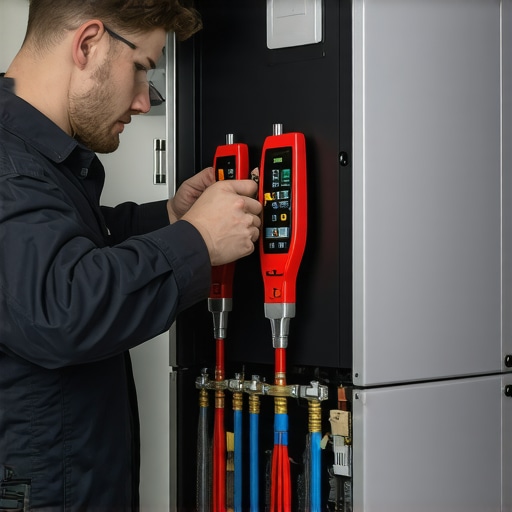
Last November, I pulled up to a house in a blizzard to follow a ‘Sales Tech’ who had just finished telling a young couple their five-year-old high-efficiency furnace was ‘toast.’ He’d quoted them $12,000 for a full replacement because the blower motor replacement he’d performed twice before kept failing. He told them the heat exchanger was probably ‘restricted’ and the whole unit was a lemon. I walked in, pulled out my dual-port manometer, and poked two holes in the plenum. The Total External Static Pressure (TESP) was 1.2 inches of water column. For those of you who don’t speak ‘Tin Knocker,’ that’s like trying to run a marathon while breathing through a cocktail straw. The furnace wasn’t the problem; the 12-inch return duct was. I spent two hours resizing the return drop and cleaning a filthy secondary heat exchanger. Total cost? A fraction of his quote. That heater is still humming today. Before you commit to a boiler repair services or a new furnace, you need to understand the ‘Airflow Manifesto.’
“The most expensive equipment in the world cannot overcome a bad duct system.” – Industry Axiom
Fix 1: The Return Air Expansion (Curing the Vacuum)
Most HVAC installers are lazy. They’ll slap a 100,000 BTU furnace on a return box designed for a 60,000 BTU unit and wonder why the limit switch keeps tripping. In a modulating furnace repair scenario, the system tries to adjust its flame and blower speed to match your heat load. If the return air is restricted, the blower has to work twice as hard, creating a vacuum that pulls juice (electricity) like a thirsty humvee. You can check this yourself: if your furnace door whistles or is hard to pull off while the fan is running, you’re choked. To fix this for 2026, we often install a ‘panning’ system or a larger return drop. We use Pookie (mastic) to seal every joint because every leak is lost efficiency. Proper airflow prevents the heat exchanger from overheating, which is the leading cause of cracked metal and dangerous carbon monoxide leaks. If you’re looking for choosing the best heating service expert tips for 2025, make sure they own a manometer.
Fix 2: Blower Wheel Decontamination and Wiring Integrity
People think a filter catches everything. It doesn’t. Over five or ten years, microscopic dust bypasses the filter and cakes onto the curved blades of the blower wheel. This changes the aerodynamics of the blade, turning it into a flat, inefficient paddle. When this happens, the motor heat rises. If you are facing a frequent blower motor replacement, check the wheel. A heavy wheel causes the motor to pull high amperage, eventually melting the insulation in your wiring repair for heating systems. We don’t just swap parts; we scrub those wheels until they’re ‘beer can cold’—a term we usually save for the suction line, but it applies to the precision here. While we’re in there, we check the thermocouple replacement needs for older atmospheric units or the flame sensors on the new ones. High static pressure creates ‘flame rollout,’ where the fire literally reaches back toward the Sparky-installed wiring because it has nowhere else to go.
“Standard 62.2 specifies the minimum requirements for mechanical ventilation in residential buildings to ensure acceptable indoor air quality.” – ASHRAE Standards
Fix 3: Filter Grille Optimization and Static Balancing
Those 1-inch pleated ‘high-efficiency’ filters you buy at the big box store? They are equipment killers. They have so much initial resistance that they eat up half of your available static pressure before the air even hits the heater. For 2026, the fix is moving to a 4-inch media cabinet. This increases the surface area, allowing air to pass through slowly but in higher volumes. This is critical for boiler repair services that utilize air handlers or hot water heater repair setups involving hydronic coils. If your static pressure is still high after a filter change, we look at the supply trunk. Sometimes, a single pinched flex duct is the culprit. Ensuring your system is balanced means you won’t need portable heater safety checks because every room will actually be comfortable. This is why preventative heating maintenance is a requirement, not a suggestion.
The Thermodynamic Reality of 2026
We are moving toward stricter regulations. Whether it’s ventless gas heater services in specific zones or the transition to new refrigerants, the margin for error is shrinking. A system with high static pressure will fail 70% faster than a balanced one. This is why priority service memberships are becoming popular; they allow us to track your TESP over time. If I see the pressure creeping up from 0.5 to 0.7 over two years, I know your coil is plugging up or your ducts are collapsing. Don’t let a ‘Sales Tech’ tell you that you need a new unit just because the blower died. Demand a static pressure test. It’s the difference between a $500 fix and an $8,000 mistake. If you want to dive deeper into how to keep your rig running, check out these top hvac repair strategies to extend your systems life. Airflow isn’t just part of the job; it is the job. Stop suffocating your heater and start measuring the pressure. Your wallet will thank you when the January freeze hits.