The 2026 Reality: Beyond the R-410A Phase-Out
I’ve spent over thirty years crawling through spider-infested crawlspaces and balancing on ice-slicked commercial rooftops, and if there’s one thing I’ve learned, it’s that the industry loves a good panic. Right now, everyone is screaming about the R-410A phase-out and the transition to A2L refrigerants like R-454B. While the ‘Sales Techs’ are busy trying to scare you into a $20,000 change-out before the ‘mildly flammable’ gas becomes the standard, the real pros are looking at the physics of the 2026 mandates. We aren’t just changing juice; we are changing how we harvest energy. This is where solar thermal heating integration stops being a ‘green’ hobby and starts being the most logical mechanical upgrade for anyone dealing with a North American winter.
The Physics Lesson: Why Airflow Isn’t Always King
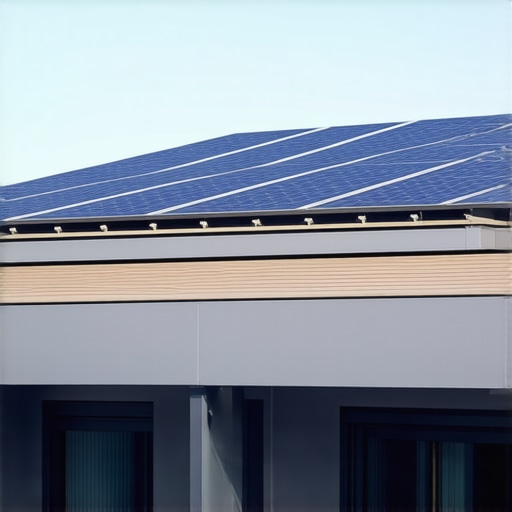
My old mentor, a grizzled tin knocker who could smell a cracked heat exchanger from the driveway, used to scream at me, ‘You can’t cool what you can’t touch, and you can’t heat what you can’t hold!’ This is the fundamental flaw with forced-air systems in cold climates. Air is a terrible conductor of thermal energy. It’s thin, it leaks, and it loses its ‘charge’ the moment it hits a cold window. Solar thermal heating integration focuses on the density of water. By using vacuum tubes or flat-plate collectors to capture sensible heat from the sun and dumping it into a hydronic heating system, we are playing a different game. We are using the sun to do the ‘heavy lifting’ of raising the delta-T (temperature difference) before your boiler or heat pump even kicks on.
“The most expensive equipment in the world cannot overcome a bad duct system, but a well-integrated hydronic loop can redefine the efficiency of the entire thermal envelope.” – Industry Axiom
The Regulatory Cliff: Why 2026 Changes Everything
We are approaching a regulatory cliff. By 2026, the efficiency standards for hotel boiler services and residential systems are tightening to a point where traditional combustion just won’t cut it without massive footprints. When you integrate solar thermal with a heat pump installation, you are creating a hybrid monster. In the HVAC world, we call this ‘decarbonization,’ but I call it ‘not being a slave to the utility company.’ If you’re in a cold climate like Chicago or the Northeast, you know that heat pumps struggle when the mercury drops below 20°F. The ‘Monsoon Effect’ of cold air kills your COP (Coefficient of Performance). However, if your solar collectors have pre-heated your return fluid to even 60°F or 70°F, your heat pump thinks it’s a spring day in Georgia. This is why heat pump solutions for efficient home comfort in 2025 and beyond rely so heavily on thermal storage.
Thermodynamic Zooming: The Solar-Hydronic Loop
Let’s talk pookie and pipes. A solar thermal system isn’t just a panel on a roof; it’s a circulation loop. In a radiant floor heating installation, we are laying miles of PEX pipe in a concrete slab. That slab is a giant thermal battery. When the sun hits those collectors, the glycol-mix fluid absorbs that radiation. We then use a heat exchanger—not unlike the evaporator coil in your AC—to transfer that energy into your floor’s water loop. We aren’t ‘blowing’ heat; we are radiating it. This is why IAQ improvement services (Indoor Air Quality) are so much easier with these systems; you aren’t blowing dust and dander through 20-year-old dirty ducts. You’re just moving molecules. If you’ve been searching for choosing the best heating service expert tips for 2025, you’ll find that the guys who understand fluid dynamics are the only ones you should trust with this kind of integration.
The Commercial Scale: Restaurants and Hotels
If you’re running a commercial kitchen, you’re fighting a constant war with your restaurant kitchen exhaust repair. You’re sucking out thousands of cubic feet of conditioned air every minute to get rid of grease and smoke. That’s ‘make-up air’ you have to heat. By integrating demand-controlled ventilation with a solar-thermal pre-heat coil, you can slash your gas bill by 40%. The same goes for large-scale hotel boiler services. Domestic hot water is one of a hotel’s biggest expenses. Why burn gas to take 50°F city water up to 120°F when the sun can take it to 90°F for free? It’s basic math, but it requires a tech who knows more than just how to swap a filter.
“Designers shall ensure that solar thermal systems are sized to prevent stagnation temperatures that exceed the limits of the system components.” – ASHRSAE Standard 90.1
Common Failures: It’s Always the Small Stuff
I’ve been called out to ‘broken’ solar systems where the owner was quoted $10,000 for a total replacement by some Sparky who didn’t understand the plumbing side. Nine times out of ten, it’s a contactor repair or a failed circulation pump. Or even simpler, the programmable thermostat programming was set up by someone who didn’t understand the lag time of a thermal mass. You can’t treat a radiant floor like a forced-air furnace; you don’t ‘crank it up’ when you get home. You have to maintain the steady state. This is where top hvac repair strategies to extend your systems life come into play—maintenance on these systems means checking the glycol pH levels and ensuring the expansion tank hasn’t waterlogged. It’s not rocket science; it’s just basic mechanical upkeep that ‘Sales Techs’ ignore because they can’t sell you a whole new unit if they just fix a $50 valve.
The Garage and Auxiliary Spaces
Don’t overlook the garage heater installation. Most people put a cheap, inefficient ‘hot box’ in the ceiling that burns through propane like it’s free. If you have a solar-thermal loop, you can easily run a small branch to a unit heater in the garage. This is the ‘Smart Fix’ of 2026—leveraging one energy source across multiple zones. This level of complexity is why preventative heating maintenance is no longer optional. If your solar loop loses pressure and you don’t have a low-pressure cut-off, you’ll burn out your pumps. If your IAQ improvement services aren’t synced with your ventilation, you’ll end up with condensation on your windows. Everything is connected. If you need a pro who actually knows how to turn a wrench and read a manifold gauge, you should contact us before you sign a contract for a system that’s obsolete before the ink dries.
Closing the Loop
The transition to solar-thermal integration is about more than just ‘being green.’ It’s about mechanical resilience. When the grid is stressed during a polar vortex and the price of juice spikes, or when your neighbor’s fancy new A2L heat pump is struggling because the ambient temp is -10°F, your hydronic slab—pre-heated by the sun—is still radiating comfort. It’s the difference between fighting physics and using physics to your advantage. Don’t let a salesman talk you into a ‘simple’ fix that costs more in the long run. Demand a system that integrates hydronic heating systems with modern solar technology. It’s the smartest move you can make for 2026 and beyond. Stay warm, stay cynical, and always check your static pressure.