The Anatomy of a Winter Emergency
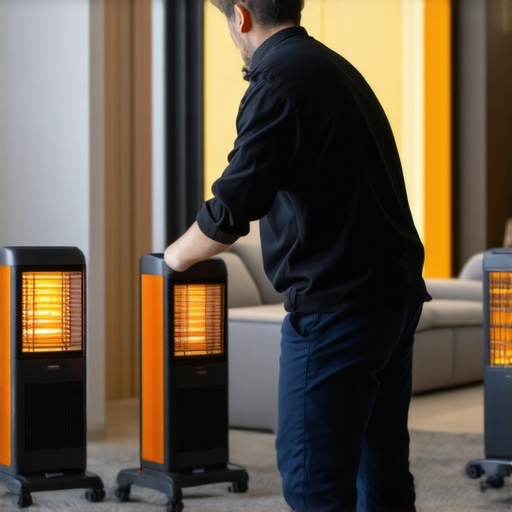
I remember a call back in the ’98 freeze. I pulled up to a house where the windows were vibrating from the sound of a steam boiler repair job gone wrong. The homeowner had three portable space heaters plugged into a single power strip because their main system had quit. The smell? It wasn’t just old dust; it was the distinct, acrid scent of melting plastic. That’s the smell of a structure fire waiting for an invitation. When your furnace dies, the first instinct is to run to the big-box store and buy a $40 ceramic heater. But as a guy who’s spent thirty years crawling through joists, I’m telling you: that $40 plastic box is a thermodynamic landmine if you don’t respect the physics of heat transfer.
The Sales Tech Scam: A Forensic Lesson
Last season, I followed a ‘Sales Tech’—one of those guys who spends more time on his hair than his manifold gauges—who told a retired teacher she needed a $18,000 oil to gas conversion because her burner was ‘lethal.’ I walked in, pulled the cover, and found a soot-caked flame sensor. A five-minute furnace flame sensor cleaning was all it took to get the ‘juice’ flowing and the burners dancing again. He wanted a commission; I wanted her to have heat. But while she was waiting for me, she had a portable heater sitting directly on a shag carpet. That’s how we lose houses. Before you rely on those ‘temporary’ fixes, you need to understand the mechanical anatomy of your home’s heating system.
“The most expensive equipment in the world cannot overcome a bad duct system, nor can a portable unit replace the safety of a properly vented combustion appliance.” – Industry Axiom
Check 1: The Electrical Load & The ‘Sparky’ Rule
A standard portable heater pulls 1,500 watts. In the world of physics, that’s about 12.5 amps. If you’re living in an older home where the gas line installation for furnaces was done decades ago, your electrical panel is likely just as ancient. When you plug that heater into a shared circuit, you’re hitting the thermal limit of the copper. If the breaker doesn’t trip, the heat doesn’t stay in the heater—it builds up in the wall wires. I’ve seen ‘Sparkies’ (electricians) pull out wires where the insulation has turned to charcoal. Never, and I mean never, use an extension cord. The resistance creates a voltage drop, the heater’s fan slows down, the internal elements overheat, and you’ve got a localized sun sitting on your floor.
Check 2: Proximity and the 3-Foot Radius
Heat moves in three ways: conduction, convection, and radiation. Portable heaters are masters of radiant heat. They don’t just warm the air; they excite the molecules of whatever they’re pointed at. If that’s your curtains or a stack of newspapers, you’re reaching the auto-ignition temperature faster than you think. In restaurant kitchen exhaust repair, we deal with grease fires because of heat proximity; your living room is no different. Keep a three-foot ‘clear zone’ around the unit. If you can’t walk around it without tripping, it’s in the wrong spot.
Check 3: The Silent Killer—Carbon Monoxide and Ventilation
If you’re using a propane or kerosene portable heater indoors, you’re playing Russian roulette with chemistry. These units consume oxygen and spit out carbon monoxide (CO). In a tight, modern home, that CO level can spike in minutes. This is why carbon monoxide detector installation isn’t a suggestion; it’s a life-saving mandate. Even with a heat pump or a variable speed furnace, a cracked heat exchanger can leak CO. In the cold North, we see ‘flame rollout’ where the fire literally reaches out of the cabinet because it can’t find enough oxygen. If you’re using a portable gas heater, you’re essentially running an unvented engine in your bedroom.
“Unvented fuel-burning space heaters shall not be used as a primary heat source and must be equipped with an oxygen depletion safety shutoff system.” – NFPA 54 / ANSI Z223.1
Check 4: The Internal Dust Trap and Maintenance
Just like a furnace flame sensor cleaning is vital for your central air, your portable heater needs a ‘tin knocker’s’ eye. Dust is flammable. When it settles on the ceramic fins or the wire coils of a portable unit, the first time you turn it on, that dust carbonizes. If the fan motor is sluggish—listen for a high-pitched screech—the unit won’t move enough air to cool the elements. This leads to a thermal runaway. If you’re experiencing frequent shutdowns, don’t just keep resetting it. It’s telling you that the internal limit switch is doing its job to prevent a meltdown. At this point, you’re better off looking into preventative heating maintenance for your main system rather than pushing a failing portable unit to its limit.
Modern Solutions: Beyond the Band-Aid
If your home is consistently cold, the answer isn’t more portable heaters; it’s better technology. Inverter-driven compressors and heat pump solutions for efficient home comfort in 2025 have changed the game. These systems don’t just blast on and off; they modulate, providing a steady stream of sensible heat that eliminates the ‘cold spots’ that drive people to use dangerous portables. For those with old hydronic systems, a steam boiler repair or a hot water heater repair might seem expensive, but compared to the cost of a fire claim, it’s pocket change. If you’re struggling to decide, check out these top HVAC repair strategies to see if your current system can be saved.
The Thermodynamic Reality
Comfort is a matter of physics, not magic. Whether you are looking for choosing the best heating service or trying to DIY a quick fix, remember that heat wants to move from where it is to where it isn’t. Your job is to make sure it doesn’t take your house with it. Stop relying on ‘the orange glow’ and get your variable speed furnace services scheduled. A properly tuned system uses the ‘suction line’ and the ‘liquid line’ to move energy efficiently, keeping your family safe without the fire risk. If you’re worried about your current setup, contact us today before the next polar vortex hits. Stay warm, stay cynical, and for heaven’s sake, keep the ‘Pookie’ away from the heater vents.
This post really emphasizes how important proper maintenance and safe practices are when using portable heaters, especially during cold snaps. I’ve seen how a small dust buildup or using an extension cord can lead to fires, which is frightening. It’s surprising how many people overlook these simple checks, thinking a heater is just plug-and-play. I’ve personally replaced a faulty fan motor on an electric space heater that was overheating because of clogged filters and dust. It’s a reminder that regular cleaning can prevent thermal runaway.I’m curious, how often would you recommend homeowners check their portable heaters for dust and wear, especially if they’re used daily? Also, do you think smart sensors integrated into heaters could help monitor and alert homeowners to risks like dust buildup or electrical issues? It seems like technological advancements could make our safety precautions more proactive rather than reactive.