The Physics Lesson: Why You Can’t Heat What You Can’t Reach
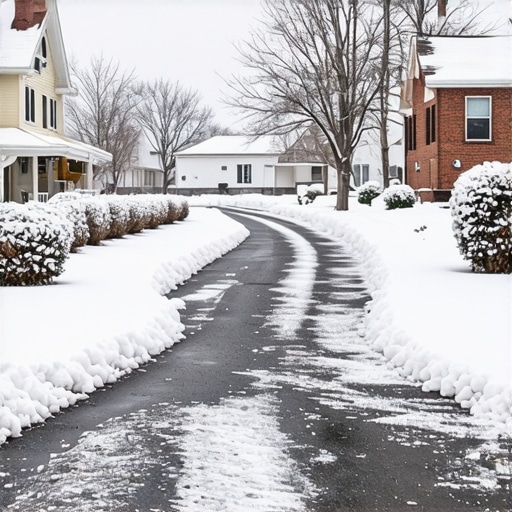
My old mentor, a man who had more soot in his lungs than a 1970s coal boiler, used to grab me by the collar and scream, ‘You can’t heat what you can’t touch, kid!’ He wasn’t talking about hugging the furnace. He was talking about the fundamental transfer of thermal energy. In the world of hydronics and snow melt systems, this is the law. If your BTU output isn’t reaching the slab because of poor insulation or a dying circulator pump, you’re just burning money to keep the worms warm. This is the reality we face as we head into 2026. The days of ‘just oversized it’ are dead. We are entering an era of precision, where the delta-T across a manifold matters more than the name on the box. For decades, homeowners in the frozen North have treated snow removal as a manual chore, but as energy codes tighten and the labor for shoveling disappears, the hydronic snow melt system has moved from a luxury to a technical necessity.
The Thermodynamic Zoom: Latent Heat and the Slab
When we talk about melting snow, we aren’t just ‘making it hot.’ We are dealing with the enthalpy of fusion. To turn one pound of ice at 32°F into one pound of water at 32°F, you need to move 144 BTUs of energy. That is latent heat, and it’s the silent killer of undersized systems. A lot of ‘Sales Techs’ will try to sell you a shop heater or a basic boiler without doing the math, but a real airflow architect knows that if your slab isn’t buffered correctly, the ground will suck that heat away before a single snowflake vanishes. We use PEX-a tubing buried in the concrete, carrying a glycol-water mix that won’t freeze when the power pops. This isn’t just plumbing; it’s a vascular system for your driveway. If the flow rate is off, or if your oil to gas conversion wasn’t handled with a high-efficiency condensing boiler, you’re going to see ‘striping’—where the snow melts over the pipes but stays frozen in between. That’s the mark of an amateur.
“Snow melting systems shall be designed to provide a heat output that exceeds the heat loss of the slab to the ground and the atmosphere during the melting process.” – ASHRAE Applications Handbook
The 2026 Regulatory Cliff: Efficiency and Dual Fuel Heat Pump Systems
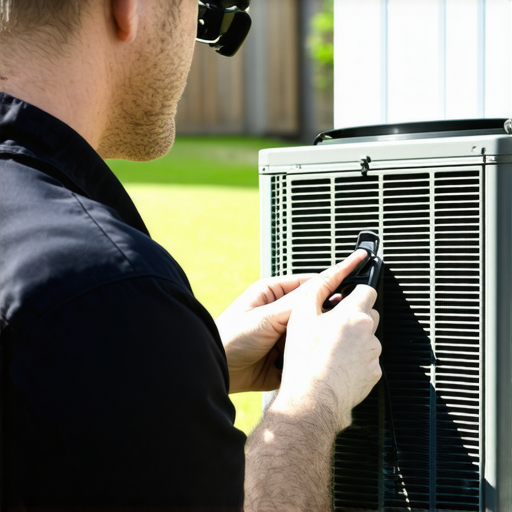
By 2026, the way we generate that heat is changing. We are seeing a massive shift toward dual fuel heat pump systems. Why? Because the ‘Sparky’ (electrician) and the ‘Tin Knocker’ (duct guy) are now working on the same team. In milder cold, the heat pump handles the load with a high COP (Coefficient of Performance). When the polar vortex hits and the thermometer drops into the negatives, the gas furnace or boiler kicks in to provide that raw, high-intensity heat needed for the snow melt manifold. This is where combustion analysis becomes critical. I’ve seen too many systems running ‘rich’—too much fuel, not enough air—which leads to carbon monoxide buildup and soot-clogged heat exchangers. If you aren’t getting heat exchanger cleaning done annually, you’re basically running a car with a clogged exhaust. It’s dangerous, and it’s inefficient.
The Forensic Diagnosis: Why Your Old System is Failing
If your current heating system sounds like a bag of rocks in a dryer, it’s likely a failing bearing or a scaled-up heat exchanger. When I walk into a mechanical room and smell that ‘sour’ acidic scent, I know a compressor is burning out or a boiler is leaking flue gas. This is why preventative maintenance contracts are the only way to survive a Northern winter. A carbon monoxide detector installation isn’t a suggestion; it’s a life-saving requirement. I followed a guy last year who told a homeowner they needed a $20,000 heat pump replacement because of a ‘dead’ unit. I checked the contactor—it was just a scorched bug stuck in the points. A five-cent fix, but the ‘Sales Tech’ wanted the commission. I’m here to tell you that HVAC maintenance plans should focus on the ‘juice’ (refrigerant levels), the static pressure of the air, and the integrity of the heat exchanger, not just a sales pitch. If you are worried about your current setup, you should check out top hvac repair strategies to see if your unit is truly a goner.
Airflow and Indoor Air Quality: The ERV Factor
When we seal a house up tight enough to make a snow melt system efficient, we create a new problem: stagnant air. This is where energy recovery ventilators (ERVs) come in. You can’t just let the house breathe through ‘leaks’ anymore; that’s like trying to fill a bucket with holes in it. An ERV swaps the stale, indoor air with fresh outdoor air while ‘stealing’ the heat from the outgoing stream. It keeps your humidity levels stable so you don’t wake up with a bloody nose and dry skin. It’s the lungs of the 2026 home. Without proper preventative heating maintenance, these units get clogged with dust and dander, and suddenly your ‘high-tech’ home feels like a locker room. You can find more on keeping things running smooth at preventative heating maintenance.
“The most expensive equipment in the world cannot overcome a bad duct system or a poorly insulated slab.” – Industry Axiom
The Verdict on 2026 Installations
Whether you are looking at shop heater services for a commercial garage or a full residential oil to gas conversion for your new snow melt system, the math has to be right. Stop listening to the guys who use ‘Pookie’ (mastic) to cover up air leaks instead of fixing the metal. True comfort comes from understanding the psychrometrics of your home. If you’re ready to stop shoveling and start living in a balanced, efficient environment, you need an architect of airflow, not a parts changer. For specialized advice, look into heat pump solutions to see how they integrate with modern hydronics. Don’t wait for the first blizzard of 2026 to realize your system is inadequate. The time for combustion analysis and system optimization is while the ground is still soft.