The Phantom in the Mechanical Room: Understanding the Blower Motor Heart
You wake up at 3 AM in the middle of a February freeze. The house feels thin, the air is stagnant, and there is a faint, rhythmic thumping coming from the basement. As a guy who has spent three decades elbow-deep in heat exchangers and wrestling with rigid ductwork, I can tell you that sound is the death rattle of your blower motor. Most homeowners ignore it until the house hits 50 degrees and they are calling for emergency heating repair at premium holiday rates. My old mentor, a grizzly veteran who could diagnose a bad compressor by taste, used to scream at me, ‘You can’t move heat if you can’t move air!’ He was right. You can have a million-BTU furnace, but if the blower motor isn’t pushing that sensible heat through the vents, you just have a very expensive, dangerous paperweight sitting in your mechanical room.
“The most expensive equipment in the world cannot overcome a bad duct system or a failing distribution fan.” – Industry Axiom
In 2026, we are seeing a massive shift in how these motors operate. We’ve moved away from the old permanent split capacitor (PSC) motors that were either ‘on’ or ‘off’ and moved toward inverter-driven compressors and ECM (Electronically Commutated Motors) that modulate their speed. While these are great for Energy Star heating certification, they are sensitive. They don’t just die; they suffer. They struggle against high static pressure caused by poor HVAC duct sealing until their control boards fry. If you want to avoid a massive bill, you need to recognize the forensic evidence of a motor on its way to the scrap yard.
Sign 1: The Screech of Metal-on-Metal (Bearing Failure)
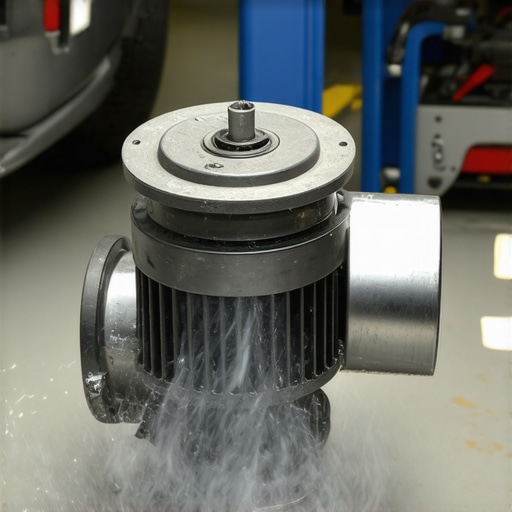
When a blower motor starts to fail, it usually screams about it first. If you hear a high-pitched squealing or a grinding sound, your bearings are shot. In the trade, we call this ‘the shriek of the damned.’ These motors are sealed units. You can’t just ‘oil them’ like the old 1970s belt-drive fans. When the lubrication dries out or the sleeve wears down, the friction creates immense heat. This heat transfers to the shaft, expanding the metal until the motor seizes. If you catch this early, you might save the control board diagnostics from showing a total failure. If you wait, that friction creates an electrical load that will pop your capacitor or, worse, melt the wiring harness. This is a common sight during commercial furnace repair where units run 24/7, but it’s becoming a plague in residential units with undersized return air drops.
Sign 2: The ‘Ghost Puff’ and the Static Pressure Trap
Have you noticed that the air coming out of your registers feels like a tired old man blowing through a straw? Weak airflow is the primary symptom of a dying motor or a severely restricted system. In the cold North, we deal with thick filters and closed-off rooms that kill blowers. When you close vents to ‘save money,’ you increase the static pressure. The motor has to work twice as hard to push air into a pressurized box. This is where HVAC duct sealing becomes critical. If your ducts are leaking in the attic, the blower is sucking in cold, unconditioned air and working overtime to satisfy a WiFi thermostat integration that keeps telling it to run. Eventually, the motor’s internal thermal overload switch will trip. It’s a safety feature designed to stop the motor from catching fire, but every time it trips, you are one step closer to needing a full heat pump installation or furnace replacement. You can read more about keeping your system alive in our guide on top HVAC repair strategies to extend your systems life.
Sign 3: The Acrid Smell of Electrical Ozone
If you smell something like burning plastic or ‘fried’ electronics near your vents, shut the system down immediately. That is the smell of the motor windings melting. Inside that motor, there are miles of copper wire coated in a thin lacquer. When the motor overheats—usually because it’s fighting a clogged ‘A’ coil or a dirty filter—that lacquer melts. This causes a ‘short to ground.’ You’ll see the Sparky (electrician) shaking his head because now you’ve likely sent a surge back to the furnace control board. In 2026, these boards are essentially computers. One surge from a dying blower and you’re looking at a $1,200 repair before labor. This is why preventative heating maintenance is non-negotiable. We check the ‘amp draw’ of the motor during a tune-up. If it’s pulling more juice than it’s rated for on the nameplate, we know it’s dying before it starts to smell.
“Proper air distribution is fundamental to any HVAC design; without it, the most efficient equipment becomes a high-priced liability.” – ACCA Manual T
Sign 4: The Mystery of the Sky-High Utility Bill
If your electric bill looks like a car payment but the weather hasn’t changed, your blower motor might be the culprit. As motors age or get dirty, their efficiency drops off a cliff. An ECM motor is supposed to be smart, but if it’s constantly ramping up to 100% capacity just to move a minimal amount of air through a shop heater services setup or a residential furnace, it’s devouring kilowatts. We call this ‘the juice hog.’ This is especially true in boiler repair services that utilize air handlers. If the pump is moving hot water but the fan is dragging, you’re losing all that energy. It’s like driving your car in second gear at 60 miles per hour; you’ll get there, but you’re burning through the engine and the gas tank to do it.
Sign 5: Intermittent Cycling and Control Board Confusion
Modern HVAC systems are a delicate dance of sensors. Your WiFi thermostat integration communicates with the control board diagnostics, which then tells the blower what to do. If the blower has a dead spot on the armature, it might start sometimes and fail others. You’ll hear the ‘click’ of the relay, but the fan never kicks on. Or, it starts, runs for five minutes, and then quits. This is often misdiagnosed as a bad thermostat, but it’s actually the motor’s internal module failing. These 2026-era inverter motors have their own ‘brains’ bolted to the back of the motor. They are susceptible to moisture and vibration. If your tin knocker (duct guy) didn’t balance the fan wheel properly, that vibration will literally shake the solder joints loose on the motor’s computer chip. If you find yourself constantly resetting the breaker, stop. You are forcing a failing motor to run, and that’s how you end up needing emergency service on a Sunday morning.
The Verdict: Repair or Replace?
In the trade, we have a rule: if the repair costs more than 50% of a new unit, or if the unit is over 12 years old, you pull the plug. Blower motors are the ‘heavy lifters’ of the system. If yours is failing, it has likely already stressed the compressor or the heat exchanger. If you are looking for long-term efficiency, especially with the new 2026 regulations, a heat pump installation with a variable-speed blower is often the smarter play. You get that Energy Star heating certification and a warranty that covers you when the next ‘Polar Vortex’ hits. Don’t be the person who spends $800 on a motor for a 15-year-old furnace just to have the heat exchanger crack two months later. Get an honest tech who knows his static pressure from his latent heat to give you the real numbers. Comfort isn’t magic; it’s physics. And physics doesn’t care about your budget when the ‘gas’ (refrigerant) stops flowing and the air stops moving.