The Sound of a Silent House: A Forensic Diagnosis
It is 3:00 AM in the dead of January. The silence isn’t peaceful; it is heavy. It’s the kind of silence that wakes an HVAC tech out of a dead sleep because it means the inducer motor isn’t whining and the burners aren’t roaring. When the mercury drops and the wind starts howling through the eaves, your furnace isn’t just an appliance—it’s a life-support system. Most homeowners think heating is a simple binary: on or off. But after thirty years of crawling through fiberglass-filled attics and sniffing out gas leaks, I can tell you that winter performance is a delicate dance of thermodynamics, fluid dynamics, and mechanical endurance.
My old mentor, a man who had more silver in his hair than a roll of solder, used to grab me by the collar and scream, ‘You can’t heat what you can’t touch!’ This was his way of teaching me the Airflow Manifesto. He didn’t care about the brand on the cabinet; he cared about the Total External Static Pressure (TESP). If your furnace is a V8 engine, your ductwork is the exhaust and intake. You can have the most expensive gas furnace in the county, but if your ductwork is choked or your furnace filter replacement has been ignored for six months, that heat exchanger is going to bake itself to death. Heat exchangers are made of steel, and steel has a memory. Every time it overheats and expands too far because of poor airflow, it inches closer to a microscopic crack that leaks carbon monoxide into your bedroom. That is the reality of ‘skipping a tune-up.’
The Mechanical Anatomy of Winter Reliability
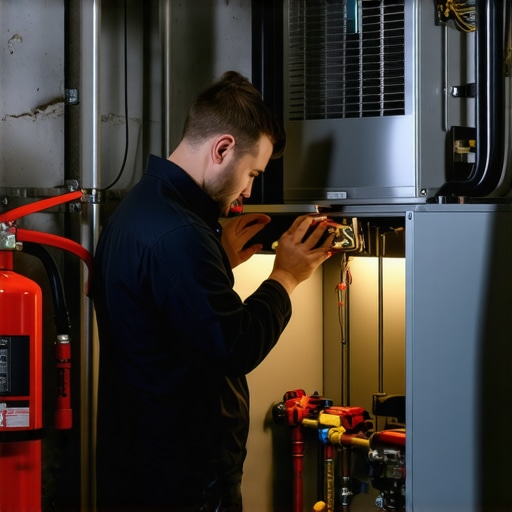
Let’s talk about the anatomy of a failure. When I walk up to a unit that isn’t firing, I’m looking for the ‘crime scene’ evidence. Usually, it starts with the capacitor replacement services. Most folks think capacitors are only for AC compressors, but your blower motor—the heart that pushes air through your home—relies on a start or run capacitor. When that juice box fails, the motor hums, overheats, and eventually dies. If you’re lucky, it just blows a fuse. If you’re unlucky, you’re looking at a $900 motor replacement in a blizzard. [IMAGE_PLACEHOLDER]
“The most expensive equipment in the world cannot overcome a bad duct system.” – Industry Axiom
In a cold climate, the chemistry of combustion is your primary concern. Gas furnace repair often boils down to three things: fuel, spark, and air. Modern high-efficiency furnaces (90%+ AFUE) create condensation as they pull heat out of the flue gases. In the North, if your drain lines aren’t pitched correctly or if the ‘Pookie’ (mastic) used by a lazy ‘Tin Knocker’ has blocked a vent, that water backs up and trips the pressure switch. It’s a safety feature, but it feels like a catastrophe when your pipes are at risk of freezing. This is why predictive maintenance alerts are becoming the gold standard. Instead of waiting for the lockout, smart sensors now monitor the microamps on your flame sensor. If that sensor is coated in carbon or oxidation, it won’t ‘see’ the flame, and the system will shut down for safety.
Thermodynamic Zooming: Why Insulation Matters
You can’t talk about heating without talking about the envelope. Attic insulation for heating is the literal blanket for your house. I’ve seen 100,000 BTU furnaces struggling to keep a 2,000-square-foot house at 68 degrees because the R-value in the attic was practically non-existent. The heat rises, hits the roof deck, and vanishes. It’s a ‘sensible heat’ loss that forces the unit to ‘short cycle.’ Short cycling is the silent killer of igniters and gas valves. The more times that system clicks on and off, the more wear and tear you’re putting on the mechanical components. If you’re planning a new construction heating design, you better ensure your ‘Sparky’ (electrician) and your HVAC contractor are on the same page about load calculations. Over-sizing a furnace is just as bad as under-sizing it; it leads to a home that feels like a sauna for five minutes and an icebox for twenty.
The Math of Modern Comfort
When is it time to pull the plug? I get asked this every day. If your heat exchanger is cracked, the conversation is over—replace it. But if you’re looking at a $500 capacitor replacement or a radiator replacement in an older hydronic system, you have to weigh the ‘juice’ against the squeeze. A 20-year-old furnace is likely operating at 60-70% efficiency. That means 30 cents of every dollar you spend on gas is literally going out the chimney. Upgrading to a modern system with geofencing temperature control can pay for itself in five winters, especially when you factor in the rebates for high-efficiency equipment. For those with peripheral heating needs, a garage heater installation or fireplace insert services can take the ‘latent’ load off the primary furnace, allowing for a more balanced thermal profile across the property.
“The primary purpose of a residential heating system is to provide a thermal environment that is productive and healthy for the occupants.” – ASHRAE Standard 55
Reliability isn’t a fluke; it’s physics. It’s ensuring your furnace filter replacement is done with a MERV 8 or 11, not a 13 that acts like a brick in your return air. It’s about checking the ‘Suction Line’ equivalents in the heating world—the manifold pressure. If your gas pressure is too high, you’re ‘over-firing’ the furnace, which turns your heat exchanger into a glowing orange ticking time bomb. If you want to learn more about keeping your system alive, check out these top HVAC repair strategies to extend your system’s life. If you’re worried about the upcoming 2025 regulations, you might want to look into preventative heating maintenance for 2025 to see how the new refrigerants and efficiency standards affect your bottom line.
The Final Verdict
Don’t be the homeowner who waits for the smell of a hot limit switch to call a pro. HVAC is about moving BTUs from one place to another with the least amount of resistance. Whether you are looking for expert heating tips or you need to contact us for a mid-winter emergency, remember that airflow is king. Keep your returns clear, your filters fresh, and your ‘Pookie’ sealed tight. Physics doesn’t care about your comfort, but a good tech does. Stay warm, stay safe, and listen to your equipment—it usually tells you it’s dying long before it actually quits.