The Frustrating Click of a Cold Boiler
You’re standing in your basement, the concrete floor pulling the heat right out of your socks. It’s 3 AM in mid-January, and that silence isn’t peaceful—it’s expensive. You’ve already done what the YouTube videos told you to do: you went to the big-box store, bought a generic thermocouple for fifteen bucks, and swapped it out. You purged the air, held the button down for sixty seconds, and… nothing. The flame dies the moment you let go. You’re ready to kick the jacket off your hydronic heating systems, but hold on. As a tech who has spent three decades sniffing out gas leaks and tracing 24v circuits in crawlspaces, I can tell you: you’re likely looking at a physics problem, not a parts problem.
The Physics Lesson: You Can’t Heat What You Don’t Touch
My old mentor, a grizzled tin knocker who could smell a cracked heat exchanger from the driveway, used to scream at me, ‘You can’t cool what you can’t touch, and you can’t sense what you don’t wrap in fire!’ He was talking about airflow and flame impingement. This is the bedrock of airflow measurement services and combustion analysis. If your pilot flame is dancing away from the tip of that thermocouple like a teenager at a school dance, it doesn’t matter if the part is brand new. The thermocouple works on the Seebeck effect—it needs to create roughly 25 to 30 millivolts of DC current through heat. If that flame is weak, yellow, or lifting, the internal solenoid in the gas valve won’t stay open. It’s a safety feature, not a personal vendetta by the furnace gods.
“Proper burner adjustment and pilot flame impingement are critical for the safe and reliable operation of gas-fired appliances.” – NFPA 54: National Fuel Gas Code
When we look at commercial furnace repair or even a simple residential setup, we often find that the pilot orifice is partially restricted by a microscopic piece of soot or a spider web. To a homeowner, the flame looks ‘fine,’ but to an HVAC veteran, that lazy yellow flame is a sign of incomplete combustion. We want a sharp, blue torch that envelops the top third of the thermocouple. If you don’t have that, you’re just throwing parts at a ghost.
The Forensic Diagnosis: Anatomy of a Pilot Failure
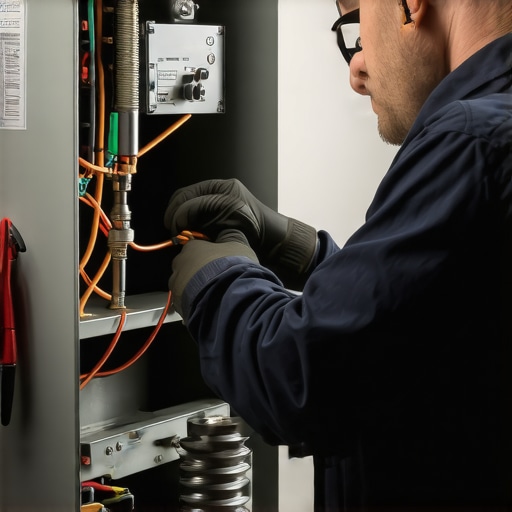
Let’s talk about the ‘Parts Cannon.’ That’s when a sales tech (the guys I can’t stand, usually wearing a white shirt that’s never seen a drop of oil) starts quoting you for a whole new system because they can’t diagnose a draft issue. In cold northern climates, the air density changes everything. If your boiler room is too tight, your hydronic heating systems will starve for oxygen. This creates a back-draft that can blow out a pilot or prevent the thermocouple from reaching the proper temperature. Sometimes, the issue isn’t even the heater; it’s a clogged dryer vent cleaning issue or an exhaust fan in the kitchen pulling a vacuum on the house. [image_placeholder_1]
The Hidden Culprit: The High-Limit Switch and Gas Valve Solenoids
If your thermocouple is getting hammered by a beautiful blue flame and it still won’t stay lit, we need to talk about the ‘interrupted’ circuit. Many modern app-controlled heating systems and even older boilers have a spill switch or a high-limit switch wired in series with the thermocouple. If your chimney isn’t drafting correctly—maybe there’s a bird’s nest or a heavy frost cap—that switch will break the millivolt signal. You’ll blame the thermocouple, but the furnace is actually trying to save your life from carbon monoxide. This is why boiler maintenance services are non-negotiable. We check the draft, the gas pressure (measured in inches of water column), and the integrity of the safety circuit.
“Failure to maintain proper venting and combustion air can lead to the accumulation of hazardous products of combustion.” – ASHRAE Standard 103
In shop heater services, we see this constantly. Dust from a woodshop or fumes from a garage clog the pilot intake, causing the flame to ‘lift’ off the burner. You think you need a new heater, but you actually just need a can of compressed air and a technician who knows how to use a manometer. If you’re looking for real efficiency, Energy Star heating certification won’t mean a thing if the installation ignores the fundamentals of gas pressure and venting.
The 2025 Reality: Hydronics and Biomass
As we move into more complex setups, like biomass boiler services or high-efficiency infared heater installation, the troubleshooting becomes even more nuanced. Biomass systems, in particular, are sensitive to fuel quality. If your pellets are damp, your pilot or ignition system will struggle. Even with app-controlled heating systems, the software can’t fix a physical blockage in a gas line or a failed regulator. You can see the preventative heating maintenance guide to understand how these systems are evolving. If you’re dealing with a system that won’t fire, it’s time to stop playing the guessing game.
Repair vs. Replace: Pulling the Plug
When do you stop fixing the old girl? If I’m looking at a 20-year-old boiler with a leaking heat exchanger or a cracked section, I’m not going to let you spend $800 on a commercial furnace repair. That’s throwing good money after bad. However, if the heat exchanger is solid and the issue is just a gas valve or a drafting problem, we fix it. You can learn more about top HVAC repair strategies to see where that line is drawn. If you’re tired of the ‘Sales Tech’ routine and want a real diagnosis, you should contact us. Don’t let a $20 part lead to a $15,000 mistake because someone didn’t understand the physics of a flame.
{“@context”:”https://schema.org”,”@type”:”HowTo”,”name”:”How to Diagnose a Pilot Light That Won’t Stay Lit”,”description”:”A professional HVAC technician’s guide to troubleshooting furnace pilot light failures after thermocouple replacement.”,”step”:[{“@type”:”HowToStep”,”name”:”Visual Flame Inspection”,”text”:”Check the color and shape of the pilot flame. It should be blue and engulf the top 1/3 of the thermocouple. If it is yellow or dancing, the pilot orifice is likely clogged.”},{“@type”:”HowToStep”,”name”:”Millivolt Testing”,”text”:”Using a multimeter, check the DC millivolt output of the thermocouple while the pilot is lit. It should read between 25-30mV.”},{“@type”:”HowToStep”,”name”:”Check Safety Switches”,”text”:”Inspect the high-limit and spill switches for continuity. A tripped safety switch will break the thermocouple circuit.”},{“@type”:”HowToStep”,”name”:”Draft Analysis”,”text”:”Ensure the chimney or vent pipe is clear of obstructions like ice or debris that could cause back-drafting.”}]}