The Curse of the 5 AM Freeze
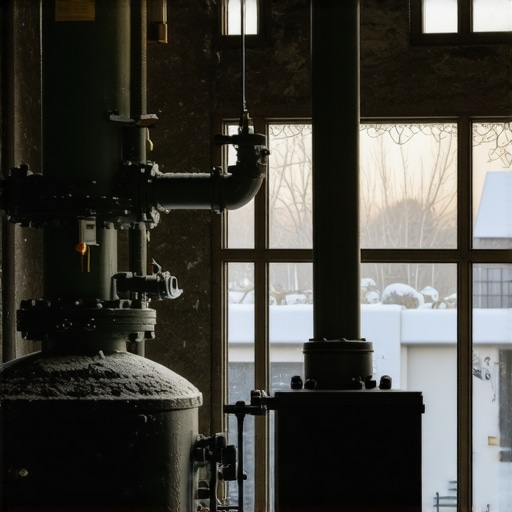
It’s 5:00 AM on a Monday in mid-January. The temperature outside has plummeted to -15°F, and the wind is howling like a ghost through the rusted chain-link fence of the local school district. While the rest of the town is buried under blankets, the school’s facilities manager is staring at a pressure gauge that reads zero. The boiler, a massive cast-iron beast that has lived in the basement since the Eisenhower administration, is stone cold. This isn’t a coincidence. This is physics. My old mentor, a man who had more soot in his lungs than blood, used to scream at me, ‘You can’t cool what you can’t touch, and you can’t heat what won’t flow!’ He was an airflow architect before the term existed, and he understood that the coldest mornings don’t just ‘break’ boilers—they reveal the mechanical sins committed during the summer.
When the temperature drops that low, we aren’t just dealing with a simple heating demand. We are dealing with Thermodynamic Stress. Every metal component—from the heat exchanger to the gas manifold—undergoes a violent contraction. If your gas furnace repair wasn’t done with precision, those hairline fractures in the heat exchanger turn into canyons. The gas valve that was sticking just a ‘tiny bit’ in October is now frozen solid because the lubricant has the consistency of peanut butter. This is where the ‘Sales Tech’ fails you. They want to sell you a new $50,000 unit because they don’t know how to diagnose a failing thermocouple replacement or a pitted contactor repair. They see a code; I see a mechanical failure of will.
“The design of the system must ensure that the boiler is not subjected to sustained return water temperatures below 130°F to prevent condensing of flue gases.” – ASHRAE Systems and Equipment Handbook
The Forensic Diagnosis: Why the System Quits
Why do school boiler systems and church heating systems fail specifically on these mornings? It’s the Cold Start Slug. When the building’s thermostat calls for heat after a weekend setback, the pumps kick on, and a massive volume of ice-cold water is slammed into a hot boiler. If the bypass valves aren’t tuned, the boiler experiences thermal shock. This is the sound of metal groaning. As a veteran, I can tell you that the smell of a failing boiler is distinct—it’s the metallic tang of overheating iron mixed with the acrid scent of a burning contactor. If you don’t have preventative maintenance contracts in place, you’re basically playing Russian Roulette with the school budget.
In these North/Cold climates, sensible heat is the only thing keeping the pipes from bursting. But we also have to talk about demand-controlled ventilation. In a school, you can’t just seal the building like a tomb. You need fresh air. But if your dampers are stuck open on a -10°F morning, you’re trying to heat the entire outdoors. I’ve seen thermostat wiring upgrades that were botched by some ‘Sparky’ who didn’t understand low-voltage logic, leading to the dampers staying 100% open while the burner was trying to keep up. It’s a recipe for a cracked block.
The Anatomy of Large-Scale Heating Failure
Let’s talk about church heating systems for a second. They are the cousins to school boilers. You have massive, cavernous spaces with 40-foot ceilings. The physics of stratification means all your expensive gas (refrigerant or fuel, we call it both) is being wasted on the ceiling joists while the parishioners are shivering in the pews. If you aren’t using demand-controlled ventilation to mix that air, you’re throwing money into the flue. I often recommend heat pump solutions for supplemental heating, but for the main load in a polar vortex? You need the raw BTUs of a well-maintained boiler or furnace.
I recently followed a technician who told a local parish they needed a full replacement because their pellet stove repair in the rectory failed and the main boiler ‘wasn’t firing.’ I went down there, found a $30 thermocouple that was covered in carbon, and had the heat back on in twenty minutes. That’s the difference between a technician and a salesman. The salesman wants to talk about financing for heat pump installs; the technician wants to know why the flame rectification signal is weak. You need to be looking for expert tips before you sign a check for five figures.
“Standardized maintenance is the only defense against the inevitable degradation of thermodynamic efficiency in high-mass heating systems.” – ACCA Manual Standard 4
The 2025 Shift: A2L and New Realities
As we move into 2025, the game is changing. We’re moving away from R-410A to R-454B and other A2L refrigerants. While this mostly affects AC and heat pumps, it changes how we look at financing for heat pump installs and total system integration. If you’re still relying on old ventless gas heater services for backup, you’re playing with fire—literally. These units are fine for a garage, but in a commercial or educational setting, they are a liability. You need real, vented solutions and gas furnace repair that respects the chemistry of combustion. If you aren’t checking for CO leaks with a calibrated sniffer, you aren’t doing your job.
For those managing these large systems, the ‘Pookie’ (mastic) on the ducts isn’t just for show. It’s about maintaining static pressure. If your ductwork is leaking in the unconditioned crawlspace of a school, you’re losing 30% of your capacity before it hits the classroom. This is why I preach the ‘Airflow Manifesto.’ It doesn’t matter if you have a million-BTU boiler if the tin knocker who installed the ducts didn’t size the returns correctly. If you need help diagnosing a system that only fails when it’s cold, you should contact us before the next cold snap hits.
How to Stop the Failure Before it Starts
1. **The ‘Beer Can Cold’ Test in Reverse:** We don’t check for ‘beer can cold’ in the winter, but we do check the suction line temperature on heat pumps. If it’s shivering, you’ve got a defrost issue.
2. **Contactor Integrity:** If your contactor repair involves just filing down the points, you’re a hack. Replace the contactor. It’s the most common point of failure when the amp draw spikes on a cold morning.
3. **Thermocouple Replacement:** Don’t wait for it to fail. If the millivolt reading is dropping, swap it out. It’s cheap insurance.
4. **Venting and Pookie:** Ensure your ventless gas heater services are actually vented if they’ve been modified, and seal every joint with mastic.
In conclusion, the ‘silent’ failure of a boiler isn’t silent at all. It’s a symphony of bad physics and neglected maintenance. Whether it’s pellet stove repair or a massive church heating system, the rules of thermodynamics don’t care about your budget. They only care about pressure, flow, and the quality of the ‘gas.’ Keep your coils clean, your filters fresh, and don’t trust a guy who brings a sales brochure to a repair job. Check out top repair strategies to keep your gear running when the mercury disappears.