The Sound of a Failing Circuit: Why You’re Shivering in the Dark
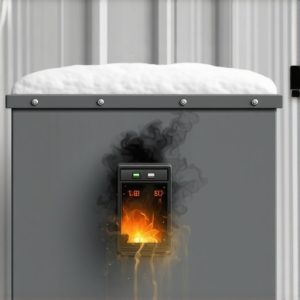
There is a specific, violent ‘clack’ that a 20-amp double-pole breaker makes when it’s had enough of your baseboard heater’s nonsense. If you’re reading this, you’ve probably heard it. You’re likely wearing three layers of wool in your own living room because every time you crank the thermostat, the lights flicker and the ‘Sparky’ special in your panel gives up the ghost. I’ve spent 30 years crawling through frozen crawlspaces and baked-out attics, and I’m telling you right now: a tripping breaker isn’t a ‘glitch.’ It’s a desperate plea from your electrical system to stop it from melting. This isn’t about a simple furnace filter replacement; this is about the raw physics of resistive heating and the dangerous interplay between amperage and heat dissipation.
The Mentors Lesson: Airflow or Bust
My old mentor, a man who could sniff out a refrigerant leak from three blocks away, used to scream at me every time I reached for a multimeter before checking the registers: ‘You can’t heat what you can’t touch!’ This is the absolute law of the HVAC jungle. He’d stand over a struggling baseboard unit and explain that if the air can’t move across those aluminum fins, the heat stays trapped in the element. In the world of baseboard heaters, we don’t have a blower motor to force the issue. We rely on natural convection. When that convection is choked by dust, heavy drapes, or poor placement, the element temperature skyrockets, the resistance drops, and the amperage draw spikes until the breaker trips to prevent a fire. This is why airflow measurement services are just as critical for electric heat as they are for a 5-ton split system.
“The most expensive heating equipment in the world cannot overcome a bad thermal envelope or restricted airflow pathway.” – Industry Axiom
The Forensic Diagnosis: Anatomy of a Tripped Breaker
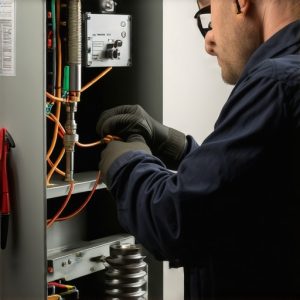
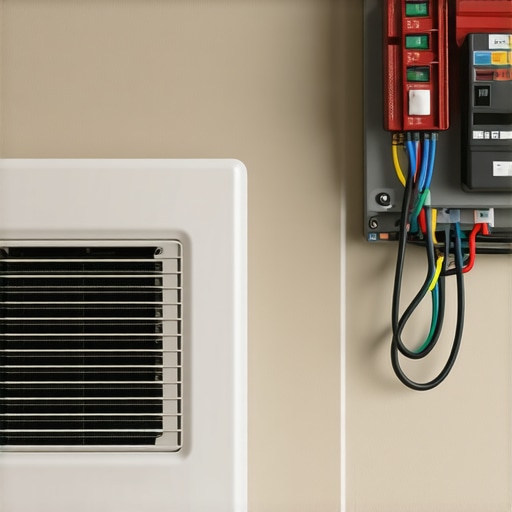
When I walk into a house where the homeowner is complaining about ‘weak heat’ followed by a total shutdown, I follow a specific mechanical anatomy. We start at the breaker itself. Is it a weak spring? Rarely. Usually, it’s a loose termination. A loose wire creates high resistance, which creates heat—not the good kind of heat, but the kind that chars the busbar. If the panel is solid, we move to the heater. The Real Reason Your Baseboard Heater Keeps Tripping the Breaker often comes down to the ‘limit switch.’ This is a safety device designed to break the circuit if the unit gets too hot. If that switch fails or if the unit is buried under a layer of lint, it’s game over. You might think you need a furnace ignition repair, but you’re actually dealing with a simple case of thermal runaway. [image_placeholder_1]
Thermodynamic Zooming: The Latent Heat Problem in the North
In the Northeast and Chicago-style climates, we aren’t just fighting the cold; we are fighting the infiltration of dry, dense air. When your attic insulation for heating is degraded, your baseboard heaters have to run 100% duty cycles to keep up. Electric baseboards are 100% efficient at turning electricity into heat, but they are incredibly inefficient at distributing it. If your home is leaking heat through the ceiling, those heaters never cycle off. This constant load generates massive amounts of heat at the wire connections. Eventually, the insulation on the Romex inside the heater’s junction box gets brittle, cracks, and you get a short-to-ground. This isn’t magic; it’s thermodynamics. If you want to stop the tripping, you need a heating service that looks at the whole house, not just the wire.
The Regulatory Cliff: Why Your 2025 Strategy Matters
We are entering a new era of HVAC regulation. With the death of R-410A and the move toward A2L refrigerants like R-454B, the cost of traditional cooling and heating is going through the roof. This makes maintaining your current resistive heat even more vital. However, if your baseboard is consistently failing, it might be time to look at heat pump solutions for efficient home comfort in 2025. Heat pumps are now capable of operating in sub-zero temps without relying solely on ‘the toaster wires’ of electric backup. For those staying with electric, consider energy recovery ventilators to keep the air fresh without dumping all your sensible heat out the window. If you’re sticking with your current setup, remember that preventative heating maintenance is the only thing standing between you and a $1,000 emergency call-out on New Year’s Eve.
“All electrical equipment shall be installed and used in accordance with the instructions included in the listing or labeling.” – NEC Section 110.3(B)
The Pookie and the Tin Knocker: Why Integration is King
Even if you don’t have traditional ducts, the principles of the ‘Tin Knocker’ (the duct guy) apply. You need to seal the gaps. I’ve seen flue pipe installation errors in dual-fuel systems that caused backdrafting, but in a purely electric house, the ‘leaks’ are your windows and doors. If you’re not using ‘Pookie’ (mastic) or high-grade sealants around your electrical penetrations, you’re literally heating the neighborhood. For those looking for the cutting edge, solar thermal heating integration is becoming a viable way to offset the massive ‘Juice’ (refrigerant or electrical) consumption of electric baseboards. If you’re unsure where to start, choosing the best heating service requires finding a tech who understands the difference between a ‘Sales Tech’ push and a real engineering fix.
Final Verdict: Stop Resetting the Breaker
Every time you flip that breaker back on without fixing the underlying draw, you are rolling the dice with a house fire. Is it a grounded element? A pinched wire? Or just a unit that’s so clogged with dust it’s literally cooking itself? Check your leak detector integration if you have a hydronic baseboard, but for electric, the multimeter is your only friend. Don’t let a ‘Sales Tech’ talk you into a whole new system when a simple cleaning and terminal tightening might solve it. But if the system is 40 years old and the ‘Gas’ (metaphorical power) is costing you a fortune, it’s time to move on. Stay warm, stay safe, and for the love of all that is holy, keep the drapes off the heaters. For more help, you can always contact us or read up on top HVAC repair strategies to keep your rig running through the polar vortex.