The Silence of a Dead Furnace: A Forensic Diagnosis
In thirty years of crawling through fiberglass-filled crawlspaces and balancing on ice-slicked rooftops, I’ve learned that silence is the most expensive sound an HVAC system makes. When you flip that thermostat to ‘Heat’ and absolutely nothing happens—no click, no hum, no rush of air—you aren’t just looking at a cold house; you’re looking at a communication breakdown. My old mentor, a man who could smell a gas leak from the curb, used to scream at me, ‘You can’t cool what you can’t touch, and you can’t heat what you can’t control!’ He was obsessed with airflow, but he knew that without the 24-volt ‘brain’ of the system, all that heavy metal and ‘juice’ is just a massive paperweight. This is the reality of the HVAC transformer. It is the bridge between the high-voltage power coming from your panel and the low-voltage signals that tell your furnace to fire up. If that bridge collapses, the whole show stops. Whether you are dealing with a standard split system or complex heat pump solutions for efficient home comfort, the transformer is the unsung gatekeeper.
“Voltage fluctuations exceeding 10% of nameplate rating can cause premature failure of control components, leading to systemic shutdowns.” – Industry Standard Electrical Guidelines
Sign 1: The Thermostat ‘Blackout’ and the 24V Void
The first sign of a blown transformer is a thermostat that has gone completely dark. If you have a modern thermostat that relies on a ‘C’ wire for power, and it isn’t displaying anything despite having fresh batteries (or if it has no batteries at all), you have a power delivery issue. In the world of choosing the best heating service expert, we always start at the source. The transformer’s job is thermodynamic zooming in its simplest electrical form: it takes 120V or 240V AC and, through electromagnetic induction, steps it down to about 24V. When you have a total blackout, it means the secondary coil in that transformer has likely burned open. This often happens during top hvac repair strategies when a ‘Sparky’ or a DIYer accidentally touches a hot wire to a ground. If you’ve recently looked into thermostat wiring upgrades and suddenly the unit is dead, that transformer is the prime suspect. It can’t send the signal to the control board to initiate the ignition sequence, leaving your furnace tune-up services useless because the system can’t even enter its self-test mode.
Sign 2: The Acrid Scent of ‘Magic Smoke’
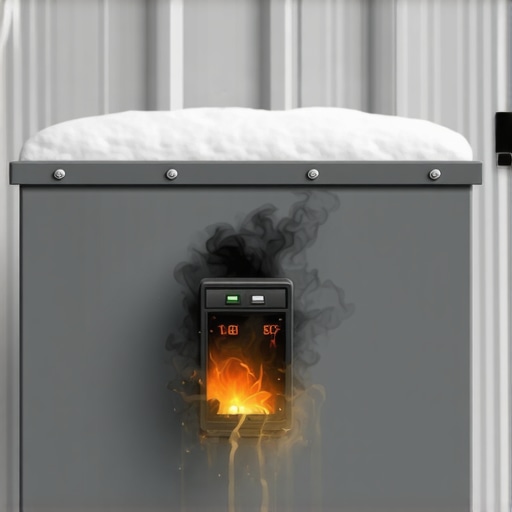
If you open your furnace cabinet and get a whiff of something that smells like a cross between a burnt marshmallow and a chemical fire, your transformer has given up the ghost. This is the smell of the varnish on the copper windings melting. Transformers fail for two main reasons: they are either ‘pushed’ or they are ‘pulled’ to death. In industrial heater services or commercial furnace repair, we see this when a component like a contactor coil shorts out, pulling massive amounts of amperage through the transformer until it literally cooks itself. You might also see this in residential geothermal heat pump systems if the internal reversing valve solenoid shorts. It’s a sensory giveaway. Once you smell that acidic, ozone-heavy stench, the part is toast. No amount of duct cleaning services or boiler maintenance services will fix a melted coil. You have to find the short first, or the new transformer will blow the second you apply ‘gas’ to the system.
Sign 3: The Infamous ‘Contactor Chatter’
Sometimes a transformer doesn’t die instantly; it weakens. This leads to ‘chattering.’ You’ll hear a rapid clicking sound, like a machine gun, coming from the electrical cabinet. This is the sound of a relay or contactor trying to pull in, but the transformer can’t provide enough ‘juice’ to hold the magnetic field. This is particularly common in hydronic heating systems where multiple zone valves might be taxing a single, undersized transformer. If you have added accessories like whole-home humidifiers without upgrading your VA (Volt-Amp) rating on the transformer, you are begging for this failure. A standard 40VA transformer can only handle so much before the voltage drops under load, causing the controls to freak out. It’s physics, not magic. You need a 75VA or 100VA unit if you’re loading up the control circuit with bells and whistles.
“The most expensive equipment in the world cannot overcome a bad duct system or a faulty control circuit.” – ACCA Manual J Philosophy
The Forensic Math: Repair vs. Replace
When I find a blown transformer during preventative heating maintenance, the part itself is cheap—maybe fifty to a hundred bucks. But the labor is in the ‘why.’ If I just swap it and leave, I’m a ‘Sales Tech’ hack. A real veteran finds the short. Is it a wire rubbed raw against the ‘tin’ (ductwork) by a ‘Tin Knocker’ who didn’t use a grommet? Is it a localized short in the heat pump defrost board? We look for the root cause to ensure your preventative heating maintenance actually sticks. In the cold North, where a cracked heat exchanger is a death sentence, a dead transformer is a blessing in disguise because it forces a professional to look at the guts of the machine. Don’t let a simple 24V failure turn into a frozen pipe disaster. If your heater won’t start, check the breaker, check the ‘Pookie’ (mastic) on the ducts to ensure no moisture is dripping on the electronics, and call someone who knows the difference between a capacitor and a contactor. For more info, see our privacy policy or contact us for a real diagnostic. “, “image”: {“imagePrompt”: “A macro photograph of a burnt-out 24V HVAC transformer with visible scorched copper windings and a multi-meter showing a zero reading, set against the backdrop of a dusty furnace control board.”, “imageTitle”: “Burnt HVAC Transformer Diagnostic”, “imageAlt”: “A technician using a multimeter to diagnose a failed 24V transformer inside a furnace.”}, “categoryId”: 5, “postTime”: “2025-05-15 10:00:00”}