The Myth of the Five-Ton Rule
If I hear one more ‘Chuck-in-a-Truck’ tell a homeowner they need a 5-ton unit just because they have a 2,500 square foot house, I am going to throw my manifold gauges into the nearest river. My old mentor, a man who spent forty years wrestling with galvanized tin and cast-iron boilers, used to smack the back of my head every time I reached for a tape measure before a calculator. "You can’t cool what you can’t touch, and you can’t heat what you don’t understand!" he’d bark. He was right. Airflow is not a suggestion; it is physics. When you eyeball a system size, you aren’t being an expert—you’re being a gambler with someone else’s money. Whether it’s a heat pump installation or a furnace swap, guessing is the fastest way to kill a compressor.
"The most expensive equipment in the world cannot overcome a bad duct system." – Industry Axiom
The Physics of the North: Why Size Matters in the Cold
In our climate, where the wind off the lake cuts through siding like a hot knife through butter, we deal primarily with Sensible Heat Loss. We aren’t just fighting humidity; we are fighting the literal escape of energy through every crack in the building envelope. If you oversize a furnace during a furnace repair services call because you think ‘bigger is better,’ you create a monster. An oversized furnace hits its high-limit switch within minutes because the existing ductwork can’t handle the CFM (Cubic Feet per Minute) required to move that much heat. This leads to short-cycling, which fries your control board diagnostics and cracks heat exchangers faster than you can say ‘carbon monoxide.’ It’s the same logic for radiator replacement; if the boiler is too big for the radiation surface, you’re just wasting gas and banging pipes.
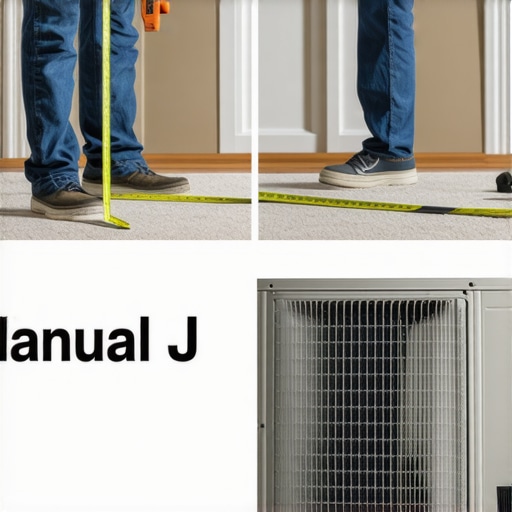
Manual J: The Forensic Blueprint of Comfort
A Professional Manual J calculation isn’t just a piece of paper; it’s a thermodynamic x-ray of your home. We look at the R-value of your attic insulation, the U-factor of your windows, and the orientation of your house relative to the winter sun. We even account for the heat gain from your fireplace insert services and how a chimney liner installation affects drafting. If we don’t do this, we don’t know the load. For instance, in a northern winter, a humidifier installation actually changes the ‘feel’ of the air, allowing for lower setpoints, but the latent heat of vaporization must be accounted for in the total energy budget. Without a Manual J, you’re just throwing juice into a system and hoping it doesn’t freeze the suction line.
The Airflow Manifesto: Static Pressure and ‘Pookie’
Comfort isn’t just about the temperature on the wall; it’s about the movement of molecules. This is where airflow measurement services become the difference between a pro and a hack. I’ve seen 20-ton systems that couldn’t cool a closet because the tin knocker who built the trunks didn’t understand static pressure. Think of static pressure like blood pressure. If it’s too high, the heart (your blower motor) fails. We use ‘Pookie’ (mastic) to seal every joint because duct tape is a lie. Even a ventless gas heater services check requires looking at how air moves in a confined space. If the return air drops are undersized, you’re starving the system. It’s why top hvac repair strategies always start with the filter and the duct, not the refrigerant level.
"Design heating and cooling loads shall be determined in accordance with ACCA Manual J or other approved methods." – International Residential Code (IRC)
The Trap of the ‘Sales Tech’ and the 2025 Regulatory Cliff
The industry is changing. With the phase-out of R-410A and the rise of A2L refrigerants, you can’t afford to guess anymore. A heat pump installation in 2025 requires precise matching to the indoor coil and the home’s actual heat loss. If you listen to a ‘Sales Tech’ who just wants to sell you the biggest box on the truck, you’ll end up with a system that feels like a cold swamp in the summer and a desert in the winter. They won’t mention that your pool heater repair or your humidifier installation impacts the electrical load or the gas pressure available for the main unit. This is why preventative heating maintenance is a requirement, not an option. You need a sparky to check the breakers and a technician to check the combustion air. Anything less is just waiting for the unit to die in the middle of a polar vortex.
Thermodynamic Realities of Modern Systems
When we talk about heat pump solutions, we are talking about moving heat, not creating it. In cold climates, an oversized heat pump is a disaster because it will never run long enough to properly defrost, leading to ice buildup that can crush the delicate aluminum fins. Proper sizing ensures the unit runs in long, steady cycles, which is much easier on the compressor and your utility bill. Whether it’s chimney liner installation for a new high-efficiency furnace or a simple control board diagnostics check, the goal is always the same: efficiency through accuracy. Don’t let someone eyeball your comfort. Demand the math. Demand the Manual J. It’s the difference between a home that’s truly comfortable and one that’s just a high-priced wind tunnel.