The Deathly Silence of a Zero-Degree Night
I’ve spent three decades listening to the music of machinery. In the dead of a Midwest winter, that music is usually the low, rhythmic hum of a furnace blower. But then there’s the silence. That particular brand of silence that wakes you up at 3 AM because the air in the room has gone flat and thin. I’ve crawled into more crawlspaces and squeezed into more frozen attics than I care to remember, usually finding a homeowner shivering over a space heater because some ‘Sales Tech’—a guy who couldn’t tell a capacitor from a canned ham—convinced them that a standard air-source heat pump could handle a polar vortex. It can’t. Not alone, anyway. If you want to survive a real winter without bankrupting yourself or freezing your pipes, you need to understand the brutal physics of the hybrid system.
The Anatomy of a Sales Tech Scam
I remember following a ‘comfort consultant’ (that’s code for a guy in a polo shirt who’s never cleared a condensate drain in his life) out to a job in a blizzard. He’d quoted a family eighteen grand for a high-efficiency electric heat pump, claiming it was ‘the future.’ He told them their old gas furnace was a ‘death trap’ because the thermocouple was charred. I got there, looked at the unit, and realized the thermocouple replacement was a twenty-minute fix. But more importantly, I realized that if they went all-electric in this climate, they’d be running on ‘heat strips’ (expensive electric toaster wires) for three months straight. I showed the homeowner how to perform a proper diagnostic instead of a sales pitch. We kept the gas, added the pump, and saved them enough on their monthly bill to pay for the repair in one season. This is the reality of the trade: physics doesn’t care about marketing.
“The most expensive equipment in the world cannot overcome a bad duct system.” – Industry Axiom
Thermodynamic Zooming: How Hybrid Systems Actually Work
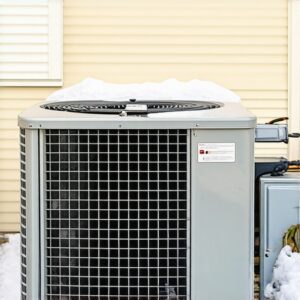
To understand why pairing a heat pump with gas is the smartest move, you have to look at the latent heat of vaporization and the Coefficient of Performance (COP). A heat pump doesn’t ‘create’ heat; it moves it. Even at 30°F, there is thermal energy in the outside air. The refrigerant—or the ‘juice’ as we call it—boils at an incredibly low temperature in the outdoor coil, absorbing that heat. It’s then compressed, which spikes the temperature, and sent to the indoor coil. But as the mercury drops toward zero, the heat density in the air becomes so thin that the pump has to work twice as hard to move half as much heat. It starts to look like a losing battle. This is where the gas furnace kicks in as the ‘heavy hitter.’ When the outdoor temp hits the ‘equilibrium point’—the temperature where the heat pump can no longer keep up with the home’s heat loss—the smart thermostat setup triggers the gas valve. Suddenly, instead of lukewarm air from a struggling compressor, you get 120°F air off the heat exchanger. It’s the difference between a candle and a blowtorch.
The Physics of the North: Why Gas is the Fail-Safe
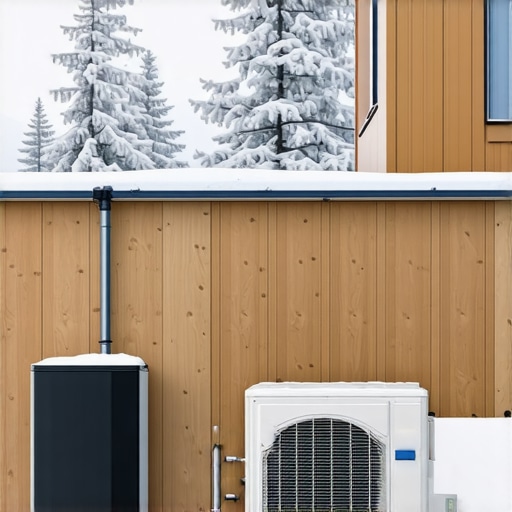
In cold climates, we deal with the ‘Monsoon Effect’ of ice. When a heat pump runs in sub-freezing temps, the outdoor coil eventually frosts over. The unit has to go into ‘defrost mode,’ which is essentially running the AC in reverse to melt the ice. If you have an all-electric system, the unit has to kick on those expensive backup electric strips to keep from blowing cold air into your house during the cycle. With a hybrid setup, the gas furnace handles the load during defrosting. It’s more efficient, faster, and keeps the ‘suction line’ from slugging the compressor with liquid refrigerant. Moreover, we have to talk about modern heat pump solutions that are specifically designed for low-ambient performance, but even they benefit from a gas backbone when the grid gets stressed or the temps go truly subterranean.
The Dangers of the Blue Flame: Pilot Lights and Heat Exchangers
When you rely on gas, you’re dealing with combustion. I’ve seen enough cracked heat exchangers to know that neglect is a killer. Every winter, I’m called out for preventative heating maintenance, and the first thing I check isn’t the thermostat; it’s the integrity of the fire box. A cracked exchanger leaks carbon monoxide into the airstream. That’s why carbon monoxide detector installation isn’t an ‘add-on’—it’s a requirement for life. If your unit is old enough to have a standing pilot, you’re wasting fuel. But even modern electronic ignition systems can fail. If you’re smelling something like rotten eggs or a sour, metallic odor, your combustion is off. Whether it’s a simple pilot light relighting or a full thermocouple replacement, you can’t ignore the ‘gut’ of your furnace. Even a wood burning stove installation needs proper venting to ensure it doesn’t create a backdraft that pulls CO into your living space.
“Design conditions for heating shall be based on the 99% or 97.5% column in the ASHRAE Handbook of Fundamentals.” – ACCA Manual J
Static Pressure and the ‘Tin Knocker’s’ Revenge
You can buy the most expensive cold climate heat pumps on the market, but if your duct design services were handled by a ‘Sparky’ or a guy with a roll of duct tape and no manometer, you’re throwing money out the window. Airflow is king. In a hybrid system, the blower motor has to move air across an A-coil (for the heat pump) and through a heat exchanger (for the gas). If the static pressure is too high because the ducts are too small, the blower motor will burn out, or worse, the furnace will overheat and trip the high-limit switch. I always tell people: if your ‘Pookie’ (mastic) isn’t sealed tight on the return air drops, you’re just heating your crawlspace. Proper heating service includes checking that static pressure to make sure the lungs of your house can actually breathe. Don’t be the guy who thinks a furnace filter replacement is the only maintenance needed; if that filter is caked in grey fuzz, your ‘suction line’ isn’t the only thing that’s going to be struggling.
The Future of Comfort: Predictive Alerts and Smart Tech
The tech is changing, though. We’re moving into an era of predictive maintenance alerts. These systems can tell me that a capacitor is drifting out of spec before it actually pops and leaves you in the cold. When you combine this with a smart thermostat setup, the system can actually learn the thermal lag of your house. It knows exactly when to swap from the heat pump to the gas furnace to maximize every cent of your energy bill. It’s not magic; it’s just better math. And for those in the Southwest who might be reading this, remember that while you’re worried about swamp cooler maintenance, us up North are worried about flame rollout and frozen condensate lines. Every climate has its demon, but in the cold, the dual-fuel system is the exorcist. If you have questions about your specific setup, you should contact us before the first frost hits, not after your pipes have already turned into ice cubes.