The Anatomy of a Cold House at 3 AM
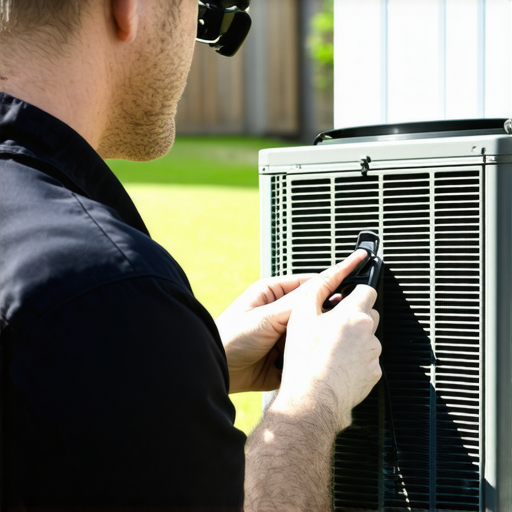
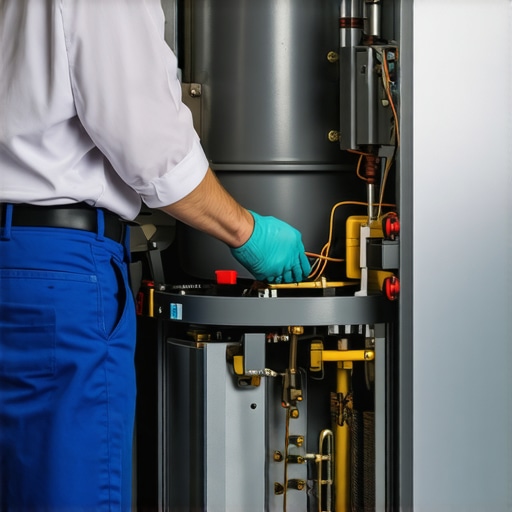
The sound of a furnace failing in the middle of a January freeze isn’t a bang; it’s a series of clicks followed by the haunting silence of a house losing its thermal envelope. You’re lying there, listening to the inducer motor spin up, waiting for the ‘woosh’ of ignition that never comes. As a tech who’s spent thirty years crawling through icy crawlspaces, I can tell you that by 2026, these modulating furnaces have become more like high-performance sports cars than heating boxes. They don’t just turn on and off; they cruise at 1% increments. But when the AI-driven HVAC optimization detects a tiny deviation in the flame rectification circuit, it locks you out faster than a bouncer at a high-end club. I recently followed one of those ‘Comfort Consultants’—really just a sales guy in a shiny polo—to a local school boiler maintenance call. He’d quoted them $45,000 to replace the entire manifold because he didn’t know how to use a multimeter to check the microamps on a modulating gas valve. I spent twenty minutes cleaning a $15 flame sensor and checking the flue pipe installation. I saved them forty grand and got the heat back on before the pipes froze. That’s the difference between a salesman and a tech who understands that airflow is the lifeblood of the home.
Thermodynamic Zooming: Why Modulating Heat Fails
In the North, we aren’t just fighting the cold; we’re fighting physics. A modulating furnace is designed to maximize AFUE by condensing flue gases. When that gas (refrigerant guys call it gas, but we’re talking natural gas here) burns, it creates water vapor. If your heat exchanger is working correctly, it pulls so much heat out of those gases that the water turns back into a liquid—releasing latent heat. This is the ‘efficiency’ you’re paying for. However, that liquid is acidic. If the drainage isn’t perfect, it backs up and trips the pressure switch.
“Design of any system must begin with an accurate heating and cooling load calculation.” – ACCA Manual J
If the unit is oversized, it short-cycles, never reaching the steady-state temperature needed to keep that condensate moving. This is why choosing the best heating service is about finding someone who does the math, not just someone who can haul a box into your basement.
Fix #1: Flame Rectification and AI-Driven Sensor Drift
The first point of failure in 2026 ignition cycles is the flame sensor. These new AI-driven boards are incredibly picky. In the old days, a dirty sensor would just need a quick rub with some steel wool. Now, the board monitors the specific waveform of the microamp signal. If the ‘Sparky’ who wired the furnace didn’t ground it properly, or if there is electrical noise from a nearby heat recovery ventilator, the signal gets ‘dirty.’ To fix this, you don’t just clean the rod; you check the DC microamp draw. If it’s below 1.5uA, the AI thinks the flame isn’t there and shuts the ‘Gas’ off to prevent a literal explosion. It’s a safety feature, but it’s also a headache for homeowners who skip their preventative heating maintenance. A simple carbon buildup on that rod can result in a $600 emergency call that could have been avoided with a yearly wipe-down.
Fix #2: Static Pressure and the Combustion Air Vacuum
Airflow isn’t just about what comes out of your registers; it’s about what goes into the burner. Modulating furnaces use variable-speed inducer motors. If your flue pipe installation has too many elbows or if snow is partially blocking the intake, the static pressure inside the combustion chamber rises. My old mentor used to scream, ‘You can’t heat what you can’t move!’ This applies to the exhaust too. Using static pressure testing, we can see if the ‘Tin Knocker’ who installed the venting used 2-inch PVC when they should have used 3-inch for a long run. In 2026 models, the furnace will try to compensate by ramping up the inducer, but eventually, it hits a limit and locks out. If you’re experiencing ignition failures, check your external vents for ice or bird nests before you call for a service appointment. Often, the ‘repair’ is just a shovel and five minutes of clearing snow.
Fix #3: The Condensate Trap and Bypass Humidifier Interaction
High-efficiency furnaces are basically giant dehumidifiers that run in reverse. They create gallons of water. If you have a bypass humidifier repair that wasn’t done right, or if the humidifier is leaking into the furnace cabinet, that moisture can find its way into the pressure switch tubing. Water in the ‘Pookie’ (mastic) sealed joints or in the silicone sensing lines will cause the furnace to think the vent is blocked.
“Adequate ventilation is the cornerstone of indoor environmental quality in airtight structures.” – ASHRAE Standard 62.1
We see this a lot in tight, modern homes. The fix involves blowing out the lines and ensuring the condensate trap is primed. If the trap dries out in the summer, or gets gunked up with dust in the winter, the furnace won’t fire. This is a classic ‘Forensic Diagnosis’—if there’s water where it shouldn’t be, the fire won’t stay where it should be.
Advanced Systems: Beyond the Furnace
Modern comfort isn’t just about the furnace; it’s the whole ecosystem. We’re seeing more homes integrate heat pump solutions as a dual-fuel backup. If your furnace fails, a well-configured system can switch to the heat pump. We’re also installing snow melt systems that tie into the steam boiler repair logic, ensuring your driveway is clear while your house stays warm. Remote thermostat access allows us to see these failures before you even feel the chill. We can see the static pressure rising on our dash and call you to say, ‘Hey, your filter is clogged,’ before the limit switch trips. This level of top hvac repair strategy is what keeps a 2026 system running for twenty years instead of ten. Don’t let a ‘Sales Tech’ tell you that a flicker in the ignition means you need a whole new system. It usually just means your furnace needs a technician who actually respects the physics of the trade.