The Ghost of Stratification: Why Your Warehouse Is Freezing
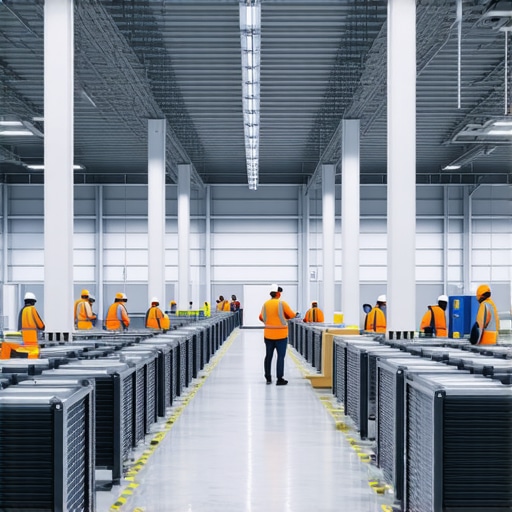
My old mentor, a grizzled master tech named Miller who spent more time in a crawlspace than his own living room, used to scream at me during every new construction heating design meeting: ‘You can’t heat what you can’t touch!’ This was his ‘Physics of the Warehouse’ manifesto. We were standing in a 60,000-square-foot distribution center in the middle of a Chicago January, and the forced-air units were screaming at 100% capacity. Up at the joists, where the tin knocker had installed the ductwork, it was a balmy 85 degrees. Down on the floor where the workers were actually moving pallets? A miserable 48. This is the fundamental failure of convective heating in large volumes. You are paying to heat the dust on the rafters while your staff shivers. As we look toward 2026, the question isn’t just about ‘blowing hot air’ anymore; it’s about thermal mass and the electromagnetic spectrum.
“Thermal comfort is that condition of mind that expresses satisfaction with the thermal environment and is assessed by subjective evaluation.” – ASHRAE Standard 55
The Thermodynamic Zoom: Radiation vs. Convection
To understand why radiant heat is dominating the 2026 warehouse landscape, you have to look at the physics of energy transfer. In a standard unit heater setup, you’re using air as a transport medium. Air is a terrible thermal battery. It’s light, it moves, and most importantly, it rises. This is ‘Sensible Heat’ gone wrong. You heat the air, it hits the ceiling, and it stays there until it loses enough energy to drop back down. By the time it reaches the floor, it’s cold. Radiant heat, specifically infrared tube heaters or high-intensity ceramic burners, skips the air entirely. It works like the sun. When you stand in the sun on a cold day, you feel warm even if the air is 30 degrees. The infrared waves travel through the air without heating it and only turn into heat when they strike a solid object—like the concrete slab of your warehouse. That slab becomes a giant thermal battery, radiating heat back up to the workers. This is why manual J calculations for warehouses are finally starting to favor radiant systems over traditional wall furnace installation.
The 2026 Shift: Energy Star and the Death of R-410A
We are currently staring down a regulatory cliff. The shift to A2L refrigerants like R-454B and R-32 is changing the game for those trying to use a heat pump for large-scale heating. While heat pumps are becoming more efficient, in a warehouse setting, they still struggle with the ‘Volume Problem.’ If you’re building a new facility in 2026, you’re likely chasing an Energy Star heating certification. To get there, you can’t just throw ‘gas’ (refrigerant) at the problem. You need a system that minimizes ‘Short Cycling’ and maximizes Energy Recovery Ventilators (ERVs) to manage air quality without dumping your expensive heat out the exhaust fan. If you’re still relying on old-school forced air, your energy bills are going to look like a mortgage payment. This is why we’re seeing a massive pivot toward hydronic radiant floors in new warehouse construction. You lay the PEX, you pump the hot water, and you let the earth do the work. It’s a closed-loop dream that makes refrigerant leak detection a non-issue because, well, there’s no refrigerant in the floor.
The Maintenance Reality: Pookie, Dust, and Despair
Let’s talk about the ‘Sales Tech’ move. Some guy in a clean polo shirt is going to try to sell you a 20-ton rooftop unit (RTU) for your warehouse and tell you it’s ‘all you need.’ He’s lying. An RTU in a warehouse is a maintenance nightmare. Between the Sparky having to run high-voltage lines across a 40-foot span and the inevitable emergency heating repair when the heat exchanger cracks because of constant cycling, it’s a money pit. Radiant heaters, particularly gas-fired tubes, are mechanically simple. There are no blowers to fail, no filters to clog with warehouse dust, and no complex ductwork that needs miles of ‘Pookie’ (mastic) to keep from leaking. However, you still need preventative maintenance contracts. You have to check the gas pressure and clean the reflectors, or you’re just burning ‘Juice’ for nothing. For more on keeping things running, check out top hvac repair strategies to extend your systems life. If you’re deciding between a major overhaul or a new install, look at choosing the best heating service expert tips for 2025 to avoid the scams.
“The heat loss of the structure shall be determined in accordance with the procedures described in the ASHRAE Handbook of Fundamentals or ACCA Manual J.” – International Mechanical Code
The ‘Airflow Manifesto’ in a High-Bay Environment
If you insist on forced air, you better be ready to fight the laws of buoyancy. You’ll need high-volume low-speed (HVLS) fans to push that trapped heat back down. But why spend the money on the fan AND the heater? With radiant heat, the ‘Suction Line’ isn’t your concern—the ‘Throw’ and ‘Pattern’ are. You want to overlap the infrared footprints so there are no cold spots. It’s like lighting a room. If you have one big light in the middle, the corners are dark. If you have multiple smaller lights, the coverage is uniform. The same applies to warehouse heat. This is the ‘Forensic Diagnosis’ of comfort: if your feet are warm, your brain thinks the room is warm. If your feet are on a 50-degree slab, you’ll never feel comfortable, even if the air around your head is 75. This is why HVAC maintenance plans for 2026 are shifting toward system-wide audits rather than just checking a belt on a motor. If you need a professional to look at your slab temps, you should contact us before the next polar vortex hits. And remember, for those managing large facilities, preventative heating maintenance is just as critical for commercial steel as it is for residential brick. Radiant heat isn’t just a 2026 ‘trend’; it’s the only way to beat the physics of a giant empty box.