You haven’t lived until you’re standing on a flat TPO roof in February, the wind howling at fifty miles per hour, trying to keep a multimeter lead from snapping off in the sub-zero chill while a ten-ton rooftop unit (RTU) sits there dead as a doornail. I’ve spent thirty years in the trades, and I’ve seen it a thousand times: a facility manager calls me screaming that their building is freezing, and they can’t understand why their ‘expensive’ heating system just gave up the ghost. Most of these guys think a gas furnace repair is just swapping out a thermocouple. They don’t understand that on a roof, you aren’t just fighting physics; you’re fighting the atmosphere itself. My old mentor used to scream at me until he was blue in the face, ‘You can’t heat what you can’t control!’ He was a grizzled old tin knocker who understood that airflow isn’t just a suggestion—it’s the law of the land. If the static pressure isn’t right, that fancy piece of machinery is nothing more than a very expensive paperweight. When high-wind winter storms roll in, the pressure differentials across a building can go haywire, and that is where the real mechanical forensic work begins.
The Physics of the ‘Flame Rollout’ and Wind-Induced Failure
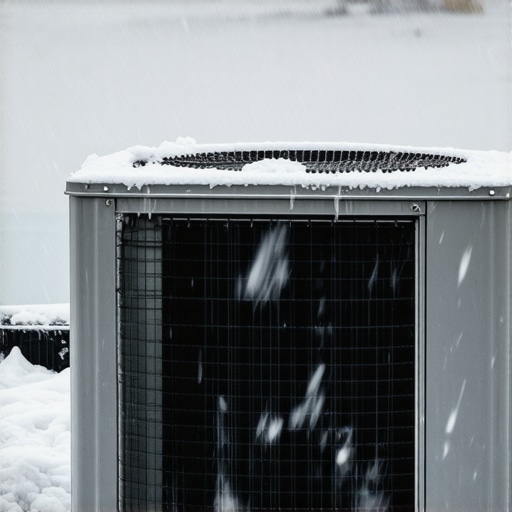
When a winter storm hits, it isn’t just the cold that kills an RTU; it’s the pressure. Commercial units rely on a very specific draft to move combustion gases out of the heat exchanger. High winds create a ‘venturi effect’ over the flue pipes, sometimes creating a vacuum that pulls the flame toward the burner or, conversely, a backpressure that pushes the flame out of the burner box. This is called flame rollout. When those sensors detect heat where it shouldn’t be, the system trips a safety and locks out. You’re left with a cold building and a unit that refuses to fire until a technician resets it. It’s a safety feature, sure, but it’s a symptom of a larger problem: poor site placement or lack of wind baffles. This is why top HVAC repair strategies must include a deep dive into the physical environment of the unit, not just the electrical components.
“Equipment shall be located so as to provide help for the prevention of ice and snow blockage of combustion air and exhaust terminals.” – International Mechanical Code (IMC) / ASHRAE Standards
In the North, we deal with the ‘Polar Vortex’ effect. The enemy here is the cracked heat exchanger. During these high-wind events, the temperature of the incoming air can be so low that the metal undergoes extreme thermal shock. Imagine the heat exchanger is at 180°F and suddenly it’s hit with a blast of -10°F air because the economizer dampers are stuck open or leaking. The metal expands and contracts violently. Eventually, it pops. Once that heat exchanger is breached, you’re looking at a carbon monoxide nightmare. This is why I tell people that two-stage furnace installation in commercial settings isn’t just about saving a buck on the gas bill; it’s about reducing that thermal stress by allowing the unit to run at a lower, more consistent temperature during moderate loads.
The Economizer Trap and Static Pressure
The biggest culprit in a winter RTU failure is often the economizer. These things are designed to bring in ‘free cooling’ when the outside air is nice, but in a winter storm, they turn into a liability. High winds can force the dampers open, or ice can jam the linkage. Suddenly, you’re trying to heat a warehouse with the ‘front door’ wide open. This is where AI-driven HVAC optimization is actually starting to make sense, even to an old-timer like me. Modern sensors can detect if a damper is out of position and adjust the inducer motor speed to compensate, or at least alert the sparky that something is wrong before the coils freeze. But AI can’t fix bad ‘Pookie’ (mastic). I’ve seen brand-new units fail because the duct guy didn’t seal the curb properly, letting all that high-pressure winter air bypass the filters and go straight into the return. If the air doesn’t touch the coil, the heat can’t transfer. It’s pure thermodynamics. Demand-controlled ventilation sounds great on a brochure, but if the mechanical integrity of the box is shot, all the software in the world won’t keep the pipes from freezing.
Humidity, Steam, and the Latent Heat Battle
In the dead of winter, the air is bone dry. This doesn’t just make people itchy; it wreaks havoc on the building’s internal environment. Many high-end commercial setups use steam humidifiers integrated into the RTU. During a storm, if the unit shuts down due to a wind-tripped pressure switch, the humidity levels plummet instantly. This can cause static discharge that fries sensitive electronics—a ‘double whammy’ for the facility. We also see issues with dryer vent cleaning in multi-unit commercial residential buildings; if the RTU provides the make-up air and it fails, the building goes into a negative pressure state. Suddenly, the dryer vents are pulling cold air *in*, and the gas furnace repair you just did is useless because the pilot light keeps getting blown out by a draft coming from the laundry room.
“The most expensive equipment in the world cannot overcome a bad duct system.” – Industry Axiom
I remember a job last January where a client was complaining about their pool heater repair being ‘defective’ because the indoor pool area was foggy and freezing. It wasn’t the heater; it was the RTU’s makeup air unit. The high winds had sucked the juice (refrigerant) right out of the system through a tiny vibration leak that only opened up when the compressor was straining against the cold. We had to recover the gas, fix the braze joint, and recharge it. It’s never just one thing; it’s a cascade of failures. For those looking to upgrade, geothermal heat pump systems or solar thermal heating integration are the future, but they still require a tech who knows how to use a manometer and doesn’t just rely on a laptop screen. You have to smell the burnt oil and hear the screech of a bearing that’s lost its lubrication to the cold.
The Solution: Beyond the Service Call
If you want to survive the next blizzard without your RTUs going into lockout, you need a plan. First, stop hiring ‘Sales Techs’ who just want to sell you a new 15-ton Carrier because the contactor is pitted. You need preventative heating maintenance that actually checks the gas pressure and the manifold. Check your infrared heater installation in the loading docks; these are great backups because they heat objects, not air, which means they aren’t as susceptible to the wind-chill issues that plague RTUs. Finally, if you’re in a high-wind zone, consider installing wind deflectors and checking your snow load clearances. Don’t wait until the ‘Suction Line’ is frozen solid to call for help. For more info on how to prep, you can contact us or read about choosing the best heating service to ensure you’re getting an architect of airflow, not just a parts changer.