The Death of the Drafty House and the Birth of the Stale Room
My old mentor used to scream, ‘You can’t cool what you can’t touch!’ This is why airflow matters more than horsepower. He was a grizzly veteran from the days of belt-driven blowers and asbestos tape, and while his lungs paid the price, his logic was flawless. Back then, houses were ‘leaky.’ You didn’t need IAQ improvement services because the house breathed through every poorly sealed window and uninsulated rim joist. But today? We’ve built vacuum-sealed vaults. We use high-performance vapor barriers and triple-pane glass to hit those 2025 energy codes, and while the utility bill looks great, the air inside is stagnant, loaded with VOCs, and smelling like a mix of last night’s fish fry and the off-gassing of that new polyester rug. This is where the Heat Recovery Ventilator (HRV) comes in, and if you think it’s just a fancy exhaust fan, you’re dead wrong.
“The most expensive equipment in the world cannot overcome a bad duct system.” – Industry Axiom
The Thermodynamic Zoom: How the HRV Core Actually Works
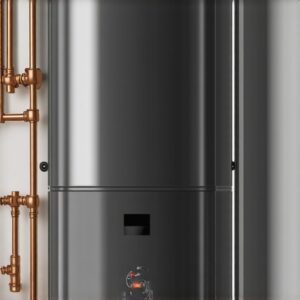
To understand why an HRV is essential, we have to look at the physics of the exchange. In a cold climate like Chicago or the Northeast, you’re fighting a constant battle against the ‘Polar Vortex’ trying to suck the heat out of your living room. When you exhaust stale air, you’re throwing away energy you already paid for. An HRV uses a cross-flow or counter-flow heat exchanger—a series of thin plates made of aluminum or specialized polymers. As the warm, stale ‘juice’ (return air) leaves the house, it passes through these plates. Simultaneously, the fresh, freezing outdoor air is pulled in. They never mix—that would defeat the purpose of IAQ improvement services—but the heat is conducted through the plates. We call this sensible heat recovery. The incoming air might be 10°F outside, but by the time it leaves the HRV core, it’s been pre-heated to 50°F or 60°F using the energy from the air you were about to dump anyway. This prevents your gas furnace repair needs from skyrocketing because the heat exchanger isn’t getting hit with a ‘cold shock’ that causes metal fatigue and eventual limit switch replacement issues.
Why Your Blower Motor is the Heart of the Operation
Most homeowners don’t realize that their HRV is often tied directly into their central HVAC air handler. This requires sophisticated relay services to ensure that when the HRV calls for fresh air, the main blower motor actually kicks on. If your blower motor replacement was done by some ‘Sales Tech’ who didn’t know how to wire a dual-speed tap, your HRV is basically a $2,000 paperweight sitting in your attic. The blower has to overcome the static pressure of both the supply ducts and the dedicated HRV venting. If the static pressure is too high because a tin knocker got lazy with the ‘pookie’ (mastic) or used undersized flex duct, the motor will hunt, overheat, and eventually trip the internal thermal overload. You can monitor this via remote thermostat access, which is the only way to know if your system is actually breathing when you’re not home. For those in the hospitality industry, we see this fail constantly in hotel boiler services where ventilation is neglected in favor of raw heating power, leading to that ‘old hotel’ smell that no amount of Febreze can fix.
The Mechanical Anatomy of Airflow Balance
An HRV isn’t a ‘set it and forget it’ appliance. It’s a mechanical lung. If you have a clogged dryer vent cleaning issue, it can actually throw off the pressure balance of your entire home. Think about it: if your dryer is pushing 100 CFM out and your HRV isn’t balanced, you’re creating a negative pressure environment. This pulls ‘unfiltered’ air through the cracks in your basement or crawlspace—bringing in radon, moisture, and dust. Part of any preventative maintenance contracts should include a pitot tube test to check the ‘Suction Line’ and discharge pressures of the HRV. If the intake screen is clogged with cottonwood seeds, your HRV core will freeze into a solid block of ice during the winter. This is also where thermocouple replacement and sensor calibration come into play for the defrost cycle. When the unit senses the core is too cold, it should shut down the intake fan or open a bypass damper to let the warm house air melt the frost. If that logic board fails, you’re back to breathing stale, damp air.
“Ventilation shall be provided in accordance with ASHRAE Standard 62.2, ensuring that the building envelope maintains acceptable indoor air quality while minimizing energy loss.” – ASHRAE Standards
The ‘Sales Tech’ Scam vs. Real Physics
I’ve seen guys walk into a home where the windows are sweating and the air feels ‘heavy’ and immediately try to sell a 5-ton AC unit to ‘dehumidify’ the place. That is a flat-out scam. In a cold climate, sweating windows mean your humidity is too high because your house is too tight and you aren’t exchanging air. Adding a bigger AC will just lead to short-cycling and a relay services failure. What you need is to manage the latent load through proper ventilation. If your furnace is constantly tripping, it might not be a bad part; it might be a limit switch replacement needed because the airflow is so restricted the heat exchanger is glowing cherry red. Understanding top HVAC repair strategies to extend your systems life means realizing that every component is connected. You can’t fix the IAQ without looking at the blower, and you can’t fix the blower without looking at the ductwork. If you are looking for choosing the best heating service expert tips for 2025, make sure the tech actually owns a manometer. If they don’t know how to measure static pressure, they aren’t a technician; they’re a part-swapper.
Maintenance: The Unsung Hero of IAQ
Don’t wait for the ‘smell’ to tell you there’s a problem. A stale-smelling home is already a sick home. Under preventative maintenance contracts, we look at the HRV filters every six months. These aren’t your standard furnace filters; they are usually small foam or mesh inserts that catch the big stuff before it fouls the recovery core. If those are clean, we look at the condensate drain. Yes, HRVs produce water! When that warm indoor air hits the cold plates, the moisture drops out (the dew point effect). If the drain line is clogged, that water sits in the tray, grows slime, and gets blown right back into your breathing air. It’s the same logic we use in heat pump solutions for efficient home comfort in 2025—you have to manage the moisture or the moisture will manage you. For more information on how we handle your data during these service calls, see our privacy policy. If you’re ready to stop breathing ‘second-hand air,’ you can contact us for a full diagnostic of your home’s respiratory system. And remember, preventative heating maintenance a guide for homeowners in 2025 is the only way to ensure your HRV and furnace aren’t fighting a war against each other all winter long. Airflow is king, and in the world of modern building science, the HRV is the crown jewel. Stop settling for a ‘stale’ house and start trusting the physics of heat recovery. It’s not magic; it’s just good engineering applied to the air you breathe every single day. If your ‘Sparky’ or HVAC guy tells you otherwise, tell them to go back to school.”