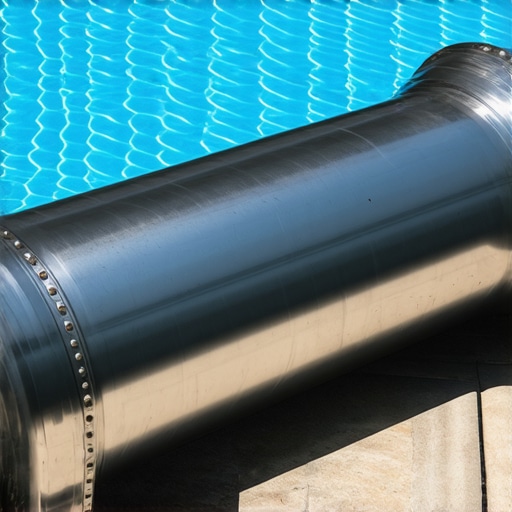
The Sound of a Dying Heat Exchanger
There is a specific sound a pool heater makes when the heat exchanger is failing due to chemistry neglect—it’s a metallic, rhythmic clicking, followed by a leak that smells like scorched pennies. I once followed a ‘Sales Tech’—those guys who wear crisp white shirts and couldn’t find a capacitor if it bit ’em—into a job site in a coastal neighborhood. He’d quoted the homeowner $12,000 for a total system replacement, claiming the entire unit was ‘atomized’ by the salt. I walked in, saw a standard copper exchanger pitted to hell because they’d converted to a saltwater chlorine generator without swapping the guts of the heater. It was a $2,500 repair, not a $12,000 catastrophe. That’s the problem with this industry: people sell what they don’t understand, and what they don’t understand is the relentless physics of electrolysis in saltwater environments.
The Thermodynamic Reality of Saltwater
In a humid coastal climate, the air is thick with latent heat. When you add a saltwater pool to the mix, you aren’t just dealing with water; you’re dealing with a chemical reactor. A saltwater pool uses a salt-chlorine generator to turn sodium chloride into hypochlorous acid. This process is great for your skin but brutal on standard HVAC and pool equipment. Most standard pool heaters come with a copper heat exchanger. Copper is a fantastic conductor of heat—it’s the gold standard for thermal transfer—but in a saltwater environment, it becomes a sacrificial anode. The salt acts as an electrolyte, and the heat speeds up the chemical reaction, leading to ‘cupro-solvency.’ This is where the copper literally dissolves into the water, often staining your pool plaster green before the unit finally gives up the ghost.
“The selection of materials for heat exchangers must account for both the thermal conductivity and the corrosive potential of the fluid medium to prevent premature structural failure.” – ASHRAE Fundamentals Handbook
Cupronickel vs. Titanium: The Battle for Longevity
When we talk about HVAC repair and pool heating, we have to look at the ‘Thermodynamic Zooming’ of the material. If you’re running a salt system, you need either cupronickel or titanium. Cupronickel is an alloy of copper and nickel. It’s harder, denser, and significantly more resistant to the high-velocity erosion and chemical attack found in saltwater. However, even cupronickel has its limits. If your pH levels swing wildly, that nickel barrier will eventually fail. This is why I always tell my priority service memberships clients to opt for titanium if the budget allows. Titanium is virtually immune to pool chemistry corrosion. It’s the ‘forever’ metal of the pool world. While it doesn’t transfer heat quite as fast as pure copper, the trade-off in longevity is a no-brainer. You don’t want to be calling for capacitor replacement services or a blower motor replacement on a heater that’s leaking acid onto its own electronics.
The Critical Role of Airflow and Crawl Space Heating
Many homeowners don’t realize that their pool heater is part of a larger thermal ecosystem. If you have an indoor pool or a pool house, crawl space heating solutions and radiant floor heating installation are vital for moisture control. Without proper heating in the sub-structure, the salt-laden humidity will migrate into the home’s framing. I’ve seen ‘tin knockers’ (duct technicians) install standard galvanized ducting in pool rooms only to have it turn to rust-dust in three years. You need ‘Pookie’ (mastic) on every seam and high-grade aluminum or PVC-coated ducting. If you’re considering an oil to gas conversion for your pool house, you need to ensure the venting is stainless steel. Standard B-vent will be eaten alive by the acidic exhaust of a salt-pool heater.
Predictive Maintenance and the 2025 Standards
We’re moving into an era of predictive maintenance alerts and occupancy sensor installation. For a pool heater, this means sensors that can detect the specific gravity of the water and the ‘delta T’ (temperature difference) across the exchanger. If the delta T drops, it’s a sign of scaling—minerals sticking to the inside of the tubes, insulating the water from the heat. This makes the burner run longer, wasting ‘gas’ (refrigerant or fuel) and stressing the baseboard heater repair needs in adjacent rooms. By 2025, new regulations on A2L refrigerants will also impact the heat pump versions of these pool heaters. We are looking at more complex sensors and mildly flammable refrigerants that require a pro who knows more than just how to use a nut-driver.
“The most expensive equipment in the world cannot overcome a bad duct system or improper material selection for the environment.” – Industry Axiom
The Expert Verdict
If you are tired of the cycle of repair and failure, you need to stop thinking about your pool heater as an appliance and start thinking of it as a chemical vessel. Whether you need a simple HVAC repair or a complex radiant floor heating installation to keep your pool deck warm, the physics remains the same: salt plus heat equals corrosion unless you use the right metals. Don’t let a ‘Sales Tech’ talk you into a standard unit just because it’s on the truck. Demand titanium, check your capacitor replacement services, and make sure your priority service memberships include a full chemistry audit. For more expert guidance, check out choosing the best heating service expert tips for 2025 or top HVAC repair strategies to extend your systems life to keep your home running like a top. If you’re ready to fix it right the first time, you can contact us today to speak with someone who actually knows the smell of a burnt compressor.