The Physics of the Wet Heat: A Lesson from the Old School
My old mentor, a guy who could smell a refrigerant leak from the curb, used to scream at me every time I touched a thermostat: ‘You can’t cool what you can’t touch, and you can’t heat what you’ve drowned!’ He was obsessed with airflow and the invisible chemistry of combustion. Back in the late 80s, we didn’t have fancy digital psychrometers; we had our senses and a basic understanding of the psychrometric chart. When a customer complained about ‘sweating walls’ in the middle of a polar vortex, he didn’t look at the insulation first. He looked for the ventless heater. He knew that the 18,000 BTUs of ‘free heat’ they thought they were getting came with a hidden tax: gallons of water dumped directly into the breathing zone.
‘A ventless gas-fired appliance relies on the room’s air for combustion and releases all products of combustion, including moisture and carbon monoxide, back into the indoor environment.’ – ASHRAE Standard 62.1
If you are running a ventless propane heater and your windows look like they are crying, you aren’t dealing with a ‘tight house’ problem; you are dealing with a thermodynamic reality. Propane (C3H8) is a hydrocarbon. When you burn it, the chemical reaction produces heat, carbon dioxide, and water vapor. In a vented system, a tin knocker has designed a flue to carry that ‘gas’ outside. In a ventless system, you are the flue. That ‘sour’ smell of damp drywall and the screech of a transformer replacement waiting to happen due to corrosion are your first warning signs.
The Forensic Diagnosis: Why Your Walls Are Sweating
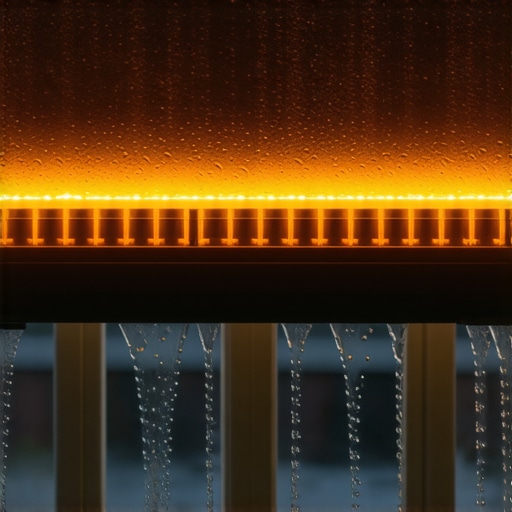
Let’s perform a forensic diagnosis of your indoor climate. When that blue flame is roaring, it’s not just sensible heat (the temperature you feel on your skin) being added to the room. It’s a massive injection of latent heat. In colder climates like the Northeast or Chicago, the outdoor air is bone-dry. Homeowners think adding moisture is good until they hit the dew point. The dew point is the temperature at which air can no longer hold water vapor, and it turns back into a liquid. When that humid, propane-heated air hits a cold exterior wall or a single-pane window, it flashes into liquid water. This isn’t just a comfort issue; it’s an structural one. Water behind the baseboards leads to mold that no HEPA filter systems can fully chase away once it takes root in the studs.
The Mechanical Anatomy of a Failed Solution
People buy ventless heaters because they are cheap and don’t require a chimney. But as a tech who has spent 30 years fixing ‘cheap’ solutions, I can tell you the math doesn’t work. The contactor in your auxiliary units might stay engaged, but the moisture is killing your electronics. I’ve seen transformer replacement jobs three times a year because the humidity was so high it caused a short in the low-voltage control board. You’re essentially living inside an unvented tea kettle. If you’re tired of the damp chill, it might be time to look into propane conversion services that transition you to a high-efficiency vented furnace or, better yet, a modern heat pump.
‘The most expensive equipment in the world cannot overcome a bad duct system, or a total lack of venting.’ – Industry Axiom
We see it all the time in warehouse heating solutions. An owner tries to save a buck with ventless ‘salamanders’ or wall units, and within two winters, the steel roof deck is rusting from the inside out. The fix isn’t more heat; it’s better physics. Transitioning to a heat pump installation or even a wood burning stove installation (which naturally dehydrates the air) changes the entire atmospheric profile of the building.
Repair vs. Replace: The $15,000 Question
I despise the ‘Sales Techs’ who walk into a house and immediately quote a $15,000 system because a capacitor blew. However, when it comes to ventless propane units, the ‘repair’ is often just stopping the use of the unit. If you’re looking for a permanent fix, you need to consider SEER2 compliant upgrades. The new 2025 standards have pushed manufacturers to make heat pumps that work down to -15°F. These systems don’t just heat; they manage humidity through constant, low-speed airflow. If the cost is a barrier, there is financing for heat pump installs and rebate application assistance available that can shave thousands off the top. I’ve seen homeowners get nearly 30% of the cost back through federal tax credits and local utility rebates.
Before you commit to another winter of damp socks and foggy windows, get a refrigerant leak detection expert to check your existing central air or look into a heat pump installation. You can find more info on top HVAC repair strategies to see if your current setup is even worth saving. If your current ‘sparky’ or HVAC guy tells you that humidity is ‘just part of propane,’ find a new guy. Better yet, check out our guide on choosing the best heating service to ensure you’re getting an architect, not a part-swapper.
The Airflow Manifesto: Physics Over Magic
Airflow is the king of comfort. In a ventless environment, the air is stagnant and heavy. To fix this, you need a system that breathes. A properly installed heat pump with HEPA filter systems will circulate the air, stripping out moisture (in cooling mode) and providing a balanced, dry heat in the winter. If you’re stuck with propane, make sure you’re using preventative heating maintenance to ensure your flues (if you have them) are clear. If you don’t have them, it’s time to move toward a heat pump solution. Stop letting ‘Pookie’ and duct tape be the only thing holding your comfort together. Physics doesn’t care about your budget, but it does care about the dew point. If you need help navigating the mess of financing for heat pump installs, we’re here to help. Contact us today to stop the indoor rain and start breathing dry, clean air. It’s not magic; it’s just better engineering. Check our privacy policy for more on how we handle your data when you reach out for a quote. “, “image”: {“imagePrompt”: “A technical diagram showing the chemical combustion of propane releasing water vapor molecules into a room with cold windows, contrasted with a modern vented heat pump system, in a realistic HVAC technician’s workshop setting.”, “imageTitle”: “Thermodynamics of Ventless Propane Heating”, “imageAlt”: “Diagram showing how ventless propane heaters increase indoor humidity through combustion byproducts.”}, “categoryId”: 0, “postTime”: “”}