The Airflow Manifesto: Why Your New Heat Pump Is Probably Failing You
Listen, I’ve spent three decades dragging my tired bones through crawlspaces that smelled like wet dogs and ozone. My old mentor, a grizzled guy who could tell you the subcooling on a unit just by touching the liquid line, used to scream at me, ‘You can’t cool what you can’t touch, and you can’t heat what you can’t move!’ He wasn’t talking about magic; he was talking about physics. This is why airflow matters more than horsepower. Today’s ‘Sales Techs’—those guys in the crisp white shirts who couldn’t find a manifold gauge set with both hands and a map—want to sell you a 5-ton heat pump for a house that only needs 3 tons because their ‘rule of thumb’ says so. They are wrong. They are skipping the Manual J calculations, and they are ruining your home’s thermodynamics in the process.
Thermodynamic Zooming: The Cold Climate Reality
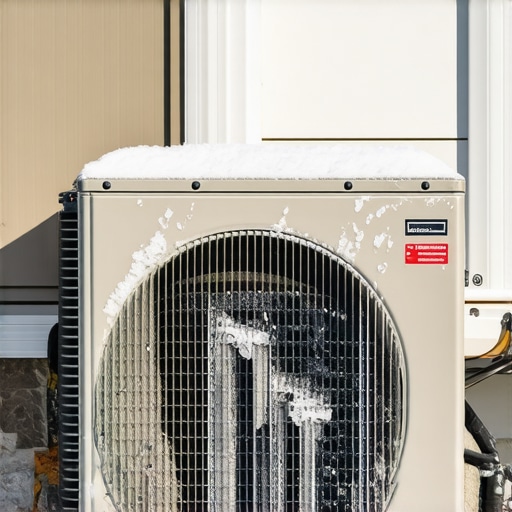
In the North, where I’ve seen ice block a heat pump solid during a polar vortex, we deal with a different beast. When we talk about high-efficiency furnace installation or heat pumps, we have to look at the latent heat. Even in cold air, there is moisture. When a heat pump runs, the evaporator coil (or the outdoor coil in heating mode) drops below the dew point. If your airflow measurement services aren’t spot on, that coil becomes a block of ice. I’ve walked onto jobs where a ‘Tin Knocker’ (duct guy) sized the return air so small the suction line was pulling a vacuum. You can’t just slap a new unit on old, choked-out ducts and expect it to work.
“The most expensive equipment in the world cannot overcome a bad duct system.” – Industry Axiom
When you ignore the Manual J calculations, you end up with a unit that short-cycles. It turns on, blasts the house with heat, and shuts off before it can actually circulate the air. In a church heating system or a large commercial furnace repair scenario, this is catastrophic. You end up with ‘hot spots’ and ‘cold spots’ because the air never reached the corners. It’s not magic; it’s static pressure. If the Total External Static Pressure (TESP) is too high, your blower motor is going to burn out faster than a cheap candle. I’ve seen relay services fried and predictive maintenance alerts ignored until the whole system is a boat anchor.
The 2025 Regulatory Cliff and Low-GWP Refrigerant Retrofits
We are entering a new era. The ‘gas’ we’ve used for years, R-410A, is being phased out for A2L refrigerants like R-454B. This transition means low-GWP refrigerant retrofits are the new frontier. These refrigerants are ‘mildly flammable,’ which sounds scary to a homeowner but is just another Tuesday for us pros. However, it means your heat pump installation needs to be even more precise. You can’t just ‘top off the juice.’ It’s a sealed system; if it’s low, you have a leak. Period. Finding that leak is the difference between a pro and a hack. If you want to avoid these headaches, you need to look into top hvac repair strategies to extend your systems life.
“Design heating and cooling loads shall be determined in accordance with ASHRAE/ACCA Standard 183.” – ASHRAE Standards
The Anatomy of a Failed Installation
Let’s look at the mechanical anatomy. Most failures start at the blower. If the airflow measurement services show that your ducts are undersized, that 5-ton unit you just bought is actually only moving 3 tons of air. The compressor, the heart of the system, starts to struggle. It’s like trying to run a marathon while breathing through a cocktail straw. Eventually, the compressor undergoes ‘liquid slugging’ because the refrigerant didn’t have enough heat to boil off in the coil. This is why heat pump solutions for efficient home comfort in 2025 require a total system approach, not just a box swap. You need to check the ‘Pookie’ (mastic) on the joints. If your ducts are leaking 30% of your conditioned air into the attic, no amount of ‘high efficiency’ is going to save your utility bill.
Boiler Repair Services and Integrated Systems
In older homes, we often see boiler repair services combined with new heat pumps as dual-fuel systems. This is smart. When the temperature drops below the heat pump’s ‘balance point’—the temperature where it can no longer pull enough heat from the frozen air—the boiler or the furnace kicks in. But if your tech didn’t do the math, those two systems will fight each other. I’ve seen systems where the heat pump was trying to cool while the boiler was still radiating heat. It’s a mess. Proper predictive maintenance alerts can catch these sensor failures before they double your gas bill. If you’re unsure about your current setup, I recommend choosing the best heating service expert tips for 2025 to find someone who actually knows how to use a manometer.
The Final Word on Comfort
Comfort is about more than just a number on the thermostat. It’s about humidity control and air movement. If your tech doesn’t talk to you about static pressure, walk away. If they don’t perform a room-by-room load calc, keep your checkbook closed. Real HVAC work is done with gauges, flow hoods, and math, not with sales pitches and shiny brochures. For those looking to keep their older systems breathing, preventative heating maintenance a guide for homeowners in 2025 is your best bet to stay ahead of the curve. Don’t let a ‘Sales Tech’ turn your home into a laboratory for bad physics. Demand the Manual J. Demand the airflow test. And for the love of all things mechanical, make sure they use enough Pookie on those duct seams. “