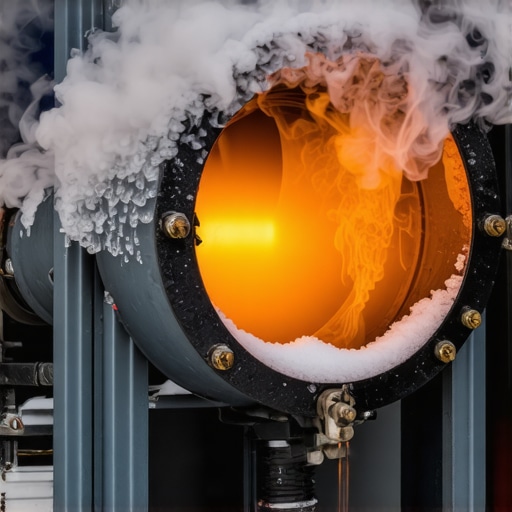
The Physics of Failure When the Mercury Bottoms Out
My old mentor, a guy who had more soot in his lungs than a chimney sweep and didn’t believe in gloves even in January, used to scream at me, ‘You can’t heat what you can’t touch!’ This wasn’t some Zen riddle. He was talking about the surface area of the heat exchanger and the desperate need for airflow. In an industrial setting, when the outside air hits -20°F, your heating system isn’t just a luxury; it’s a life-support machine for your pipes and your inventory. Most guys think you just crank the thermostat and hope for the best. They’re wrong. Industrial heating in sub-zero temps is a battle against thermodynamics, and right now, the cold is winning because you’re probably ignoring your ductwork and your sensors.
“The most expensive equipment in the world cannot overcome a bad duct system.” – Industry Axiom
The Forensic Diagnosis: Why Your Contactor is Pitting
When it’s cold enough to freeze the whiskers off a barn cat, your industrial heater is cycling constantly. This is where contactor repair becomes the frontline of your defense. Every time that thermostat calls for heat, those silver-plated contacts slam together. In sub-zero temps, the metal is brittle, and the electrical arc is brutal. If those contacts are pitted, they’ll stick. You’ll either have a heater that won’t turn on or one that won’t turn off until the high-limit switch trips. It’s not magic; it’s physics. While you’re looking at the electrical, don’t ignore the carbon monoxide detector installation. In a tight industrial shop, a cracked heat exchanger—caused by the extreme thermal expansion and contraction of sub-zero operation—will dump CO into your breathing air faster than you can say ‘lawsuit.’ These sensors aren’t optional; they are your early warning system against a literal death trap.
Thermodynamic Zooming: The Latent Heat Struggle
Let’s talk about variable speed furnace services. In the old days, we had single-stage blowers—on or off. It was like trying to perform surgery with a sledgehammer. Modern variable speed motors allow for a more nuanced approach to heat transfer. We’re looking at sensible heat (the temperature change you can feel) and the way we move that energy through the building. If your airflow is restricted because of a neglected furnace filter replacement, the heat exchanger will overheat. It doesn’t matter if it’s -40°F outside; that metal box inside will hit 200°F and crack. I’ve seen ‘Tin Knockers’ spend days perfecting a return air drop just to have a manager slide a piece of plywood over a vent. That’s how you kill a compressor or a blower motor. You need HVAC duct sealing with actual ‘Pookie’ (mastic), not that silver tape that peels off the second it gets cold. Air follows the path of least resistance, and if that path is through a leak in your attic, you’re just heating the squirrels.
The Industrial Fluid Crisis: Spa Heaters and Hot Water
In many industrial facilities, we aren’t just moving air; we’re moving water. Spa heater services and hot water heater repair are often neglected until the floor is a skating rink. When water sits in a pipe at sub-zero, it doesn’t just freeze; it expands with enough force to shatter cast iron. This is why priority service memberships are the only way to survive a northern winter. You want a tech who knows your building’s ‘gremlins’ before the polar vortex hits. If you’re still running 20-year-old boilers, you’re bleeding money. We are moving toward SEER2 compliant upgrades and low-GWP refrigerant retrofits, even in the industrial heating world. The regulations are tightening, and the old ‘gas’ (refrigerant) is getting too expensive to keep ‘topping off.’ It’s a sealed system, folks. If you need more juice, you have a leak. Period.
“Proper combustion requires precise fuel-to-air ratios, often compromised by poor maintenance.” – ASHRAE Standard 15.5
The Math of Survival: Repair vs. Replace
A $500 repair on a capacitor or a contactor repair is a drop in the bucket compared to an $8,000 industrial furnace replacement. But you have to know when to pull the plug. If your heat exchanger has a hairline fracture, no amount of ‘Pookie’ will save it. You’re looking at a replacement. For those looking to maximize efficiency, top HVAC repair strategies suggest that keeping the coils clean and the filters fresh adds five years to the life of the machine. If you’re in the market for a new setup, look into heat pump solutions that are rated for cold climates, though in sub-zero industrial applications, you’ll likely need a dual-fuel setup with a gas backup. Don’t let a ‘Sales Tech’ talk you into a unit that’s oversized; that leads to short cycling, which is the fastest way to burn out a motor in the winter. For more on choosing the right pro, check out choosing the best heating service expert tips. Maintenance isn’t a scam; it’s the difference between a productive Monday and a frozen disaster. Check your filters, seal your ducts, and for the love of all that is holy, don’t ignore that screeching bearing in the blower motor.