The Specific Backlink Strategy That Moves Your HVAC Shop Into the Local Map Pack
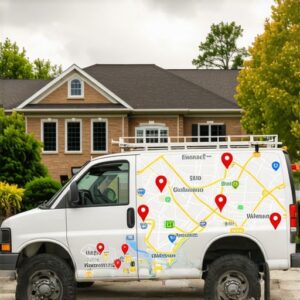
You have the best technicians in the county. Your trucks are wrapped, your 5-star reviews are trickling in, and your Manual J calculations are flawless. Yet, when a homeowner in your service area types “AC repair near me” into their phone, your business is nowhere to be found. You are the “Invisible HVAC Shop.”
In the high-stakes world of local home services, if you aren’t in the Google Maps Top 3 – the coveted “Local Map Pack” – you effectively do not exist. According to data from Klutch Growth, ranking in the local 3-pack can more than double your visibility and customer engagement compared to standard organic listings. For an HVAC contractor, that visibility translates directly into emergency service calls and high-ticket system replacements.
The problem is that most owners think a verified profile and a few reviews are enough. They aren’t. To dominate the local search landscape in 2026, you must master the “Prominence” factor of Google’s local algorithm. While your competitors are busy tweaking their business descriptions for the tenth time, the winners are building a moat of high-authority, hyperlocal backlinks. If you’re wondering Why Your HVAC Shop Is Still Stuck Outside the Google Maps Top 3, the answer almost always lies in your backlink profile.
The Algorithm Breakdown: Proximity, Relevance, and Prominence
Google’s local search algorithm is built on three pillars: Proximity, Relevance, and Prominence. Most HVAC owners have a decent handle on the first two. Proximity is determined by where the searcher is located relative to your shop. Relevance is about how well your google business profile seo matches the search query (e.g., using keywords like “furnace repair” or “ductless mini-split installation”).
However, the pillar that actually moves the needle for competitive keywords is Prominence. Prominence is Google’s way of measuring how “important” or “authoritative” your business is in the eyes of the digital world. This is heavily influenced by information that Google has about a business from across the web, such as links, articles, and directories.
Think of each high-quality link as a vote of confidence. If a local news station, a neighborhood association, and a major HVAC manufacturer all link to your site, Google assumes you are a pillar of the community. This authority flows directly into your map listing. To rank higher on google maps, you cannot rely on your website alone; you need the rest of the internet to vouch for you.
As an SEO specialist with 5 years of experience, I’ve seen countless shops plateau because they ignored the technical authority side of their profile. You can have 500 reviews, but if your website has zero external authority, a competitor with 50 reviews and a strong backlink profile will often outrank you.
Citations vs. Backlinks: Why Your Directory Listings Aren’t Enough
There is a common misconception in the HVAC industry that “citations” and “backlinks” are the same thing. They aren’t, and confusing the two is a recipe for stagnation. A citation is any mention of your Name, Address, and Phone number (NAP) on the web – think Yelp, Yellow Pages, or Angie’s List. While these are necessary for foundational 5 Google Map Listing Fixes That Actually Drive More Heating Leads, they are now a commodity.
Every one of your competitors has the same citations. If everyone has them, they provide zero competitive advantage. Furthermore, many contractors fall into the trap of buying “1,000 Local Citations” for $50 on freelance marketplaces. This is a mistake. Why Relying on Cheap Citations Is a Huge Mistake for Local Heating Shops is simple: Google’s algorithm has evolved to ignore low-quality, automated directory spam. It wants to see contextual, earned links.
A backlink is a link from another website that points to yours. Unlike a citation, which is often just a text mention in a structured directory, a powerful backlink usually comes from an article, a blog post, or a partner page. For HVAC local SEO, we are looking for hyperlocal relevance and industry authority.
The Hyperlocal Backlink Strategy: Winning the Neighborhood
This is the “secret sauce” that most SEO agencies won’t tell you because it requires actual manual effort. Hyperlocal backlinks are links from websites that are physically located in your service area. Google values these immensely because they prove your physical relevance to a specific geography.
Here is the specific strategy to build these “proximity bombs”:
1. Sponsoring Local Youth Sports
Don’t just do it for the tax write-off or the banner on the outfield fence. When you sponsor a Little League team or a local soccer club, ensure they list you on their “Sponsors” page with a link to your website. These sites often use .org or .edu domains, which carry significant weight. More importantly, the website is locally relevant. A link from “SpringfieldLittleLeague.org” tells Google you are an integral part of Springfield.
2. Strategic Partnerships with Non-Competing Trades
You likely know a great plumber, a reputable roofer, or a high-end realtor in your town. Reach out to them. Offer to write a “Pro Tip” for their blog – something like “How a Leaking Roof Can Destroy Your HVAC Efficiency” – in exchange for a link back to your site. This creates a network of local authority. Check out How Local Neighborhood Backlinks Actually Get Your Heating Shop Found for a deeper dive into these community-driven tactics.
3. Neighborhood Association & HOA Websites
Many neighborhoods have their own private or semi-private websites. Getting listed as a “Preferred Vendor” on an HOA site is gold. These links are incredibly hard for your competitors to replicate and provide a massive signal of trust to Google’s local algorithm.
Pro Tip: In the HVAC world, a link from a local neighborhood association is worth ten links from a generic SEO directory. It’s about the “geo-targeted” relevance, which often outweighs raw domain authority in the map pack.
Industry-Specific Authority: The “Expert” Signal
While hyperlocal links prove where you are, industry links prove what you are. You need to show Google that you are a legitimate expert in heating, ventilation, and air conditioning. This requires links from high-authority HVAC sources.
- Manufacturer Directories: Are you a Carrier FAD (Factory Authorized Dealer)? A Trane Comfort Specialist? A Rheem Pro Partner? These manufacturers have high-authority websites. Ensure your profile on their “Dealer Locator” is fully optimized and links directly to your localized service pages.
- Trade Schools and Apprenticeship Programs: If you hire from a local trade school, ask them for a link on their “Employer Partners” page. These .edu links are incredibly powerful for google business profile seo.
- HVAC News and Publications: Sites like ACHR News or HVAC Insider often look for expert commentary on industry trends, such as the transition to R-454B refrigerants or the impact of new SEER2 ratings. Providing a quote as an expert can land you a high-authority backlink.
If you find this process overwhelming, many shops utilize a professional google maps ranking service to handle the heavy lifting of outreach and link acquisition. The key is consistency; authority isn’t built overnight.
The Role of Content in Link Building
You cannot build high-quality links to a boring “Contact Us” page. To earn the best backlinks, you need “Linkable Assets.” These are pieces of content so valuable that other people want to link to them.
For an HVAC shop, this might include:
- The Ultimate Guide to Dual Fuel Heat Pumps: Explain how these systems cut 2026 energy bills in your specific climate.
- A “Short Cycling” Diagnostic Tool: A simple flowchart that helps homeowners troubleshoot why their AC is turning on and off rapidly.
- Local Rebate Guides: A comprehensive list of every utility rebate available for high-efficiency furnace installs in your specific county.
When you have content like this, your outreach becomes much easier. Instead of asking for a favor, you are providing a resource. This is also essential for your local landing pages. For example, The Only Way to Build City Pages That Actually Rank for Boiler Repair involves creating content that is so locally specific that other local businesses feel comfortable referencing it.
Measuring Success: Tracking Your Map Position
SEO is not a “set it and forget it” strategy. You must track your progress to see which links are actually moving the needle. Because Google Maps results vary based on where the searcher is standing, a standard search on your office computer won’t give you the full picture.
You need to use local seo tools that provide a “geo-grid” view of your rankings. This shows you exactly where you rank in the Top 3 and where you drop off to position #4 or #5. Understanding this data allows you to double down on link building in the specific neighborhoods where you are losing ground. As I often tell my clients, Why Monitoring Your Local Map Position Is the Fastest Way to Spot a Lead Drop is because the map pack is volatile; a new competitor or a lost backlink can shift the rankings in days.
Using a dedicated google maps optimization tool or rank tracker ensures you are making decisions based on data, not guesswork.
Conclusion & Final Checklist
Dominating the HVAC Local Map Pack in 2026 requires more than just a verified profile and a few reviews. While those are the foundation, backlinks are the Prominence signal that forces Google to acknowledge your authority and move you into the Top 3. By focusing on hyperlocal links from your community and industry-specific links from manufacturers and trade publications, you create a ranking profile that is nearly impossible for competitors to beat.
If you are tired of being the “Invisible HVAC Shop,” it’s time to take action. Follow this checklist to start your journey toward The Specific Moves That Push Your HVAC Shop Into the Local Map Pack Top 3:
- Perform a Google Business Profile Audit: Ensure your NAP data is 100% consistent across the web.
- Audit Your Current Backlinks: Identify if you have any local or industry-specific links.
- Launch a Hyperlocal Campaign: Reach out to one local sports team or neighborhood association this week.
- Create One Linkable Asset: Write a guide on a common local HVAC problem (like “Why Your Furnace Screeches”).
- Track Your Progress: Use a rank tracker to monitor your geo-grid position.
The leads are out there. They are searching for you right now. The only question is, will they find you, or will they find the guy down the street who understood the power of local backlinks? Don’t wait – start building your authority today.