The Airflow Architect’s Manifesto: Why 2026 Changes Everything
My old mentor, a man who had more silver in his hair than a brazing rod and smelled permanently of WD-40, used to scream at me until his face turned the color of a cherry-red heat exchanger. ‘You can’t cool what you can’t touch, and you can’t heat what you won’t move!’ he’d bellow. His point? Airflow matters more than horsepower. You can drop a 5-ton unit into a house with 3-ton ductwork, and all you’ve bought yourself is a very expensive vibrating paperweight. In the world of the 2026 HVAC transition, this lesson is more vital than ever.
“The most expensive equipment in the world cannot overcome a bad duct system.” – Industry Axiom
We are standing on the edge of a regulatory cliff. The era of R-410A is dead. If you’re still buying ‘dry ships’ or looking for old ‘juice’ (refrigerant) at the back of a warehouse, you’re setting yourself up for a nightmare. By 2026, the low-GWP refrigerant retrofits and the mandatory shift to A2L refrigerants like R-454B and R-32 are the new law of the land. These ‘mildly flammable’ gases require new sensors, new leak detection logic, and a technician who actually knows how to use a torque wrench instead of just ‘guesstimating’ the flare nuts. If your tech doesn’t mention the words ‘static pressure,’ show him the door.
The Cold Climate Physics: Beyond the Balance Point
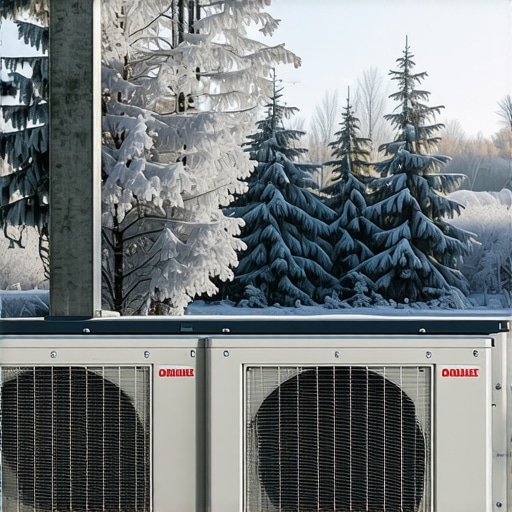
In the North, specifically during a polar vortex, a standard heat pump used to be a joke. It would hit its ‘balance point’—that temperature where the heat loss of the house exceeds the unit’s output—and the expensive electric backup heat would kick in, spinning your meter like a desk fan. But the 2026 crop of cold climate heat pumps uses vapor injection technology. By injecting a bit of liquid refrigerant back into the scroll compressor, we can keep the discharge temperatures down and the heating capacity up, even when it’s -15°F outside. This isn’t magic; it’s thermodynamics. It’s about squeezing every last BTU out of the ambient air by dropping the evaporator coil way below the dew point to manage the latent heat load before the frost cycle takes over.
1. The Mitsubishi Hyper-Heat H2i (The Gold Standard)
If you want a unit that laughs at a blizzard, this is it. The Mitsubishi Hyper-Heat series remains the king because of its inverter-driven compressor. While some ‘Sales Tech’ will try to sell you on a basic single-stage unit, the Hyper-Heat maintains 100% heating capacity down to 5°F. It’s the closest thing we have to a ‘bulletproof’ system. When I’m doing a ductless mini-split installation in a drafty old Northeast home, this is the only head I’ll hang. It integrates perfectly with modern WiFi thermostat integration, allowing for precise static pressure compensation that most brands can’t touch.
2. Daikin SkyAir with Cold Climate Tech
Daikin is the 800-pound gorilla of the global market for a reason. Their 2026 models are built specifically for the low-GWP refrigerant retrofits we’re seeing nationwide. What sets them apart is the swing compressor—it has fewer moving parts than a standard scroll, meaning less friction and fewer calls to a ‘Sparky’ to fix a blown start capacitor. If you’re looking into heat pump solutions for efficient home comfort in 2025 and beyond, Daikin’s ability to ramp down to 15% capacity prevents the dreaded ‘short cycling’ that kills compressors prematurely.
3. Fujitsu Halcyon XLTH (Extreme Low Temp Heating)
Fujitsu doesn’t get the hype of the big three, but their XLTH line is a ‘Tin Knocker’s’ dream. They’ve redesigned the base pan with heaters to prevent the ‘ice block’ syndrome that occurs during defrost cycles in the North. When the unit reverses the flow of ‘gas’ to melt the frost off the outdoor coil, the melt-off has to go somewhere. In cheaper units, it freezes and bends the fan blades. Fujitsu solved this. It’s a specialized tool for homeowners considering an oil to gas conversion who decide to skip the gas line entirely and go full electric.
4. Carrier Infinity with Greenspeed Intelligence
Carrier is the old guard, but their Greenspeed logic is top-tier for hydronic heating systems integration and complex residential zones. The software monitors the relationship between the indoor coil temperature and the outdoor ambient temp to find the most efficient compression ratio. It’s a ‘smart’ system that actually works. However, warning: these units are sensitive. If your furnace flame sensor cleaning hasn’t been done on your backup system, or if your ductwork is restricted, the Infinity controller will throw a fault code faster than a ‘Sales Tech’ can quote a markup.
5. Trane/American Standard Resolute
Trane says it’s ‘hard to stop,’ and while that’s marketing fluff, the Resolute series is built like a tank. It uses a variable speed fan motor that can push through high static pressure—perfect for those older homes where the ducts are too small and the homeowner refuses to let a ‘Tin Knocker’ tear out the drywall. For those looking for financing for heat pump installs, these units often qualify for the highest tier of federal tax credits because of their staggering HSPF2 ratings.
“Modern refrigerants require a level of precision that the industry has ignored for forty years. The era of ‘good enough’ is over.” – ASHRAE Standards Handbook
The Critical Failure: Why Most ‘Cold Climate’ Installs Fail
You can buy the best Mitsubishi on the market, but if the guy installing it doesn’t pull a vacuum down to 500 microns and hold it, the ‘juice’ will be contaminated with moisture. Moisture plus refrigerant plus heat equals acid. That acid eats the windings on your compressor motor, and six months later, you’ve got a burnout. It’s a sour, acidic smell that you never forget. This is why choosing the best heating service expert is more important than the brand name on the box. I’ve seen electric heater services and heat pump installs botched because the tech didn’t use a micron gauge. They just ‘purged’ the lines—a cardinal sin that violates EPA Section 608.
The Maintenance Reality: Beyond the Filter
Everyone knows to change the filter, but in 2026, that’s not enough. You need to ensure your evaporative cooler services (if you’re in a hybrid climate) or your heat pump’s outdoor coil is chemically cleaned. If the fins are plugged with cottonwood and dirt, the ‘gas’ can’t reject or absorb heat efficiently. The ‘Head Pressure’ spikes, and the compressor works twice as hard for half the result. For larger properties or campuses, school boiler maintenance is often ignored until the pipes knock, and heat pumps are no different. They need a biannual checkup to ensure the sensors for the new A2L refrigerants are calibrated. Don’t fall for the ‘Scam Tune-Up’ where they just spray some water on the unit and leave. Demand a full subcooling and superheat calculation. Check out this guide for homeowners in 2025 to see what a real pro should be doing.
The Math of 2026: Financing and ROI
The upfront cost of a high-end cold climate heat pump is enough to make any homeowner clutch their chest. We’re talking $12,000 to $22,000 depending on the complexity. But with financing for heat pump installs and the current tax credits, the ROI is often under seven years, especially if you’re moving away from expensive heating oil or propane. The key is to stop thinking about the ‘box’ and start thinking about the ‘system.’ This includes your WiFi thermostat integration, which can use outdoor temperature sensors to decide exactly when to swap from the heat pump to your backup furnace (if you keep one).
Ultimately, a heat pump is just a machine that moves heat from where it isn’t wanted to where it is. In the winter, it’s stealing heat from the freezing outside air—yes, there is still heat in 0°F air—and moving it inside. If your tech doesn’t understand the latent heat of vaporization or how ‘Pookie’ (mastic) seals a plenum better than silver tape, he isn’t an Airflow Architect. He’s just a parts changer. For more on keeping your unit alive, see these top hvac repair strategies. Comfort is physics, not magic. Don’t let anyone tell you otherwise.