The 2025 Regulatory Cliff: Why Your New Build is Already Obsolete
We are standing on the edge of a massive shift in the HVAC world. If you are breaking ground on a new home today, you aren’t just building a house; you are navigating the death of R-410A and the birth of the A2L transition. By 2026, the way we heat and cool homes will be dictated by sensors, mildly flammable refrigerants, and more electronics than a Silicon Valley server room. Most builders are still slapping in the same oversized junk they used in the 90s, but that is a recipe for a $800 utility bill and a cracked heat exchanger within a decade. If you want to actually save money, you have to stop thinking about the box and start thinking about the physics of the envelope.
“The most expensive equipment in the world cannot overcome a bad duct system.” – Industry Axiom
My old mentor, a guy who could tell you a system’s static pressure just by listening to the return air whine, used to scream at me, ‘You can’t heat what you can’t touch!’ He was talking about the boundary layer of air on a heat exchanger. If the airflow is wrong, the heat stays in the metal, the metal fatigues, and you end up with a furnace ignition repair call on a three-year-old unit. He taught me that comfort isn’t about horsepower; it is about management. This brings us to the first tactic for 2026: The Hydronic Renaissance.
Tactic 1: Hydronic Heating Systems and Thermal Mass
In the North, where the wind bites through your jacket like a starved dog, forced air is often a poor substitute for real warmth. When we talk about heat pump solutions, we have to look at how that heat is delivered. Hydronic heating systems—using water instead of air—are the gold standard for 2026. Water has a much higher heat capacity than air. While a ‘tin knocker’ is struggling to balance a duct system that’s leaking 20% of its capacity into the crawlspace, a hydronic setup is moving BTUs through copper or PEX with surgical precision. By integrating hydronics into the slab or under-floor, you create a thermal flywheel. It takes longer to heat up, but it holds that energy, preventing the rapid cycling that kills compressors and gas valves alike.
Tactic 2: Precision Load Calculation Services vs. “The Rule of Thumb”
I’ve walked onto too many jobs where the ‘Sales Tech’ just looked at the square footage and said, ‘Yep, you need a 5-ton.’ That is a lie. It is a lazy, expensive lie. True 2026 efficiency requires HVAC load calculation services that follow Manual J protocols to the letter. We aren’t just looking at the floor plan; we are looking at the U-value of the glass, the orientation of the house toward the winter sun, and the infiltration rate of the building envelope. Oversizing is the silent killer. An oversized unit ‘short cycles’—it blasts the house with heat, hits the thermostat setpoint, and shuts off before it can even warm up the furniture or properly manage the humidity. This creates hot and cold spots that make you feel like you’re living in a cave. Proper system performance testing during the design phase ensures that the equipment matches the actual heat loss of the structure. If you skip this, you’re just throwing ‘juice’ at a problem that math could have solved.
“Design heat loss shall be calculated in accordance with the procedures outlined in the ASHRAE Fundamentals Handbook.” – ACCA Manual J Standard
Tactic 3: Predictive Maintenance and Leak Detector Integration
The new A2L refrigerants (like R-454B) coming in 2025 and 2026 are ‘mildly flammable.’ To satisfy the safety ghouls, these systems require mandatory leak detector integration. But don’t just see this as a regulatory hurdle; see it as a tool. We are moving toward an era of predictive maintenance alerts. Instead of waiting for the house to hit 50 degrees because the furnace failed, these systems monitor the ‘delta T’ (temperature difference) across the coil and the amp draw of the inducer motor. When a bearing starts to screech—a sound I can hear from the driveway but most homeowners miss—the system logs a fault. By pairing this with HVAC maintenance plans, we can catch a failing capacitor or a clogged condensate line before it ruins your New Year’s Eve. In 2026, the smart money is on systems that tell you they are sick before they actually die.
The Airflow Manifesto: Why “Pookie” is Your Best Friend
You can buy a 98% AFUE furnace, but if your ductwork is held together with cheap silver tape and prayer, you’re only getting 70% of what you paid for. I always tell folks to watch the ‘tin knockers.’ If they aren’t slathering ‘Pookie’ (mastic) on every joint, they aren’t doing it right. Air is lazy; it wants to take the path of least resistance, which is usually out of a gap in the plenum and into your attic. This is where IAQ improvement services start. You can’t have clean air if your return ducts are sucking in insulation dust and rodent droppings from the crawlspace. Proper sealing and system performance testing are the only ways to ensure that the air you paid to heat actually makes it to your bedroom.
The Harsh Reality of 2026 Bills
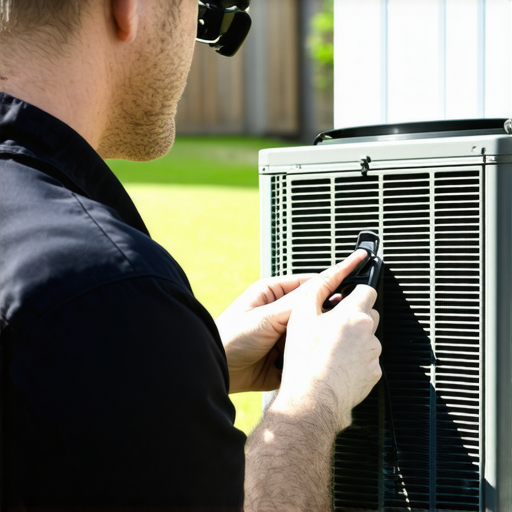
The cost of electricity and gas isn’t going down. The ‘Sparky’ (electrician) is going to charge you more for the heavy-duty circuits these new high-efficiency heat pumps require. The only way to win is to reduce the demand. This means better insulation, better windows, and most importantly, an HVAC system designed with thermodynamic zooming. We need to look at the microscopic level—the way the flame licks the heat exchanger—and the macroscopic level—how the air circulates through the entire volume of the home. Anything less is just ‘topping off the gas’ and hoping for the best. And trust me, hope is a terrible strategy when it’s 10 below zero outside. “,”image”:{“imagePrompt”:”A professional HVAC technician in a blue uniform using a digital manometer to measure static pressure in a newly installed, high-efficiency ductwork system with visible grey mastic sealant on the joints, set in a modern mechanical room.”,”imageTitle”:”HVAC System Performance Testing”,”imageAlt”:”Technician performing static pressure test on new HVAC ductwork”},”categoryId”:123,”postTime”:”2024-05-20T10:00:00Z”}