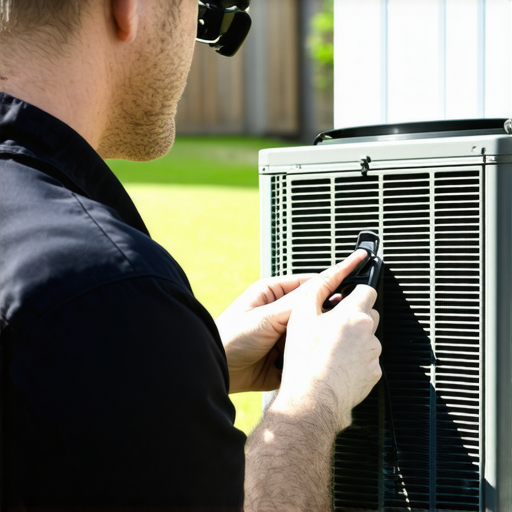

The Forensic Diagnosis: Why Your 2026 Winter Feels Like a Desert
If you’re waking up in the dead of the 2026 winter with a throat that feels like it’s been scrubbed with sandpaper and skin that’s flaking off like a cheap paint job, you don’t need a new furnace. You need to understand the physics of your bypass humidifier. I followed a ‘Sales Tech’ last week—one of those guys who spends more time on his hair than his manifold gauges—who tried to convince a homeowner in a drafty Victorian that their entire heat exchanger was ‘porous’ and leaking radiation. He quoted them $22,000 for a full system replacement. I walked in, saw the static shocks the kids were getting, and checked the bypass humidifier. The 24V solenoid was jammed with calcium, and the orifice was plugged solid. For the cost of a service call and a few parts, I had that house back at 40% relative humidity. That’s the difference between a technician and a salesman.
In the HVAC world, we live and die by the psychrometric chart. When you take cold, outdoor air and heat it up to 120°F in your supply plenum, the ‘relative’ humidity drops through the floor. This is sensible heat at its most aggressive. You aren’t just heating the air; you are effectively drying out the very structural integrity of your home. To fix bone-dry air, we have to look at the bypass system—the simple, elegant loop that uses the pressure differential between your supply and return ducts to move air through a water-saturated pad. But like any mechanical system, it’s prone to failure, especially with the hard water we deal with in the North.
“The most expensive equipment in the world cannot overcome a bad duct system or an improperly balanced humidity load.” – Industry Axiom
Fix 1: The Solenoid and Orifice – The Heart and Artery
The first point of failure is almost always the solenoid valve. This is an electromagnetic gatekeeper. When your humidistat calls for moisture, it sends 24 volts to this valve, which lifts a plunger and lets water flow. If you hear a ‘click’ but no water follows, your orifice is likely choked with mineral deposits. I’ve seen ‘Tin Knockers’ install these without a pre-filter, and in two seasons, the calcium builds up until the ‘gas’ (or in this case, water) can’t get through. You need to check for 24V at the leads. If the power is there but the water isn’t, it’s time for a tear-down. This is technical maintenance, not a sales opportunity. You can often clear the orifice with a thin needle, but in 2026, with the cost of labor, replacing the solenoid assembly is often the more reliable path to prevent a 2 AM emergency. While you’re in there, ensure your flue pipe installation is clear; if your furnace is struggling to vent, it can affect the overall pressure balance that the bypass relies on.
Fix 2: Thermostat Integration and the ‘Brain’ Issue
We are seeing a massive shift toward smart thermostat setup and voice control setup Alexa Google in 2026. A common mistake is having a ‘dumb’ humidifier trying to talk to a ‘smart’ brain. If your humidifier is wired to a separate humidistat on the return duct, it’s likely fighting your programmable thermostat programming. The fix is to bypass the old mechanical humidistat and wire the solenoid directly to the ‘HUM’ terminal on your furnace control board or the dedicated accessory terminals on your smart thermostat. This allows for ‘Humidification on Demand,’ where the system can kick on the blower even if the heat isn’t running, just to move moisture. This is vital for church heating systems or large residential blocks where the thermal mass takes a long time to heat up but the air dries out instantly. If you’re struggling with this, choosing the best heating service expert tips for 2025 can guide you toward a technician who actually understands low-voltage wiring, not just someone who can swap filters.
Fix 3: The Pressure Differential and ‘Pookie’ Seals
The bypass humidifier relies on static pressure. Air naturally wants to move from the high-pressure supply side to the low-pressure return side. If your bypass duct is leaky, or if the ‘Tin Knocker’ who installed it used cheap tape that’s now peeling, you’re losing that pressure. I always use ‘Pookie’ (mastic) to seal the take-off. If the air doesn’t have enough velocity to whistle through that water pad, you won’t get evaporation. This is where refrigerant leak detection logic actually applies to airflow; if you have a leak in your pressure ‘envelope,’ the system fails. Check the damper on the bypass duct. Many homeowners leave it closed from the summer. Flip that handle to ‘Winter’ and ensure the water is cascading over the pad evenly. If the pad is scaled over, it’s not a pad anymore; it’s a rock. Replace it. For those looking for more long-term durability, top hvac repair strategies to extend your systems life often start with these small, incremental airflow fixes.
“Proper humidity levels are essential for preventing the degradation of building materials and occupant health.” – ASHRAE Standards
The 2026 Regulatory Cliff: Refrigerants and Your Humidifier
You might be wondering what low-GWP refrigerant retrofits have to do with your dry air. As we move away from R-410A toward A2L refrigerants like R-454B, the new indoor coils are designed with different fin spacing to handle the thermal properties of these ‘mildly flammable’ gases. This changes the temperature of your supply air. If you have an older bypass humidifier, it might not be evaporating water as efficiently with the cooler supply temps of some modern high-efficiency heat pumps. If you’ve upgraded to a new system, you might need to consider radiant floor heating installation to supplement your comfort, as radiant heat doesn’t strip moisture from the air the way forced air does. If your contactor is buzzing or you need a contactor repair on your outdoor unit, remember that your indoor humidity is just one piece of the heat pump solutions for efficient home comfort in 2026. Everything is connected. If you’re unsure about your system’s health, preventative heating maintenance a guide for homeowners in 2025 is the best way to ensure you aren’t left in the cold—or the dry.
The Math: Repair vs. Replace
A new bypass humidifier costs about $500 to $800 installed. A simple contactor repair or solenoid swap is less than half that. If your unit is over 10 years old and the plastic housing is becoming brittle from the heat of the plenum, pull the plug and replace the whole thing. Modern units have better distribution trays that prevent ‘hot spots’ on the pad where scale builds up faster. Don’t let a sales tech talk you into a $3,000 ‘whole-home steam suite’ unless you actually have the electrical capacity and the water quality to back it up. For most North/Cold climate homes, a well-maintained bypass unit is all you need to stop the bone-dry air and keep your furniture from cracking. If you have more questions or need a forensic diagnosis of your own, contact us today. We don’t do sales pitches; we do physics.