The 2026 Regulatory Cliff: Why Your Next HVAC Choice Is a High-Stakes Gamble
I’ve spent three decades crawling through spider-infested crawlspaces and balancing on ice-slicked commercial roofs, and I can tell you one thing: the industry is currently in a state of absolute chaos. We are sitting on the edge of the 2026 regulatory cliff. If you are looking at your old oil furnace or a chattering 20-year-old AC unit, you’re not just buying a machine anymore; you’re navigating a minefield of EPA mandates, the death of R-410A ‘juice,’ and a massive influx of federal money that most ‘Sales Techs’ will try to pocket themselves. I recently followed a ‘Comfort Advisor’—that’s corporate-speak for a guy who couldn’t tell a capacitor from a canned ham—into a local parish. He’d quoted $28,000 for a total replacement of their church heating systems. He told them the control board diagnostics proved the unit was ‘brain dead.’ I walked in, pulled the panel, and found a loose common wire and a blown 5-amp fuse. A twenty-cent fix. But he wanted that fat commission on a new install. This is the reality of the 2026 rebate landscape: everyone wants the money, but few want to do the actual thermodynamic math.
“The most expensive equipment in the world cannot overcome a bad duct system. Proper sizing through Manual J and duct design via Manual D are non-negotiable for system longevity.” — ACCA Industry Axiom
Thermodynamic Zooming: The Physics of the 2026 Heat Pump
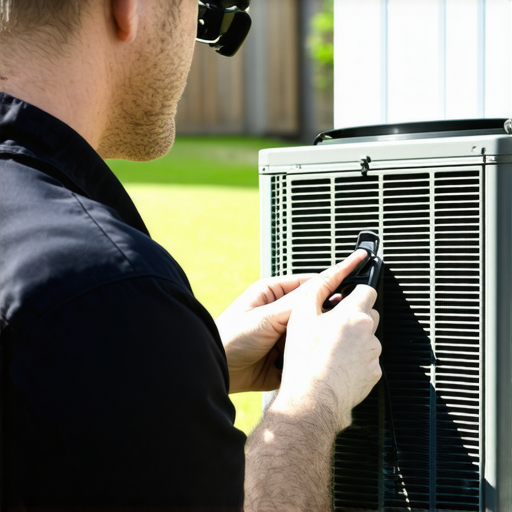
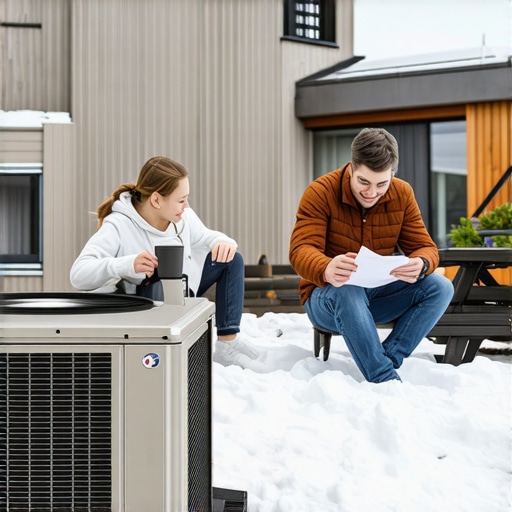
Let’s talk about dual fuel heat pump systems. In our northern climate, where the wind-chill makes your eyes water, the old-school heat pumps used to give up the ghost at 30°F. They’d go into ‘Defrost Mode’ and blow lukewarm air while your electric meter spun like a ceiling fan. But the 2026 tech is different. We’re talking about vapor-injection compressors that can pull latent heat out of the air even when it’s 5°F outside. When we talk about rebate application assistance, we aren’t just filling out forms; we are proving to the government that your system is sized for the ‘balance point’—that exact temperature where the heat pump’s capacity matches the home’s heat loss. If you don’t perform static pressure testing during the install, that shiny new $15,000 heat pump will ‘short cycle’ its way to an early grave because it can’t move enough air across the evaporator coil to satisfy the pressure sensors. This is why heat pump solutions for efficient home comfort in 2025 and beyond require a technician who understands the ‘Tin Knocker’s’ craft as much as the ‘Sparky’s’ wiring.
The Oil to Gas Conversion Trap and the Dual Fuel Escape Hatch
Many homeowners are looking at oil to gas conversion as a way to escape the volatility of heating oil prices. But in 2026, the real money is in the hybrid approach. By pairing a high-efficiency gas furnace with an electric heat pump, you’re playing both sides of the energy market. You use the ‘juice’ when the COP (Coefficient of Performance) is high, and you flip to gas when the polar vortex hits. For multi-family heating upgrades, this is the only way to ensure dehumidification services remain effective in the shoulder seasons. Without proper refrigerant leak detection during the annual startup, these complex systems can lose their charge, leading to ‘slugging’—where liquid refrigerant hits the compressor valves and turns your expensive investment into a very heavy paperweight. If you need help navigating these technical waters, it’s time to contact us before the summer rush hits and the rebate pool dries up.
The A2L Transition: R-454B and the Flammability Factor
We are officially moving away from R-410A. The new refrigerants, like R-454B, are classified as A2L—’mildly flammable.’ Don’t let that scare you, but it does mean your 2026 installation requires new sensors and specific control board diagnostics to ensure if a leak occurs, the blower motor kicks on to dilute the gas. This is why top hvac repair strategies to extend your systems life are more critical than ever. You can’t just slap a new coil on an old ‘Pookie’-smeared duct system and hope for the best. The static pressure will be all wrong, the new refrigerant won’t phase-change correctly, and you’ll be out $10,000 with no rebate to show for it. We also offer ventless gas heater services for localized backup, but these must be integrated with your primary system’s logic to avoid carbon monoxide buildup. Efficiency isn’t just a sticker on the side of the box; it’s the result of static pressure testing and ensuring your ductwork isn’t leaking 30% of your conditioned air into the attic.
“Standard 62.2 defines the roles of and minimum requirements for mechanical and natural ventilation systems and the building envelope.” — ASHRAE Standards
How to Claim Your 2026 Rebates Without Losing Your Mind
The HEEHRA (High-Efficiency Electric Home Rebate Act) is the big fish here. Depending on your household income, you could be looking at $8,000 off the invoice immediately. But here is the catch: the contractor must be registered, and the equipment must hit specific SEER2 and HSPF2 ratings. This is where rebate application assistance becomes a technical service. We have to document the refrigerant leak detection tests, the final static pressure readings, and the decommissioning of the old unit. For property managers handling multi-family heating upgrades, this documentation is the difference between a profitable year and a massive loss. Don’t let a ‘Sales Tech’ tell you the rebate is ‘guaranteed’ without showing you the AHRI certificate first. To stay ahead of the curve, read our preventative heating maintenance a guide for homeowners in 2025 to see how to prep your current system for the eventual transition. When you are ready to make the jump, remember that choosing the best heating service expert tips for 2025 involves asking about their static pressure testing tools and their EPA 608 certification level.
{“@context”:”https://schema.org”,”@type”:”HowTo”,”name”:”How to Apply for 2026 Heat Pump Rebates”,”step”:[{“@type”:”HowToStep”,”text”:”Conduct a Manual J Load Calculation to determine the exact BTU needs of your property.”},{“@type”:”HowToStep”,”text”:”Perform a Static Pressure Test on existing ductwork to ensure it can handle the airflow of a variable-speed heat pump.”},{“@type”:”HowToStep”,”text”:”Select AHRI-certified equipment that meets the SEER2 and HSPF2 requirements for federal HEEHRA rebates.”},{“@type”:”HowToStep”,”text”:”Hire an EPA 608 certified technician to install the system, ensuring proper refrigerant charge and leak detection.”},{“@type”:”HowToStep”,”text”:”Submit the AHRI certificate and the contractor’s invoice to the state energy office for rebate processing.”}]}
This post provides a very clear picture of how complex the HVAC landscape is becoming with the upcoming 2026 regulations. I’ve seen firsthand how improper installations and a lack of proper static pressure testing can shorten the lifespan of a heat pump considerably. As someone who’s handled everything from duct sealing to refrigerant leak detection, I strongly agree that knowing the technical aspects behind these systems pays off long-term, especially when rebates are involved. I wonder, with all the technical requirements like Manual J and D calculations, do you recommend homeowners hiring specialized consultants for these initial assessments, or is a seasoned HVAC tech usually enough? It seems like doing thorough pre-installation planning might be the most reliable way to maximize rebate eligibility and system longevity. Would love to hear thoughts from others who have navigated this new terrain—what’s been your biggest challenge or success?
Reading this article really underscores how critical proper planning and knowledgeable installation are, especially with the new regulations coming in 2026. I’ve been in the industry long enough to see how shortcuts or insufficient assessments—like skipping static pressure testing—can lead to early equipment failure and reduced system efficiency. Personally, I think it’s worth investing in a qualified HVAC specialist or consultant at the outset, particularly for complex setups like dual fuel or heat pumps in colder climates. They not only ensure that the system is correctly sized with proper Manual J and D calculations but also help navigate rebate documentation, which can be quite detailed and technical. From my experience, homeowners who rely solely on quick installs or inexperienced techs often end up paying more long term through repairs or energy inefficiency. How have others here handled the initial assessment phase—have you found good local consultants or HVAC pros who excel at this kind of technical prep? It seems like thorough upfront work, though more expensive initially, could save money and headaches later.